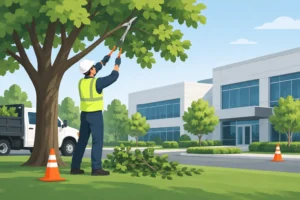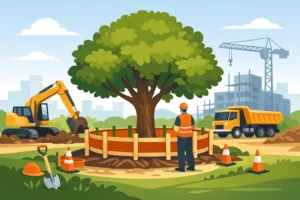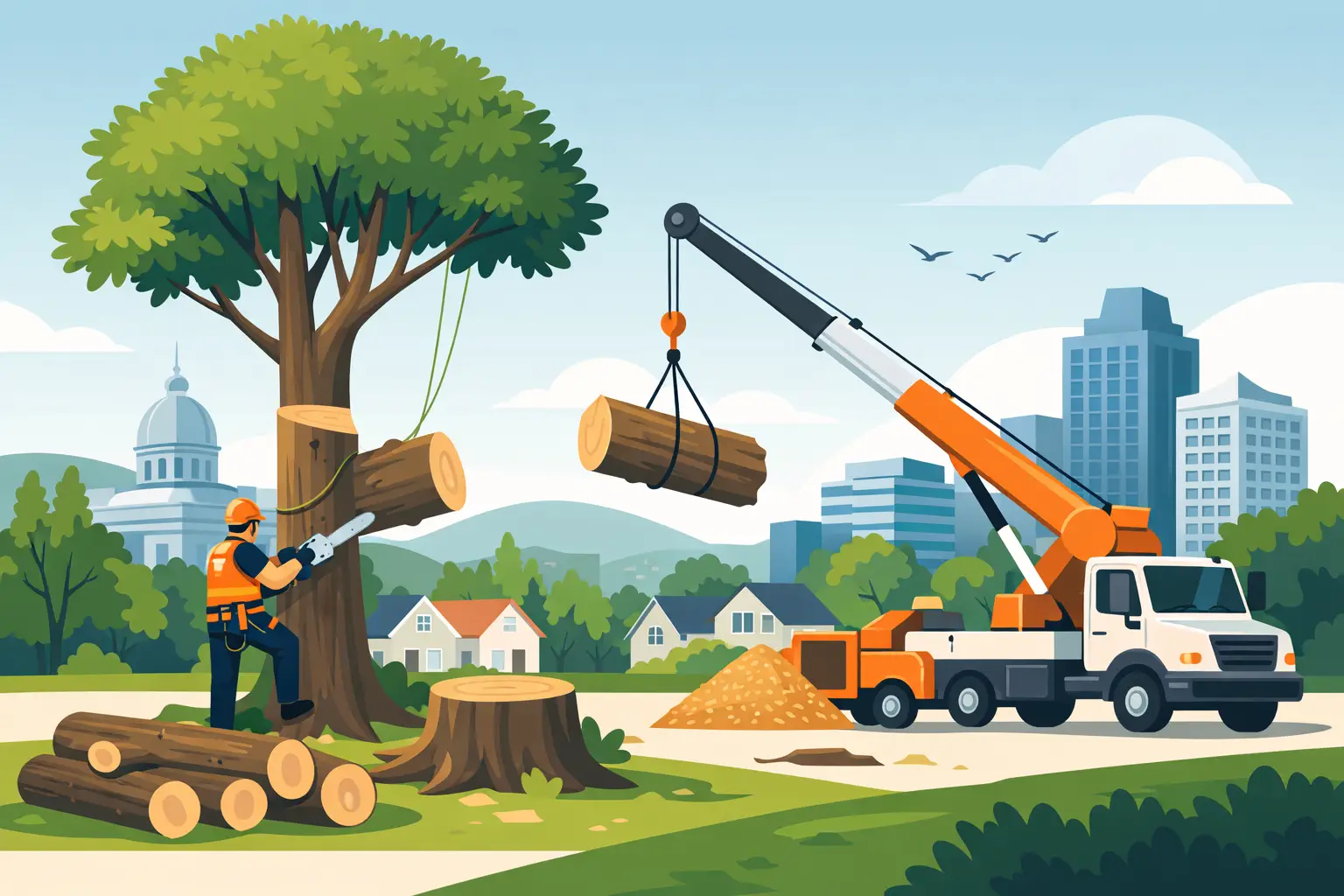
A tree can look manageable from the ground and become a complicated removal once it is close to a roofline, fence, power line, driveway, or neighboring property. That is why tree removal cost is rarely based on height alone. A proper estimate accounts for the tree, the work area, the risk involved, and what needs to happen after the last section comes down.
For homeowners and commercial property managers in New Haven County, the goal should not be to find the lowest number over the phone. The better goal is to understand what the work requires, what is included in the price, and whether the crew has the equipment and experience to complete it safely and leave the property clean.
What Affects Tree Removal Cost?
Every removal starts with an on-site look at the tree and its surroundings. Two 50-foot trees may have very different prices if one stands in an open backyard and the other leans over a house with limited access.
Tree size, condition, and species
Larger trees usually require more labor, more rigging, heavier equipment, and more time handling debris. Diameter matters as much as height. A tall, narrow tree is different from a broad mature oak with heavy limbs stretching over several areas of a yard.
Condition also changes the plan. A healthy tree can often be climbed, tied off, and dismantled in controlled sections. A dead, cracked, hollow, storm-damaged, or unstable tree may not be safe to climb. In those cases, the crew may need a bucket truck, crane, additional rigging, or a more cautious piece-by-piece approach.
Species can play a role as well. Dense hardwood adds weight, while brittle or decaying wood can make limb control less predictable. Arborist oversight helps identify these issues before a crew starts cutting.
Location and access
Access is one of the biggest cost factors on Connecticut properties. Can trucks and equipment reach the tree? Is there a narrow gate, steep grade, stone wall, patio, pool, garden, or septic area to protect? Is the tree behind the home, where every branch must be carried or lowered by hand?
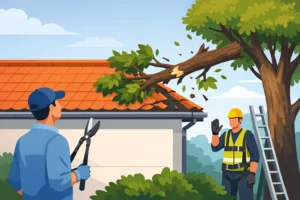
A tree in an open front yard is generally more efficient to remove than one growing between houses. When limbs extend over a roof, garage, fence, or deck, crews may need to lower each piece with ropes instead of simply dropping it into a clear landing zone. That extra control takes time, skill, and planning.
Nearby utilities and structures
Trees near electric service lines, communications lines, buildings, and public roads require additional precautions. Utility-line work is not a job for an uninsured operator with a chainsaw. Depending on the line and the required clearance, coordination with the utility company or a qualified line-clearance crew may be necessary.
The same is true when a tree threatens a structure. A professional removal plan protects the home first, then addresses the tree. The cheapest bid is not a bargain if it leaves a damaged roof, crushed fence, or insurance dispute behind.
Cleanup, hauling, and wood handling
Ask what the estimate includes after the tree is down. Some prices cover cutting only, while others include chipping brush, hauling logs, raking the work area, and removing all debris. Hauling large trunk sections can add meaningful labor and disposal cost.
If you have a fireplace or want logs left for future splitting, that may reduce hauling but does not always reduce the removal price. The crew still has to cut, lower, and process the wood safely. Be specific about whether you want chips, logs, or all material removed from the property.
Typical Tree Removal Cost Ranges
A site visit is the only reliable way to price a specific job, but broad ranges can help property owners plan. In the New Haven County area, a small tree with open access may cost roughly $300 to $800 to remove. A medium-size tree often falls between $800 and $1,800, depending on branching, access, and cleanup.
Large mature trees commonly start around $1,500 and can reach $3,500 or more. Difficult removals involving tight spaces, serious decay, heavy rigging, crane access, road control, or trees over structures can cost substantially more.
These are planning ranges, not a promise or a substitute for an inspection. A large tree in a clear yard can cost less than a smaller hazardous tree hanging over a house. The safest way to compare prices is to make sure each contractor is pricing the same scope of work.
What Should Be Included in a Tree Removal Estimate?
A clear estimate prevents the most common misunderstandings. Before approving work, confirm whether the price includes cutting down the tree, lowering limbs where needed, chipping brush, hauling wood, final cleanup, and disposal. Also ask whether stump grinding is included or quoted separately.
Tree removal and stump removal are usually separate services because they require different equipment and labor. Leaving the stump may be appropriate if it is in a wooded area or will not affect future use. In a lawn, planting bed, driveway expansion, or construction area, grinding the stump and addressing major roots can make the property more usable.
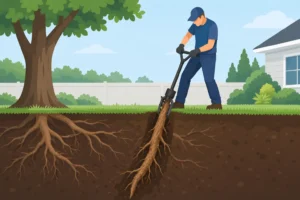
For deeper root issues, surface grinding may not be enough. Stumpbuster LLC uses a proprietary Plowrake system for root removal when a property needs a cleaner, deeper result for landscaping or future improvements. That level of work should be discussed during the estimate, not added as an afterthought once the tree is gone.
Permits, Emergency Work, and Other Cost Variables
Some towns, historic districts, homeowner associations, or commercial sites have rules affecting tree removal. Requirements may be more likely for trees near wetlands, public rights-of-way, protected areas, or new construction. Property owners should check local requirements before scheduling non-emergency work.
Emergency calls can also cost more than planned removals. After a storm, crews may be responding to blocked driveways, damaged roofs, and trees resting on structures. The work may require immediate mobilization, after-hours labor, temporary stabilization, or more extensive cleanup. If a tree has already fallen on wires, keep clear and contact the utility provider or emergency services as appropriate before anyone approaches the area.
Season matters, but it is not the whole story. Frozen ground can sometimes protect lawns from ruts, while wet spring conditions can limit equipment access. Scheduling flexibility may help, yet safety and site conditions should determine the work plan.
How to Compare Tree Removal Quotes Fairly
A low quote can be legitimate when a job has easy access and minimal risk. It can also leave out hauling, cleanup, insurance, stump work, or the equipment needed to protect your property. Compare written scopes, not just totals.
Look for a company that is insured, experienced with the type of tree involved, and willing to explain how it will handle nearby structures and debris. Ask whether the crew includes qualified arborist leadership when tree health, decay, or preservation decisions are part of the job. If one contractor recommends trimming or selective removal instead of taking down a healthy tree, that may be sound advice rather than an attempt to make the job more complicated.
Photographs are useful for an initial conversation, but they cannot show every concern. An on-site inspection reveals hidden decay, access limitations, overhead hazards, root flare, and the real condition of the surrounding landscape.
When Removal Is Worth the Investment
Removal makes sense when a tree is dead, structurally unsound, severely declining, damaged beyond reasonable correction, or creating a clear risk to people and property. It may also be the right choice when roots are disrupting a driveway, branches repeatedly strike a roof, or a tree has outgrown a tight location.
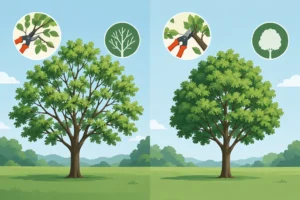
Not every overgrown tree needs to come down. Professional trimming can often reduce weight, improve clearance, remove hazardous limbs, and preserve a valuable shade tree. A licensed arborist can help separate a tree that needs maintenance from one that has become a removal problem.
If you are concerned about a tree on your property, start with a thorough evaluation and a written estimate that explains the work. The right removal protects your home, restores your yard, and gives you a clean path forward instead of another problem to manage.