A mature tree can look perfectly sound from the driveway and still come down during one hard Connecticut storm. The most common reasons trees fail in wind are not always obvious: decay hidden inside the trunk, weakened roots below ground, poor branch structure, or years of stress that finally show up when the wind starts pushing.
For homeowners and property managers in New Haven County, the issue is not simply whether a tree survives a storm. It is whether it can strike a roof, vehicle, fence, utility line, sidewalk, or neighboring property when it fails. Knowing what causes wind damage helps you make a practical decision before a manageable tree problem becomes an emergency removal.
Reasons Trees Fail in Wind
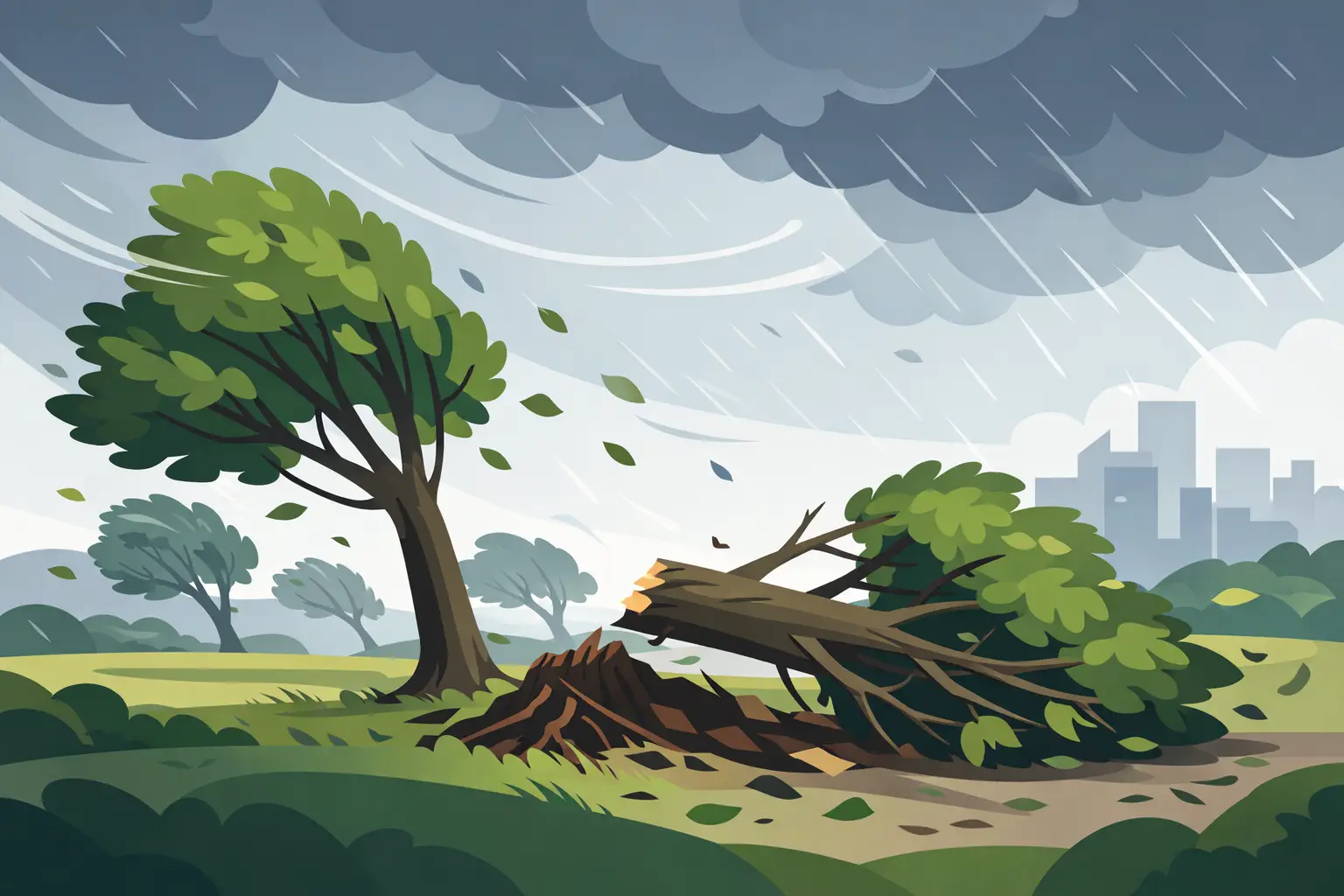
Wind does not usually cause a healthy, well-rooted tree to fail without warning. More often, a storm exposes a weakness that has been developing for years. The failure may happen at the roots, at the trunk, or high in the canopy, and each type calls for a different response.
Root damage and shallow root systems
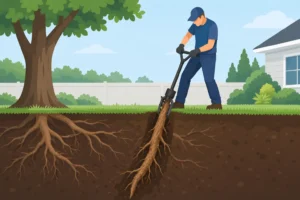
A tree relies on a broad, healthy root system to stay anchored. When roots are cut during construction, damaged by trenching, crowded by compacted soil, or restricted by nearby pavement, the tree can lose much of its holding strength. The canopy may still look full and green, which makes this problem easy to miss.
Wet soil makes matters worse. After prolonged rain, saturated ground loses its grip on roots, especially around large, mature trees. High winds then act like a lever against the canopy. A tree may tip over with much of its root plate attached, leaving a large hole in the yard.
Root rot can create the same risk. Fungi that break down roots often work underground for a long time before a tree leans or declines. If you notice mushrooms or fungal growth around the base, soil lifting on one side of the trunk, a new lean, or exposed roots that appear damaged, have the tree assessed promptly.
Internal decay in the trunk
A tree trunk may look solid on the outside while the heartwood inside has decayed. Old pruning wounds, broken limbs, insect activity, and fungal infections can create openings where decay organisms enter. Over time, the trunk loses the strength needed to resist bending and twisting in high winds.
Cavities, cracks, peeling bark, and visible conks or shelf-like fungi are all warning signs. They do not automatically mean removal is necessary. Some trees compartmentalize decay effectively and remain stable for years. The concern depends on how much sound wood remains, where the decay is located, the tree species, and what the tree could hit if it fails.
A trunk with major decay near the base deserves particular attention because that is where the tree carries the greatest load. In a storm, a compromised trunk can snap suddenly, even when the upper canopy appears healthy.
Weak branch attachments
Not every wind failure involves the whole tree. Large limbs often break first, particularly when they have a narrow V-shaped attachment or included bark. Included bark forms when bark becomes trapped between two co-dominant stems instead of allowing wood fibers to knit together. The union can look substantial, but it is structurally weak.
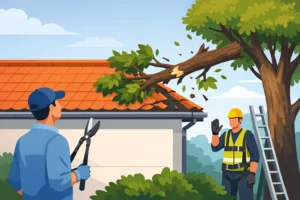
Heavy horizontal limbs are also vulnerable when they extend too far from the trunk, carry excess weight near their ends, or have old cracks. Ice and wet snow add weight in winter, while summer storms put broad-leaved canopies under heavy wind pressure. A limb over a roof, driveway, play area, or parking lot should not be ignored simply because the rest of the tree is standing straight.
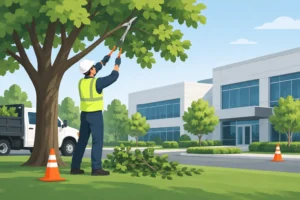
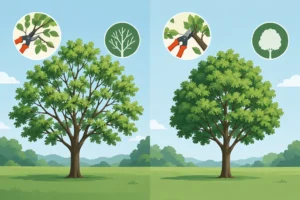
Proper pruning can reduce this risk, but topping is not the answer. Cutting back large portions of a crown indiscriminately often creates weak new growth, decay, and more future maintenance. Selective pruning by an experienced tree professional is safer and better for the tree.
Poor tree structure that developed over time
Some trees develop multiple trunks, lopsided crowns, or long limbs because of competition for sunlight, previous storm damage, or years without pruning. A tree growing at the edge of woods may have a canopy weighted heavily toward the open yard. When winds come from that open side, the imbalance puts extra force on the trunk and roots.
Fast-growing trees can be especially prone to structural issues. Their wood may be more brittle, and large limbs can outgrow their attachments quickly. That does not mean every fast-growing species needs removal. It means these trees need regular attention, especially as they mature near homes and utility lines.
Young trees can often be improved with structural pruning before defects become major hazards. Mature trees require a more careful evaluation because large cuts can cause stress or decay. The best option depends on the tree’s condition, size, location, and remaining useful life.
Previous storm injury
A tree that survived one storm may be more likely to fail in the next. Torn roots, split branch unions, cracked limbs, and trunk wounds may not be visible from the ground. Storm damage can also open the door to insects and decay long after debris has been cleaned up.
After a major wind event, inspect the property from a safe distance. Look up for hanging branches, broken tops, fresh cracks, and limbs resting in other trees. Look down for lifted soil, new gaps around the trunk base, or roots pulling out of the ground. Do not stand beneath damaged limbs or try to pull down branches with ropes, ladders, or equipment from the garage.
Soil, site, and construction changes
Trees respond to their growing site, and a change around the tree can affect stability years later. Regrading can bury the root flare, which is the widening area where the trunk meets the roots. New driveways, patios, retaining walls, and utility work can compact soil or remove critical roots.
Even changes that seem minor can matter around older trees. Adding fill soil against a trunk, routinely parking vehicles over the root zone, or repeatedly damaging roots with lawn equipment can reduce a tree’s health and anchoring ability. Large trees need room below ground, not just clearance above it.
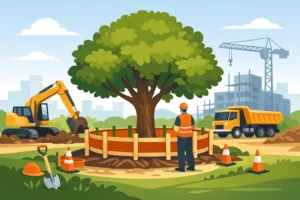
This is why it pays to plan tree protection before a renovation or landscaping project begins. Once major roots are cut or buried, there may be no practical way to restore the tree’s original stability.
Warning Signs Before Wind Causes Tree Failure
A hazardous tree does not always look dramatic. Sometimes the clearest warnings are subtle: a lean that was not there last season, a crack where two trunks meet, thinning leaves on one side of the canopy, dead branches in the upper crown, or mushrooms near the base.
Pay close attention to trees within striking distance of structures and areas people use every day. A dead limb in the far corner of a wooded lot may be less urgent than a smaller weakened limb over a front walk. Risk is a combination of the defect and the target below it.
If a tree has suddenly leaned after rain or wind, treat it as urgent. A new lean can signal root failure already in progress. Keep people, vehicles, and pets out of the area until a qualified professional can inspect it.
What Property Owners Can Do Safely
Routine observation and timely pruning are the most useful forms of prevention. Walk your property a few times each year, especially after storms and before winter. Check for deadwood, low limbs contacting structures, visible cracks, decay signs, and soil movement at the base of mature trees.
Avoid making large pruning cuts yourself or removing limbs near power lines. Utility-line work and storm-damaged tree work require specialized training, equipment, and insurance. A mistake can turn a damaged limb into a serious injury or property loss.
When a tree has significant decay, a failing root system, major structural defects, or a high-value target beneath it, removal may be the responsible choice. In other cases, selective pruning, cabling, bracing, or monitoring can extend a tree’s safe life. There is no one answer for every tree, which is why an on-site assessment matters.
For New Haven County property owners, an arborist-led evaluation can identify the real source of concern and recommend a practical next step. Stumpbuster LLC has worked with local trees, soils, and storm conditions since 1985, providing careful tree removal, trimming, stump grinding, and root removal when the work calls for it.
A strong wind is not the time to find out whether a questionable tree was stable. If something about a tree has changed, trust what you are seeing and have it checked before the next storm puts that weakness to the test.