A mature maple or oak can have roots running just below the lawn surface for many feet beyond its canopy. When those roots begin showing above ground, homeowners often want to cover, cut, or remove them right away. Knowing how to handle exposed tree roots starts with one rule: protect the tree’s root system before trying to improve the appearance of the yard.
Exposed roots are not always a sign that a tree is failing. In many New Haven County yards, they are simply the result of shallow soil, erosion, compacted ground, changing grades, or a tree species that naturally develops surface roots. The right solution depends on where the roots are, what they are affecting, and whether the tree is otherwise healthy.
Why Tree Roots Become Exposed
Tree roots need oxygen, water, and room to spread. Most of the fine feeder roots that support a tree are found in the upper 12 to 18 inches of soil. That means a large, established tree may have a broad root system close to the surface even when its trunk appears strong and healthy.
Heavy rain can wash away topsoil and expose roots over time. Foot traffic, mowing, parked equipment, and construction can compact the soil, making it harder for roots to grow downward. Some homeowners also discover roots after removing old landscaping, adding a patio, or regrading part of the property.
Species matter, too. Maples, beeches, willows, and some oaks are well known for producing roots near the surface. On rocky Connecticut properties, roots often grow where the soil is available rather than forcing their way through ledge or dense subsoil.
How to Handle Exposed Tree Roots Without Damaging the Tree
The safest response is usually to work around exposed roots instead of against them. Cutting major roots to create a smooth lawn can reduce the tree’s ability to take up water and nutrients. It can also make a mature tree less stable in wind, especially if the roots being cut are close to the trunk or on one side of the tree.
Start by identifying the actual problem. Roots in a back corner of a lawn may be mostly cosmetic. Roots lifting a sidewalk, interfering with a driveway, creating a trip hazard, or pressing against a structure need a more deliberate plan.
Avoid piling several inches of soil over the roots. A thin layer of good topsoil may be appropriate in a limited area where erosion is minor, but deep fill can smother roots by reducing oxygen exchange. Do not bury the tree’s root flare, which is the widened area where the trunk meets the roots. A trunk that looks like it goes straight into a mound of soil is often planted or filled too deeply.
Mulch is usually a better option than soil. A two- to three-inch layer of natural wood mulch can protect roots, conserve moisture, reduce mower damage, and make the area look intentional. Keep mulch several inches away from the trunk. A mulch pile against the bark holds moisture where it does not belong and can lead to decay, insects, and disease.
If exposed roots are in turf, consider enlarging the mulch bed around the tree rather than fighting to keep grass alive over the root zone. A curved planting bed can make the transition look natural while reducing the need to mow directly over roots. Shade-tolerant ground covers may also work in some locations, but do not aggressively dig or till between roots to install them.
When You Should Not Cut Surface Roots
Cutting roots is one of the most common and costly mistakes homeowners make. The damage may not be obvious immediately. A tree can decline gradually over the next few growing seasons, or it may become more likely to lean or fail during a storm.
Do not cut roots that are large, close to the trunk, or connected to a tree that is already stressed. Warning signs include thinning leaves, dead branches, peeling bark, mushrooms near the base, trunk wounds, or a recent change in lean. Roots are especially critical when a tree is near a house, garage, road, play area, or utility line.
A rough rule is that roots within several times the trunk diameter should be left alone unless a qualified arborist has evaluated the situation. Even a root farther from the trunk may be structurally significant, depending on the species, soil conditions, and direction of the tree’s lean.
Small feeder roots are often disturbed during normal landscaping, but that does not make root pruning a simple DIY job. Clean cuts, proper timing, and a clear understanding of the tree’s condition all matter. Never tear roots out with a truck, excavator, or stump grinder while the tree is still standing.
Protect Roots During Lawn and Landscape Work
Exposed roots can be damaged by routine yard work as much as by major construction. Repeated strikes from a mower deck or string trimmer can injure bark and open a path for decay organisms. Set mower wheels high enough to avoid scraping roots, and use a mulched bed where mowing becomes difficult.
Keep heavy vehicles, dumpsters, and stacks of materials out of the root zone whenever possible. The root zone extends well beyond the trunk, often as far as the branch spread and sometimes farther. Compaction from a single renovation project can affect a tree long after the contractor leaves.
If you are planning a fence, shed, patio, pool, drainage project, or utility work near a mature tree, address the roots before construction begins. Adjusting the layout by a few feet may save a valuable tree and prevent expensive removal later. Trenching through roots should be avoided unless the work has been planned with professional guidance.
Roots Lifting Sidewalks, Patios, and Driveways
Roots that push up hardscape are different from roots that simply show through the lawn. The raised surface can create a real trip hazard and may damage concrete, pavers, asphalt, or drainage patterns.
The first instinct is often to remove the offending root. That may solve the pavement issue temporarily, but it can create a tree hazard. In many cases, lifting and resetting a section of pavers, adjusting the grade, using a root-friendly path material, or rerouting a walkway is safer for the tree than root removal.
Concrete sidewalks and driveways may require input from both a hardscape contractor and an arborist. The best approach depends on the root size, the tree’s age and condition, the amount of lifting, and how close the damage is to the trunk. Where public sidewalks are involved, local municipal rules may also apply.
Roots near a foundation deserve a careful evaluation rather than quick assumptions. Healthy roots generally do not break sound concrete foundations. However, they can take advantage of existing cracks, affect older masonry, interfere with drains, or contribute to problems in already dry or unstable soil. A professional inspection can separate a root issue from a drainage, settling, or structural issue.
When Root Removal Is the Right Answer
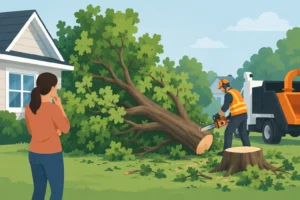
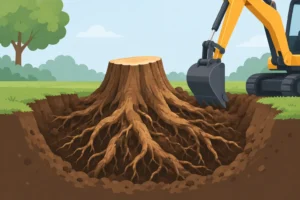
Root removal makes sense after a tree has been removed, when a stump and remaining roots are preventing new construction, lawn restoration, or replanting. It may also be needed when old roots are creating persistent surface problems after a tree is gone.
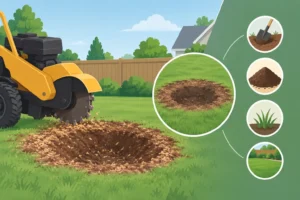
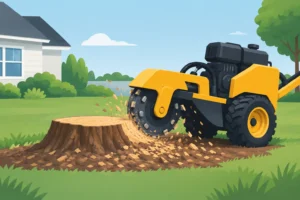
This is where equipment and experience make a major difference. Ordinary stump grinding handles the visible stump but may leave substantial roots below grade. For projects that require deeper, cleaner removal, Stumpbuster LLC uses its Plowrake root removal system to pull out stubborn root material and restore usable space more thoroughly.
If the tree is still living, root removal should never be treated as a separate job from tree health and safety. The decision should account for the tree’s size, species, location, condition, and the risk it presents if its support roots are disturbed.
Signs It Is Time to Call an Arborist
An arborist evaluation is worthwhile when exposed roots are associated with a leaning tree, cracked soil, raised ground at the base, sudden leaf loss, or roots that have been cut during excavation. Call for help promptly if roots are lifting a walkway near an entrance, affecting a driveway, or creating a hazard around a business or rental property.
A licensed arborist can assess whether the tree can be preserved with mulch, grade correction, selective pruning, or a change in landscaping. If removal is the safer choice, the work can be planned to protect nearby structures and leave the area clean and ready for its next use.
Exposed roots are part of life with mature trees, and mature trees are often one of the best features of a Connecticut property. Give the roots room to do their job, address safety concerns early, and get experienced advice before making a cut that cannot be undone.