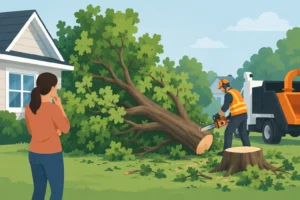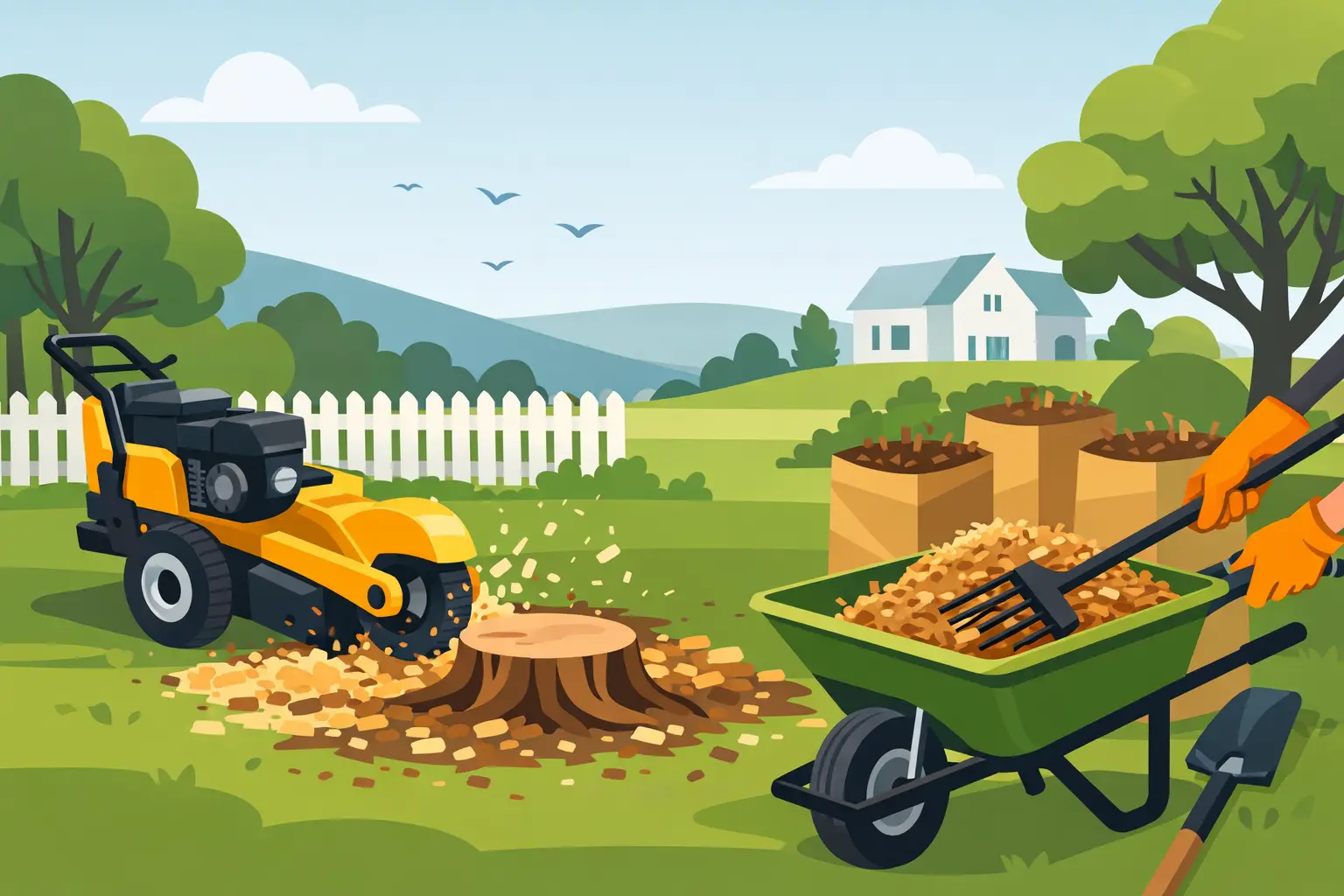
A stump can be gone in an afternoon, but the job is not truly finished until the surrounding area is safe, level, and ready to use again. This guide to stump grinding cleanup explains what happens after the grinder leaves, what property owners should expect, and when deeper root removal makes sense for a Connecticut yard.
Stump grinding turns the visible stump into wood chips, often called grindings. That process removes the tripping hazard and opens up the space, but it also leaves a mix of mulch, soil, and sometimes larger roots beneath the surface. The right cleanup plan depends on what you want to do with the area next: grow grass, install a garden bed, put in a patio, replant a tree, or simply make mowing easier.
What Stump Grinding Leaves Behind
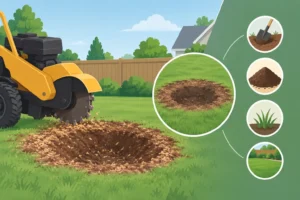
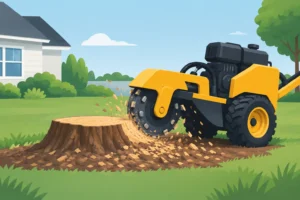
A stump grinder works by cutting the stump below grade, typically several inches under the surrounding lawn. The operator then rakes the grindings back into the hole or piles them nearby, depending on the agreed scope of work and the condition of the site.
Those wood chips are not ordinary mulch. They contain a blend of fresh wood fiber and soil. Left in a thick pile, they can settle over time, interfere with new grass growth, and create a soft spot in the yard. That does not mean every grinding must be hauled away. It means the material needs to be handled according to the future use of the space.
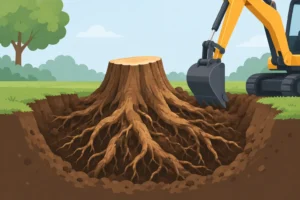
Surface roots are another consideration. Grinding removes the stump itself, but it does not automatically remove every root that extends through the lawn. For many mature trees, roots may run well beyond the stump area. If those roots are not causing a problem, leaving them in place is usually the practical choice. If they are lifting a walk, crowding a foundation, blocking a new installation, or making the ground unusable, root removal may be the better solution.
Start Cleanup With a Clear End Use
The most useful question is not, “Can the chips stay?” It is, “What needs to happen here next?” A level lawn has different requirements than a driveway expansion or a new planting bed.
For a lawn area, the goal is to remove enough grindings to prevent settling, backfill with suitable topsoil, and establish grass. For a garden bed, a portion of the wood chips may be useful as surface mulch once separated from excess soil. For construction, fencing, a shed, or hardscaping, deeper removal is often necessary. Buried wood and large roots can decay, shift, and leave a void below a future structure.
Property owners should also consider access. A stump beside a fence, near a pool, or in a tight side yard may require a different cleanup approach than one in an open front lawn. Experienced operators plan for the equipment path, nearby utilities, landscaping, and the amount of material that can reasonably be removed without damaging the rest of the property.
How to Handle Stump Grindings
In most cases, there are three sensible options: haul the grindings away, reuse a limited amount as mulch, or blend the area back to grade with soil after removing the excess.
Hauling is the cleanest choice when you want an immediate lawn repair, have a small yard, or need a hard, stable base for a project. It also makes sense when the volume of chips is too large to use elsewhere on the property. Fresh grindings can be bulky, and a large stump can produce far more material than homeowners expect.
Reusing a thin layer as mulch can work around established shrubs and trees. Keep it away from trunks and do not pile it against siding, fencing, or foundations. Fresh wood material can temporarily use nitrogen as it decomposes, so it is not a good material to mix heavily into a lawn seed bed or vegetable garden.
If the goal is grass, remove most of the grindings from the hole. Fill the area with screened topsoil, firm it in layers, and leave it slightly higher than the surrounding grade. The soil will settle. A shallow depression is common when a cleanup is rushed or when the hole is filled mainly with chips instead of soil.
Do Not Bury a Large Pile of Chips
Burying wood chips may look tidy on the day of the job, but it often creates trouble later. As the material breaks down, the ground can sink and become uneven. In wet periods, buried wood may hold moisture. In dry periods, it can leave a loose, unstable patch that is difficult to mow or seed.
A small amount of fine material blended into the surrounding soil is not always a concern. The problem is volume. The larger the stump, the more important proper removal and backfilling become.
Root Cleanup: When Grinding Is Not Enough
Stump grinding is usually the right answer when the main concern is a visible stump, mowing obstacle, or tripping hazard. Full root removal is a separate job, and it should be selected for a specific reason.
Consider deeper root removal when roots are heaving a walkway, interfering with a new lawn installation, affecting drainage, or occupying the footprint of a planned patio, addition, or utility trench. It can also be appropriate where a stump and major roots are close to a foundation, retaining wall, or driveway.
There is a trade-off. Removing large roots disturbs more soil and can require more restoration afterward. In a wooded corner of a property where no construction is planned, that extra excavation may not be worthwhile. In a high-use yard or commercial landscape, a cleaner, deeper result can prevent future repairs.
Stumpbuster LLC uses a specialized Plowrake root removal system for situations where grinding alone will not provide the clean result a property needs. That type of work is especially valuable when the objective is to reclaim usable space, rather than simply remove what is visible above ground.
Restore the Area Safely
Once chips and unwanted roots are addressed, inspect the work zone before calling the project complete. Look for low spots, exposed roots, loose debris, and damage to nearby turf. Check the edges of walkways, driveway borders, irrigation heads, and landscape beds. A professional cleanup should leave the area orderly, not just stump-free.
If the site will be seeded, rake the topsoil smooth and compact it lightly. Apply seed suited to the amount of sun the area receives, then keep the surface consistently moist while germination begins. Early fall is often an excellent time for lawn repair in New Haven County because the soil is still warm and summer heat has eased. Spring can also work, although weed pressure is often greater.
Sod provides a faster finished appearance, but it requires good soil preparation and regular watering. For a small stump area, seed is often the more economical choice. If the lawn has broad damage from removal equipment or multiple stumps, sod may be worth considering for a more uniform result.
Plan Around Utilities, Drainage, and Replanting
Cleanup is more than cosmetic when a stump is near utility lines or drainage features. Before excavation or root removal, underground utilities must be identified. Roots can also affect the way water moves through the yard. Filling a low stump hole without considering existing grade can direct water toward a house, garage, or neighbor’s property.
Replanting deserves some planning as well. A new tree should not go directly into the old stump hole, where leftover roots, wood debris, and depleted soil can limit growth. Choose a nearby location with enough room for the mature tree, proper clearance from structures and wires, and soil conditions that suit the species. A licensed arborist can help determine whether the old tree failed because of disease, site conditions, or simple age before recommending a replacement.
A Cleaner Yard Starts With the Right Scope
The best stump grinding cleanup is decided before the equipment arrives. Tell the contractor whether you want chips removed, a lawn-ready finish, deeper root extraction, or preparation for a future project. Clear expectations prevent the common surprise of finding a large pile of grindings or a settling hole after the work is done.
For homeowners and commercial property managers in New Haven County, the goal is straightforward: remove the hazard, protect the rest of the landscape, and leave ground that works for the property. A properly cleaned stump site gives you back more than a few square feet of lawn. It gives you a safer, more usable space for whatever comes next.