A low branch over the driveway, a leaning trunk near the house, or a stump that will not stop producing shoots can turn into an expensive problem fast. An arborist credentials review gives you a practical way to separate qualified tree professionals from contractors who may be willing to take the job without the training, coverage, or equipment to do it safely.
For homeowners and commercial property managers in New Haven County, this is more than paperwork. Tree work often involves heights, power equipment, heavy wood, nearby structures, underground roots, and utility lines. The right credentials do not guarantee a perfect job, but they give you a much better starting point when you are choosing who will work on your property.
What Arborist Credentials Actually Tell You
An arborist is a professional whose work centers on tree care, including diagnosis, pruning, preservation, removal, and risk management. A company can own a chainsaw and a truck without having arborist-level knowledge. Credentials help show that the person directing the work understands more than how to cut a limb.
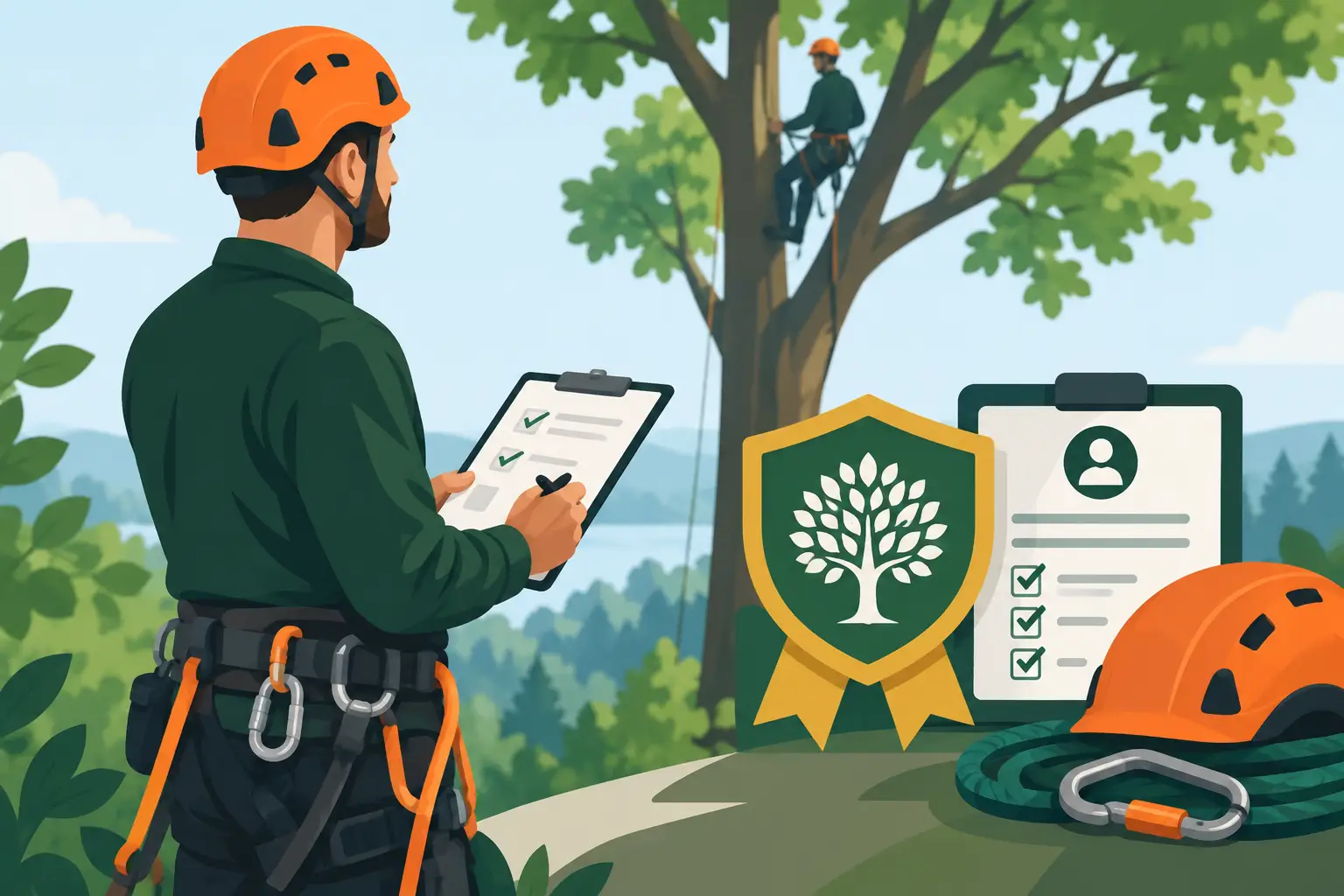
In Connecticut, ask whether the company has a currently licensed arborist involved in the estimate and the job. A state license is one of the clearest signs that a professional has met applicable requirements for arboriculture work. If a contractor says they are licensed, ask what the license covers and who on the crew holds it. A direct answer is a good sign.
You may also see voluntary industry certifications, such as certification from a recognized arboriculture organization. These credentials can reflect continuing education and knowledge of tree biology, pruning standards, pests, structural defects, and safety practices. They are valuable, but they should be considered alongside local licensing, hands-on experience, and insurance.
A credential is not a substitute for judgment. A mature oak with storm damage near a roof requires a different plan than routine trimming of young ornamental trees. The best tree professionals combine formal qualifications with years of experience handling real site conditions.
Arborist Credentials Review: What to Verify
A useful review is straightforward. You are not trying to interrogate a contractor. You are confirming that the company is prepared to take responsibility for a high-risk job.
Start with licensing and then ask for proof of insurance. A reputable tree service should carry liability insurance and workers’ compensation coverage appropriate for its employees. Do not settle for a verbal assurance that the company is insured. Ask for current documentation and make sure the policy is in the name of the business doing the work.
Liability coverage matters if a falling limb damages a roof, fence, vehicle, or neighboring property. Workers’ compensation matters if a crew member is injured on your site. Without proper coverage, a low estimate can become a costly decision.
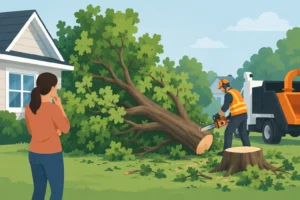
Next, look at the company’s experience with the specific work you need. Tree removal, fine pruning, stump grinding, and root removal are related services, but they are not identical. A crew that can remove a small dead tree may not have the equipment or planning ability needed for a large tree over a garage, close to a service line, or in a tight backyard.
Ask how the work will be performed. Will the tree be climbed, lifted by crane, or removed in sections? How will the crew protect lawns, gardens, driveways, and structures? What happens to logs, brush, sawdust, and stump grindings? Clear answers usually reflect a crew that has planned the job before arriving.
Why Insurance and Equipment Belong in the Review
Credentials show knowledge. Insurance and equipment show whether a company can put that knowledge to work responsibly.
Proper equipment improves safety and often reduces damage to your property. Depending on the site, that may include bucket trucks, chippers, stump grinders, rigging equipment, protective gear, and machines designed to move heavy material without tearing up the yard. The equipment itself is not the whole story. It must be operated by people who know its limits.
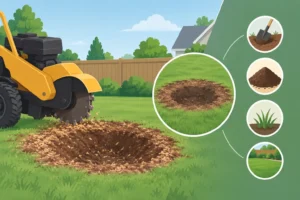
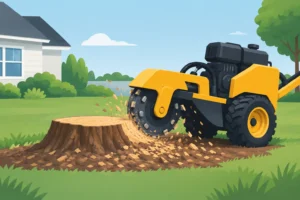
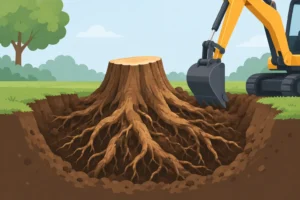
Root work is a good example. Grinding a stump below ground may improve the appearance of a lawn, but surface grinding does not always remove the roots that interfere with a patio, garden, utility area, or future planting. If your goal is to reclaim usable space, ask whether the company can address the root system as well as the visible stump.
Stumpbuster LLC has served local properties since 1985 and uses its Plowrake system for deeper root removal when a standard stump grind is not enough. That distinction matters when roots are the real reason a yard, planting bed, or construction area cannot be used properly.
Watch for Vague Claims and Unrealistic Prices
A contractor does not need to use technical language to be qualified. In fact, the best estimates are often plainspoken. They identify the work, explain the approach, and set expectations for cleanup.
Be cautious when a company cannot provide license or insurance information, pressures you to decide immediately, or gives a price without looking closely at the tree and surrounding site. Tree work is not a service where an accurate estimate can always be made from a quick description over the phone. Access, decay, lean, power lines, nearby structures, and disposal needs all affect the plan.
An unusually low price deserves a closer look. It may mean the contractor is new, operating with lower overhead, or offering a limited scope of work. It can also mean insurance, safe rigging, cleanup, proper disposal, or stump work has been left out of the estimate. Compare what each company will actually do, not just the number at the bottom of the page.
A written estimate should make clear whether it includes removal of wood and brush, stump grinding, root removal, hauling, and final cleanup. If you want firewood left on site, mulch spread in a certain area, or a stump cut close to grade, have that included before the work starts.
Credentials Matter Most When the Job Is Complicated
For basic seasonal pruning on small trees, a qualified and insured local tree service may be all you need. For a hazardous tree, storm-damaged limbs, a large removal near a home, or visible signs of disease or decay, arborist oversight becomes even more valuable.
Look for a professional who can explain why a tree should be pruned, treated, monitored, or removed. Removal is sometimes the safest answer, especially when a tree has severe structural defects, root failure, extensive decay, or conflicts with buildings and utilities. But a knowledgeable arborist should not treat every tree as a removal job.
The same goes for trimming. Topping a tree or cutting back large sections without a sound reason can create weak regrowth, increase stress, and make a healthy tree less stable over time. Proper pruning should improve clearance, remove dead or hazardous limbs, and support the tree’s long-term structure when preservation is possible.
Local familiarity also helps. New Haven County properties range from compact city lots to wooded suburban yards and commercial sites with heavy traffic. A crew experienced in the area understands the access challenges, seasonal weather, common tree conditions, and cleanup expectations that come with each setting.
Questions Worth Asking Before You Hire
Before approving an estimate, ask who will supervise the work, whether a licensed arborist will be involved, and whether the company can provide current insurance documentation. Ask how the crew will protect your property and what cleanup is included.
For removal work, ask how the tree will be lowered and whether nearby structures, landscaping, wires, or neighbor access create special concerns. For pruning, ask what branches will be removed and why. For stump work, ask how deep the stump will be ground and whether root removal is available if you plan to regrade, build, plant, or install a patio.
The answers should be clear, specific, and consistent with the written estimate. You should not feel rushed or left guessing about what your property will look like when the crew leaves.
A good arborist credentials review is not about finding the most impressive title. It is about hiring a trained, insured, experienced professional who can assess the job honestly and leave your property safer, cleaner, and ready for what comes next.