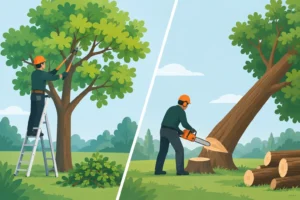
A large shade tree can look perfectly healthy from the ground while carrying a serious structural weakness high above your driveway, roof, or patio. Homeowners often ask when should trees be cabled because they have noticed two trunks spreading apart, a heavy limb extending over the house, or a crack where major branches meet. In the right situation, a professionally installed tree cable can reduce the risk of failure and help preserve a valuable mature tree.
Cabling is not a universal fix, and it is not a substitute for removing a tree that is severely decayed, unstable, or too hazardous to keep. It is a support system chosen after an arborist evaluates the tree’s structure, condition, location, and long-term prospects.
When Should Trees Be Cabled?
Trees are typically cabled when they have a structural defect that could lead to a split or major limb failure, but the tree is otherwise healthy enough to retain. The goal is to limit excessive movement between parts of the canopy and reduce the force placed on a weak connection during wind, snow, or ice.
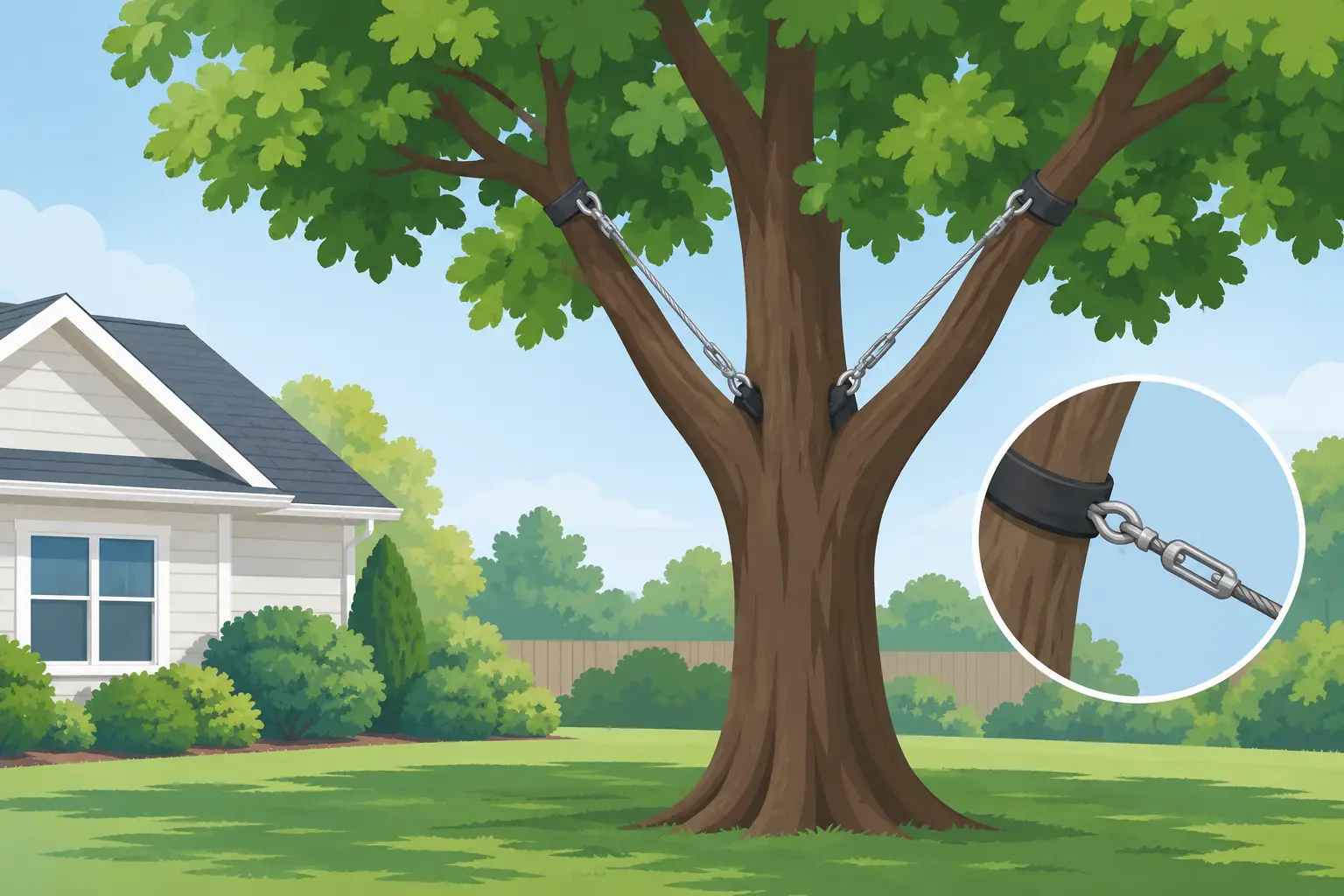
The most common reason for cabling is a tree with multiple stems, often called co-dominant leaders. Instead of one main trunk, the tree has two or more upright trunks of similar size. This structure can be especially concerning when the stems form a narrow, V-shaped union. Bark may become trapped between them, creating what arborists call included bark. That connection is weaker than a broad, U-shaped union with strong overlapping wood.
Cabling may also be appropriate for a long, heavy limb with a poor attachment point, particularly when it extends over a house, garage, driveway, play area, or parking lot. A cable does not make that limb indestructible. It provides supplemental support and can lessen the chance that normal weather movement turns into a costly failure.
For many Connecticut properties, timing matters as much as the decision itself. A tree with a visible split, widening crack, or suddenly sagging limb should be inspected right away, not after the next heavy snow or thunderstorm. For trees with known structural weaknesses but no immediate emergency, an inspection before storm season is a sensible way to plan the work.
Warning Signs That Call for an Arborist Inspection
Not every forked tree needs a cable. Many mature trees have multiple stems and remain stable for decades. The concern rises when there are signs that the union is under stress or when a failure would have serious consequences below.
Look closely for a crack at the point where trunks or major limbs join. Fresh exposed wood, a dark line that appears to be opening, or a seam running down from the union can all indicate movement. A gap that seems wider than it was in previous seasons deserves prompt attention.
A pronounced V-shaped crotch, especially one with bark visibly pressed between the stems, is another reason to have the tree evaluated. So is a branch that has grown much longer or heavier on one side of the canopy, causing the tree to look unbalanced. Previous storm damage, old pruning wounds, decay cavities, fungal growth near a major union, and deadwood also change the assessment.
Location is part of the equation. A modest defect in a tree at the back edge of a wooded lot may be managed differently than the same defect above a bedroom, service entrance, fence, or frequently used walkway. Good tree risk management considers both the likelihood of failure and what the tree could hit.
How Tree Cabling Works
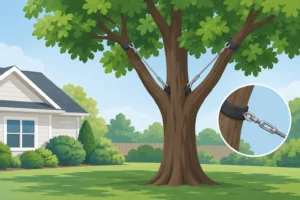
Modern tree support systems are generally designed to be flexible rather than rigid. A qualified arborist installs high-strength cable in the upper canopy between stems or limbs that need supplemental support. The system allows normal, limited movement while helping prevent the parts from pulling too far apart during high winds or heavy loading.
Where a split is already present or a union needs closer support, bracing rods may be used along with cabling. Rods are installed through the weak area to hold the wood together, while the cable reduces leverage from above. The right approach depends on the type and extent of the defect. A newly discovered crack requires a different response than a tree with an awkward but stable limb structure.
Installation height, cable placement, hardware size, and pruning recommendations all matter. A poorly placed cable can cause unnecessary wounding, concentrate force in the wrong area, or fail to provide meaningful support. This is why cabling should not be treated as a do-it-yourself project or a quick add-on by someone without arboricultural training.
Cabling Is Often Paired With Selective Pruning
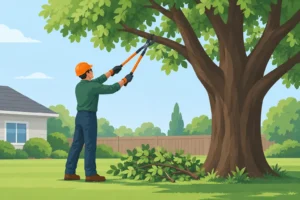
Reducing weight on a long limb or overextended leader can make a support system more effective. This is not the same as cutting the limb back severely or topping the tree. Excessive cuts can create weak regrowth and leave the tree in worse condition.
Proper structural pruning removes selected branches or shortens targeted areas to reduce leverage while preserving the tree’s natural shape and health. In some cases, pruning alone may be enough. In others, the combination of careful pruning and cabling offers the best balance between safety and preservation.
When Cabling Is Not the Right Answer
A cable cannot solve every tree problem. If a trunk has extensive internal decay, major root damage, a hollow section that has lost structural strength, or a crack that has already opened significantly, removal may be the safer recommendation. The same is true when a tree is declining rapidly from disease or when a failure could strike an occupied building or high-use area.
Cabling also does not correct poor planting location. A tree that has outgrown a narrow space beside a structure, utility line, or busy road may continue to create problems even with added support. An honest arborist should explain whether a cable will provide useful risk reduction or simply postpone an unavoidable removal.
There is also a maintenance commitment. Cables should be inspected periodically, especially after major storms and as the tree grows. Hardware can become too tight, trees can develop new defects, and changing branch weight may alter the loads on the system. Supplemental support is a management tool, not a one-time guarantee.
Why Local Conditions Matter in New Haven County
Mature oaks, maples, hickories, and other established trees add real character and value to properties across New Haven County. They also face strong coastal winds, wet snow, ice loading, saturated soils, and summer thunderstorms. Those conditions can expose weaknesses that were not obvious during calm weather.
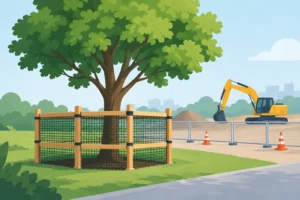
A tree near the shoreline in Branford or Guilford may experience different wind exposure than a sheltered tree in Hamden or Wallingford. Soil drainage, grade changes, nearby construction, and root disturbance all affect stability as well. An on-site evaluation is more useful than a general rule because the same tree structure can carry very different risks from one property to the next.
At Stumpbuster LLC, arborist-led evaluations focus on the condition of the tree and the practical risk to your property. Sometimes the right recommendation is a cable and targeted pruning. Sometimes it is monitoring. And sometimes the safest, most responsible choice is removal before a compromised tree damages a home, vehicle, or neighboring property.
What to Expect From a Professional Evaluation
An arborist begins by looking at the whole tree, not just the branch that caught your attention. That includes trunk condition, branch unions, canopy balance, deadwood, visible decay, root zone concerns, past damage, and the targets below the tree.
The evaluation should also account for the tree’s species and age. Some species are more prone to splitting at tight unions, while others compartmentalize wounds differently or respond poorly to aggressive pruning. A healthy younger tree with a correctable structural issue may be an excellent candidate for support. An older tree with multiple signs of decline may not be.
You should receive a clear explanation of the options, including what cabling can reasonably accomplish and what risk remains. No tree service can promise that a supported tree will never fail. The value of professional cabling is in reducing a known structural risk with a properly designed system and a realistic maintenance plan.
If you see a fresh crack, separated stems, a hanging limb, or sudden leaning after a storm, keep people and vehicles away from the area until it can be inspected. Addressing a weakness early may give you more choices for protecting the tree and the space around it.