A lawn mower blade catches on a raised root. A walkway starts to lift. Grass refuses to grow beneath a mature maple, and the roots seem to be spreading farther every year. Surface root management is not just about making a yard look cleaner. Done correctly, it protects people, hardscaping, drainage, and the long-term health of valuable trees.
For Connecticut property owners, the key is to address the problem without creating a larger one. Cutting roots blindly can destabilize a tree, invite decay, and leave a homeowner with a serious removal issue later. A better approach starts with understanding why roots are at the surface and choosing the least destructive solution that will actually solve the problem.
Why Tree Roots Rise to the Surface
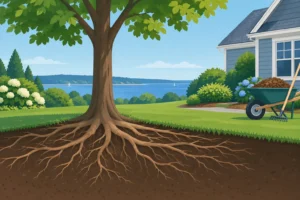
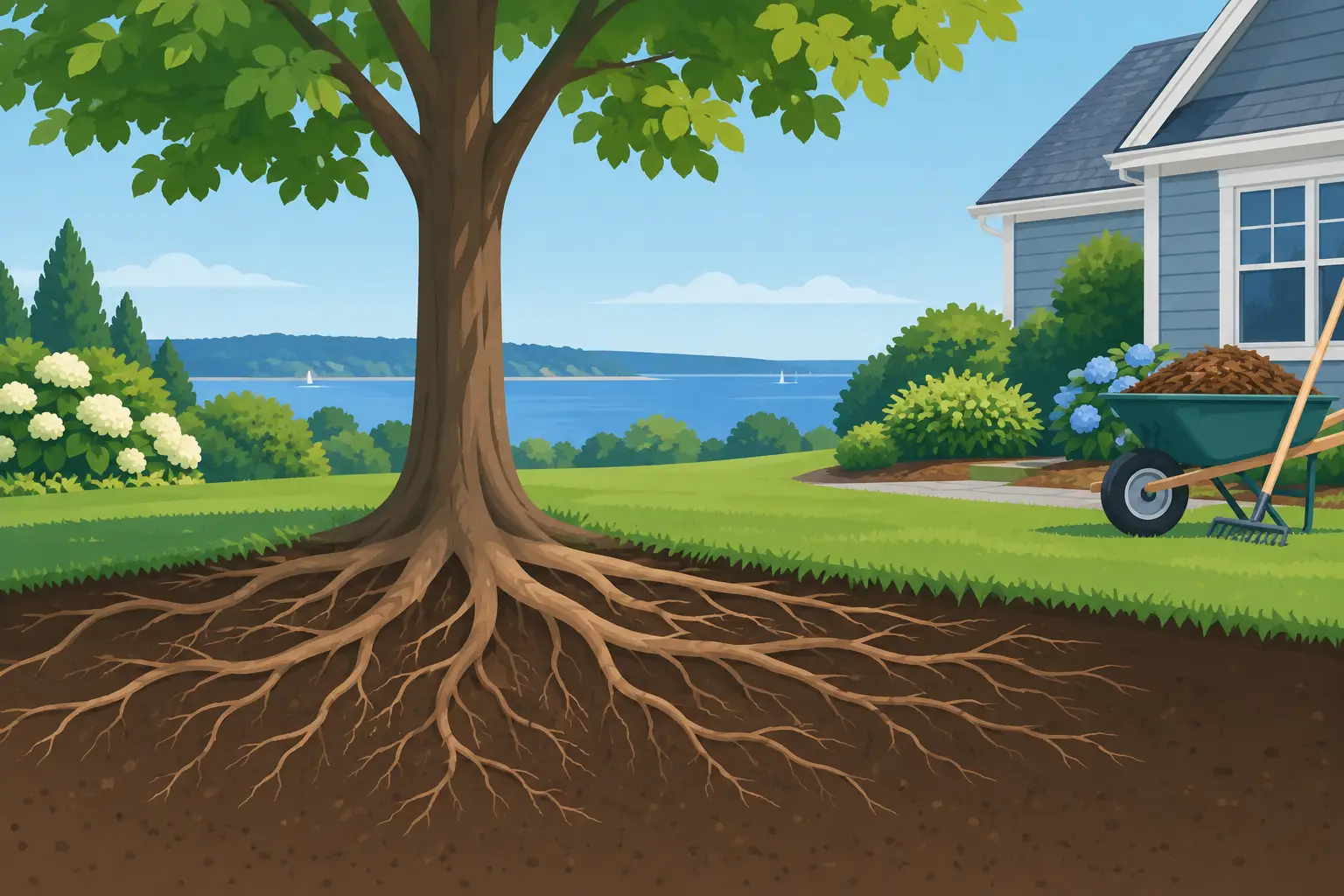
Most tree roots are not deep taproots running straight down. The fine roots that collect water and oxygen usually grow in the upper 12 to 18 inches of soil. When that upper soil layer is compacted, poorly drained, shallow, or low in oxygen, roots often grow close to the surface where conditions are better.
This is common throughout New Haven County. Many established neighborhoods have mature trees growing in compacted soil near driveways, sidewalks, stone walls, and old utility trenches. Connecticut’s rocky soil can also limit downward root growth. A tree planted too deeply, surrounded by excess fill, or competing with turf can develop visible roots as it matures.
Some trees are simply more likely to show surface roots. Maples, willows, beeches, poplars, sweetgums, and many large shade trees can develop broad root systems near the soil line. The appearance of roots does not always mean the tree is unhealthy. In many cases, it is a normal response to site conditions and age.
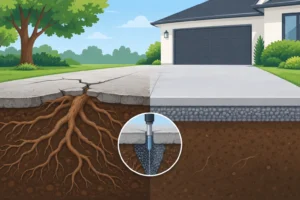
The concern begins when roots create a trip hazard, crack pavement, interfere with mowing, crowd a planting bed, damage a retaining wall, or make part of the yard unusable. At that point, the goal is to manage the conflict between the tree and the property, not to punish the tree for doing what roots are supposed to do.
Surface Root Management Starts With an Inspection
Before any roots are pruned or excavated, look at the whole tree and its surroundings. The size of the tree, species, trunk condition, lean, canopy health, soil grade, and distance from the problem area all matter.
A small root near the edge of a patio may be manageable. A large structural root close to the trunk is a different situation. Structural roots help anchor the tree and transfer loads from the trunk into the soil. Removing one can reduce stability, particularly on a mature tree exposed to wind, snow, or saturated ground.
As a practical rule, roots within several feet of the trunk deserve extra caution. A root that is large in diameter or clearly connected to the tree’s root flare should never be cut simply because it is inconvenient. The visible root may be only part of a much larger support system underground.
An arborist-led inspection can also identify problems that are easy to miss. Root girdling, trunk decay, poor soil drainage, prior construction damage, and fungal decay can all affect whether root pruning is appropriate. A tree that already has reduced structural strength may need a different plan than a healthy tree with one lifted sidewalk panel.
When Root Pruning Makes Sense
Root pruning can be useful, but it should be selective and measured. It is most appropriate when a limited number of roots are damaging a specific feature and there is enough distance from the trunk to make pruning less risky.
For example, a root may be trimmed to create clearance for a repaired walkway, a fence post, or a defined edge around a planting area. The cut should be clean, made with proper equipment, and placed where it does the least harm to the tree. Tearing roots with a backhoe, chopping them with an axe, or grinding them down at random creates unnecessary wounds and can lead to decay.
The amount of root loss matters as much as the location. Removing too much of the root system can cause canopy dieback, leaf scorch, branch failure, or decline that shows up months or years later. It can also make a tree more vulnerable during storms. There is no one-size-fits-all percentage that is safe for every species and property. The tree’s health, age, soil, and exposure all need to be considered.
Timing also matters. Root work is often easier on a tree when it is dormant, but site conditions can change the recommendation. Wet ground, frozen soil, utility locations, and urgent hazards may require a different schedule. The right decision depends on the actual condition of the tree, not just the calendar.
Better Alternatives to Cutting Surface Roots
In many yards, the best solution is to work around the roots rather than remove them. This is especially true for healthy, mature shade trees that provide significant value in cooling, curb appeal, and property character.
A raised or rerouted walkway can eliminate a trip hazard without severing major roots. Flexible paving options may work well in some locations. Where a root is affecting turf, expanding the mulch bed around the tree is often a cleaner answer than repeatedly trying to grow grass over exposed roots.
Use a natural mulch layer, generally two to three inches deep, and keep it pulled back from the trunk. Mulch helps retain moisture, reduces mower damage, and makes the root area look intentional. Do not pile mulch against the trunk into a steep mound. Excess mulch can hold moisture against the bark, hide root flare, and encourage decay.
Grade changes should be handled carefully. Adding several inches of soil over roots can reduce oxygen exchange and stress the tree. Cutting roots to lower the ground level can be just as damaging. If a yard needs regrading for drainage or a construction project, the tree’s root zone should be evaluated before work begins.
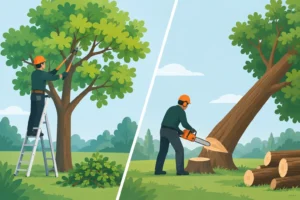
When Tree Removal Is the Safer Answer
Sometimes surface roots are only one sign of a larger problem. If a tree has major decay, severe lean, repeated limb failures, extensive root damage, or roots that are causing significant structural conflict, keeping it may no longer be the safest option.
Removal becomes a reasonable discussion when the tree is pushing hard against a foundation, undermining a wall, lifting a driveway beyond practical repair, or threatening utilities. It may also be the right choice when prior root cutting has left the tree unstable or in visible decline.
Tree removal should not be the first answer to every exposed root. Mature trees are worth preserving when they can be managed safely. But preserving a tree at all costs is not responsible when people, buildings, or access routes are at risk. A licensed arborist can help weigh the condition of the tree against the scope and cost of ongoing repairs.
After removal, stump grinding alone may not solve a root-related yard problem. Large remaining roots can continue to interfere with grading, landscaping, or construction for some time. For projects that require cleaner access below ground, deeper root removal may be needed.
Stumpbuster LLC uses its Plowrake root removal system when a property needs more than a surface-level cleanup. This approach helps remove substantial roots after stump work so the area can be restored for lawn, planting, drainage improvements, or future use. The appropriate depth and extent of removal depend on the planned use of the space and nearby utilities.
Preventing Root Conflicts Before They Start
The easiest root problem to manage is the one avoided during planning. When planting a new tree, choose a species that fits the available space above and below ground. Large-growing shade trees need room away from foundations, sidewalks, septic components, driveways, and utility lines.
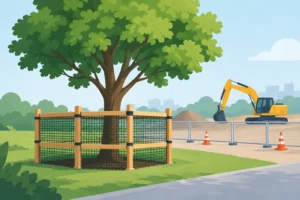
Plant at the correct depth, with the root flare visible at or slightly above finished grade. Avoid compacting soil around the root zone during construction, and do not use mature trees as storage areas for fill, equipment, or building materials. A few hours of construction traffic can compress soil enough to affect roots for years.
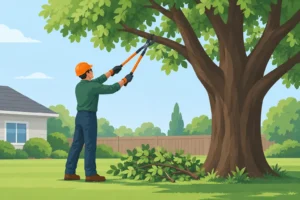
For existing trees, regular pruning and inspections help identify structural issues early. Healthy canopy management does not stop roots from growing, but it can improve overall tree condition and reveal whether a root concern is part of a broader safety issue.
Get the Right Answer Before Cutting
A raised root can be frustrating, but quick fixes often create expensive consequences. Before cutting, grinding, burying, or excavating around exposed roots, have the tree and the affected area evaluated by someone who understands both tree biology and property safety.
A careful plan can preserve the tree, restore usable space, and prevent a small landscape problem from becoming an emergency removal. If you are dealing with roots near a walkway, driveway, foundation, or lawn in New Haven County, a professional estimate can give you a clear path forward before any permanent cuts are made.