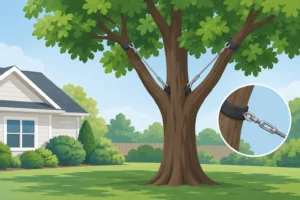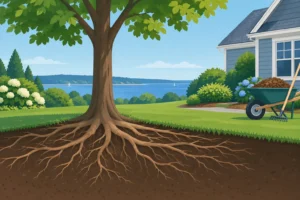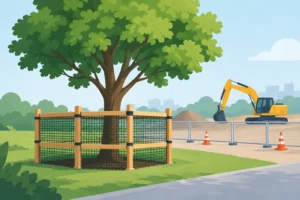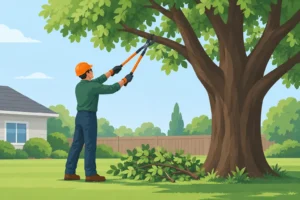
A tree leaning over a roof in Hamden or hanging above a driveway in North Haven is not a job for the biggest saw at the hardware store. A useful tree removal equipment review starts with the property, the tree’s condition, nearby structures, and the room available to work safely. The right equipment matters, but experienced judgment is what determines whether the work is controlled, clean, and safe.
For New Haven County property owners, equipment should be judged by more than power. The best setup reduces risk to people, homes, utility lines, lawns, and neighboring properties while allowing the crew to remove and clean up the tree efficiently.
What Good Tree Removal Equipment Must Do
Tree removal is rarely a single-tool job. A mature oak, a storm-damaged maple, and a small ornamental tree near a fence each require a different approach. Equipment must match the access, tree size, wood condition, drop zone, and cleanup plan.
A professional crew needs tools that can cut accurately, lower heavy sections under control, move material without unnecessary lawn damage, and handle the stump or roots if the customer wants the space restored. Bigger equipment is not always better. A crane may be the safest choice for a large tree over a house, while compact equipment is often the better fit for a narrow backyard with limited gate access.
The operator is part of the equation. Even high-quality machinery cannot make up for poor rigging, dull chains, unsafe cutting practices, or a crew that fails to inspect decay and weak points before climbing.
Chainsaws: The Core Cutting Tool
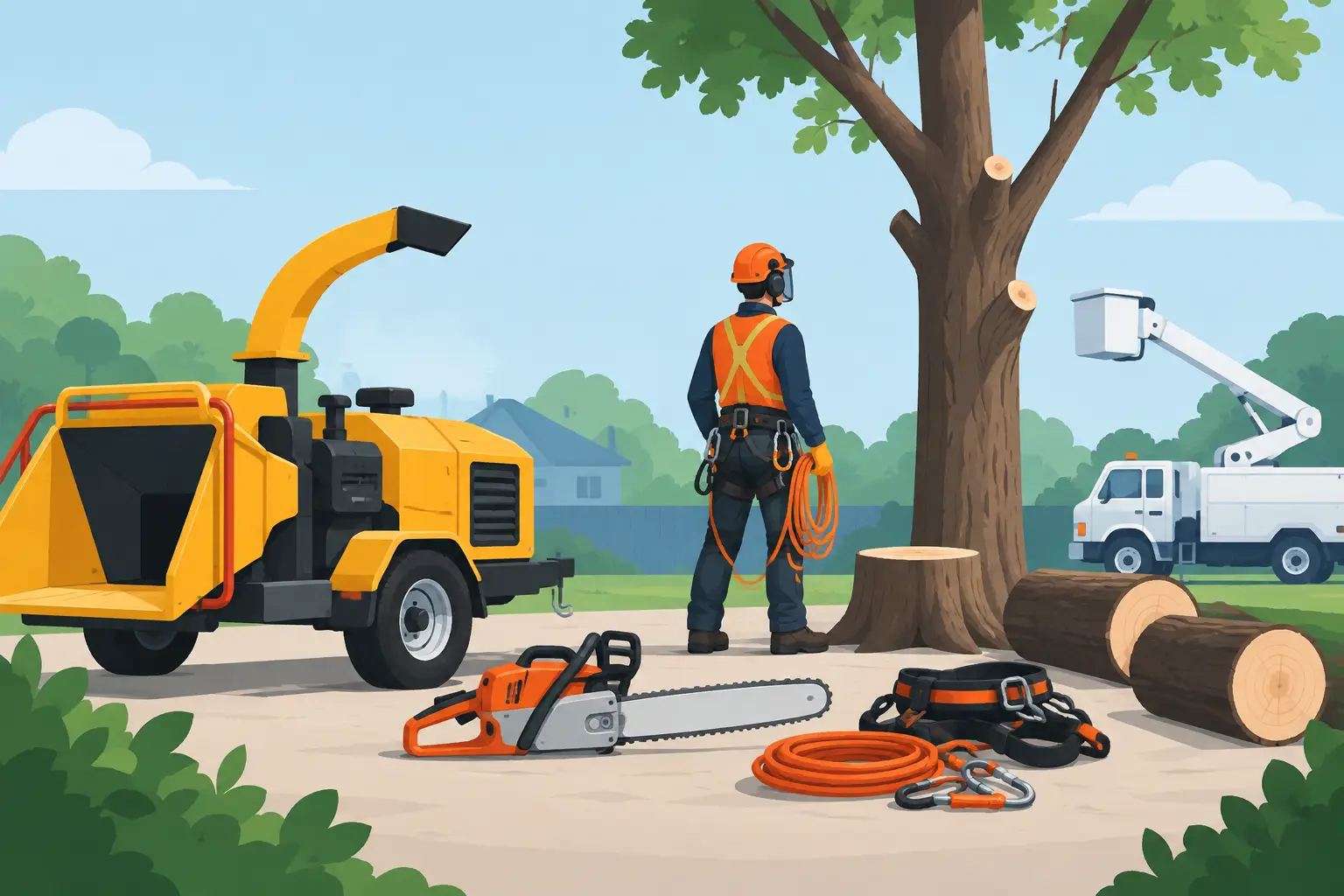
A professional-grade chainsaw remains central to most removals. It provides the controlled cuts needed for felling, limbing, bucking logs, and dismantling a tree in sections. Crews commonly use more than one saw because a small saw offers better control in the canopy, while a larger saw can handle wide trunk cuts efficiently.
The features that matter are reliability, bar length, chain sharpness, balance, and maintenance. A powerful saw with a dull chain can create more risk than a properly maintained saw of moderate size. Dull chains force the operator to push harder, produce rougher cuts, and increase the chance of kickback or loss of control.
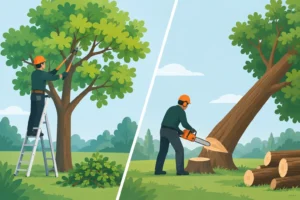
For homeowners, saw selection is also where the line between light pruning and tree removal becomes clear. A small fallen limb may be manageable with proper protective equipment and experience. Removing a standing tree, especially one near a building or utility service, should be left to trained professionals.
Rigging Gear: The Equipment That Controls the Fall
Rigging equipment often receives less attention than chainsaws, yet it is among the most important parts of a safe removal. Ropes, slings, pulleys, friction devices, blocks, carabiners, and lowering systems allow a crew to guide branches and trunk sections to a planned landing area.
This matters when there is no room to drop material freely. A branch that weighs several hundred pounds can damage a roof, fence, deck, garden wall, or parked vehicle in seconds. Proper rigging lets the crew lower it gradually instead of taking chances with gravity.
Rigging gear must be inspected regularly. Rope wear, damaged hardware, poor knots, and incorrect load calculations can turn a controlled job into a serious accident. Arborist experience is especially valuable when a tree has deadwood, internal decay, storm splits, or an uneven lean because those conditions change how wood reacts under load.
Cranes, Lifts, and Compact Equipment
For difficult removals, aerial lifts and cranes can provide a safer alternative to climbing. A lift gives the arborist stable access to limbs that cannot be reached safely from the ground. It can be an excellent option for trees near houses, parking areas, or busy commercial properties, provided the equipment can reach the work area without damaging the site.
A crane is often the right choice when large sections must be lifted over a structure or when the tree is too compromised for a climber to trust. The crane operator and tree crew work together to attach each section, make the cut, and lift it away from the hazard area. This approach can be more expensive than a straightforward removal, but it may prevent much greater damage when the tree is located in a tight or high-risk spot.
Compact loaders and tracked machines are equally valuable on the ground. They move logs and brush efficiently while spreading weight better than heavier wheeled equipment. On soft Connecticut lawns, that can mean fewer ruts and less restoration after the job. Site protection still matters, especially after rain or during spring thaw, when even compact machinery can disturb saturated soil.
Wood Chippers and Cleanup Equipment
A removal is not complete when the tree is on the ground. Chippers turn branches into manageable wood chips, reducing the number of truck loads and helping keep the work area orderly. A properly sized chipper can process brush quickly, but it must be fed carefully by trained operators following strict safety procedures.
For homeowners, the visible benefit is a cleaner property and faster debris removal. For commercial sites, efficient chipping helps keep drive lanes, sidewalks, and parking areas clear during the project. Logs may be cut into manageable sections for hauling, processing, or firewood when requested and practical.
Cleanup equipment also includes tarps, rakes, blowers, and protective mats. These may seem secondary, but they are part of professional workmanship. A crew should leave the property safer and more usable than it found it, not create a new problem with scattered debris, damaged turf, or blocked access.
Stump Grinders and Root Removal Tools
A stump grinder removes the visible stump below grade so the area can be covered, seeded, landscaped, or prepared for another use. It is a strong choice for many ordinary stumps, particularly when the goal is to eliminate a tripping hazard and improve the appearance of the yard.
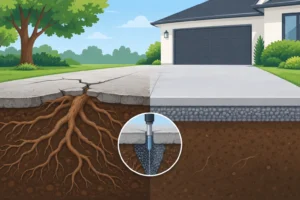
Grinding does not always remove the full root system. Large roots may remain below ground and continue to interfere with a planned patio, driveway repair, utility work, drainage project, or new planting. That is where a more complete root-removal approach can make sense.
Stumpbuster LLC uses its proprietary Plowrake root removal system when deeper, cleaner extraction is needed. The right choice depends on the stump species, root spread, future plans for the area, and access for equipment. A homeowner planning to plant grass may need a different level of removal than a property owner preparing for construction.
The Most Important Part of Any Equipment Review
The best tree removal equipment is not defined by a brand name or a machine’s size. It is defined by whether it gives an experienced crew the control needed for your particular property. Before work begins, the crew should assess overhead utilities, access routes, the tree’s health, weather conditions, nearby structures, and the safest way to lower or remove material.
Insurance, trained operators, and licensed arborist oversight belong in the same conversation as saws and machinery. Equipment helps complete the work, but planning prevents costly mistakes. For trees near power lines, homeowners should never attempt cutting or pruning and should contact the utility company or a qualified tree service for guidance.
If a tree, stump, or root system is taking up usable space or creating a safety concern, ask for an on-site estimate. A clear plan, the right equipment, and a crew that respects your property will do more for your peace of mind than any single machine ever could.