A low branch over a driveway, a dead maple near the house, and roots pushing up a patio may all look like landscaping problems. They are not necessarily the same kind of job. When deciding between an arborist versus landscaper, the right choice comes down to the condition of the tree, the risk involved, and the result you need on your property.
Landscapers do valuable work that keeps a property attractive and functional. Arborists focus on trees as living structures, including their health, growth, defects, and safe removal. For homeowners and commercial property managers in New Haven County, knowing the difference can prevent costly damage, poor pruning, or a job that only solves half the problem.
Arborist Versus Landscaper: The Core Difference
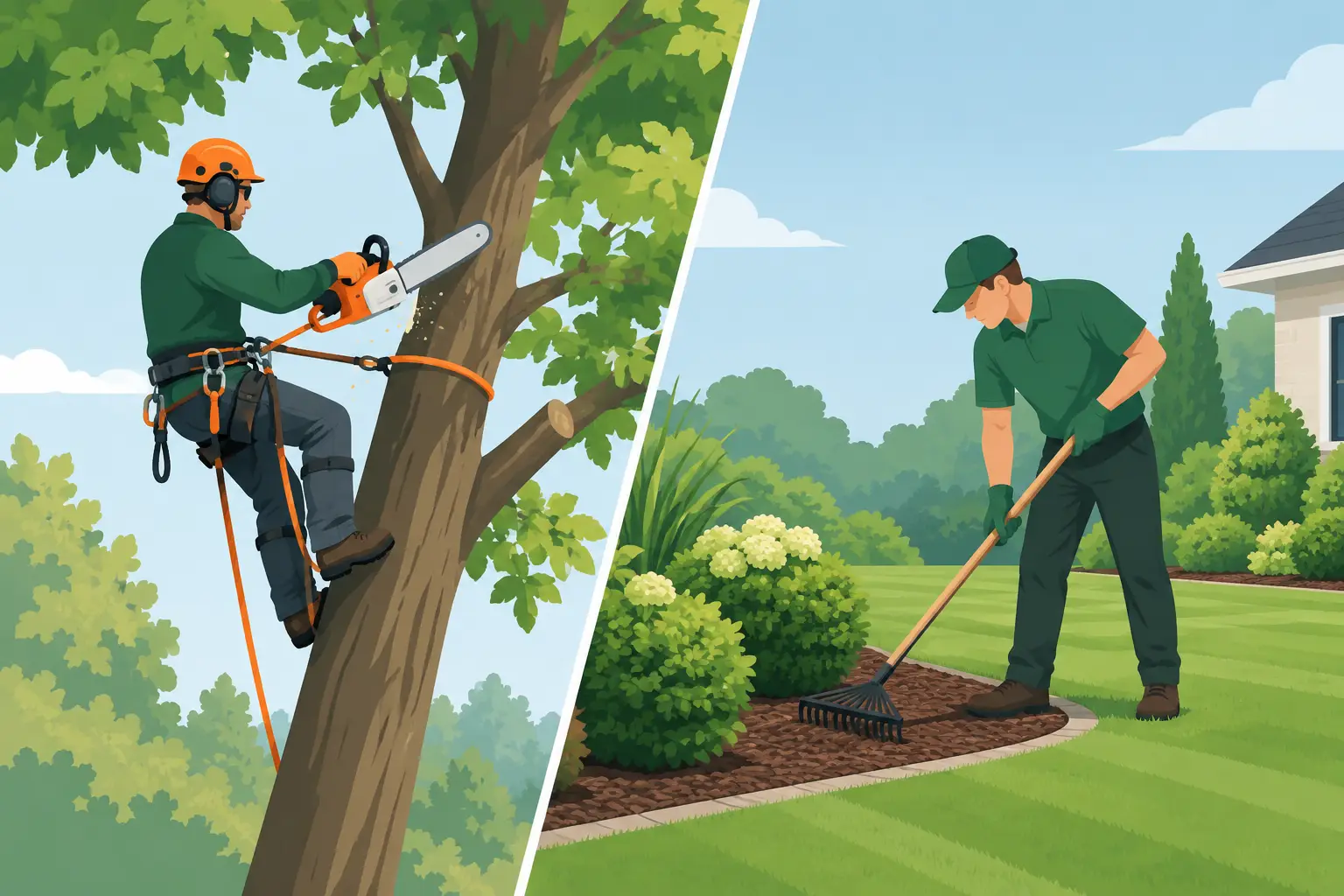
A landscaper works on the overall appearance and use of outdoor space. That may include lawn care, planting beds, mulch, shrubs, seasonal cleanup, drainage improvements, patios, and general property maintenance. Many landscapers also handle light trimming of hedges, ornamental trees, and low branches that are easy to reach safely.
An arborist is trained to assess and care for trees. The work involves more than cutting limbs. A qualified arborist looks at species, tree structure, decay, disease, root conditions, soil issues, storm damage, and the way a tree interacts with homes, driveways, power lines, and neighboring properties.
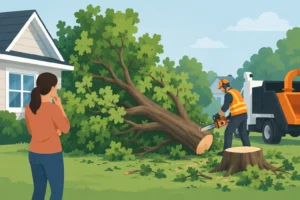
The difference matters most when a tree is mature, damaged, close to a structure, or large enough that a wrong cut could create a hazard. Tree work often requires climbing, rigging, bucket equipment, saw work, controlled lowering of limbs, and full insurance coverage. It is not a task to treat like routine yard maintenance.
When a Landscaper Is the Right Call
If your goal is to improve the appearance of healthy, manageable areas around the yard, a landscaper may be the best fit. They can help create planting plans, restore neglected beds, install mulch, maintain turf, trim shrubs, and make an outdoor space easier to enjoy.
Landscapers are also a sensible choice for small ornamental trees that need simple shaping, provided the work is within safe reach and does not involve major structural pruning. A crabapple or young flowering tree, for example, may need light cleanup to remove small dead twigs or branches crossing through the canopy.
A landscaper can also be helpful after tree work is complete. Once a hazardous tree is removed or a stump is ground out, landscaping can turn the cleared area into lawn, a garden bed, a walkway, or another usable part of the property.
The limitation is that landscaping services are not always equipped for high-risk tree decisions. If branches are large, the tree is tall, or the work takes place near a roof, fence, utility line, or busy parking area, it is time to bring in a tree professional.
When You Need an Arborist
Call an arborist when the health, stability, or removal of a tree is part of the problem. This is especially true after storms, when defects that were hidden by leaves become easier to see.
Warning signs include dead or hanging limbs, cracks where major branches join the trunk, mushrooms or decay at the base, peeling bark, a leaning tree, and roots lifting pavement. A tree does not need to be completely dead to be dangerous. A living tree with internal decay or poor branch structure can still fail without much warning.
An arborist is also the better choice for pruning mature trees. Proper pruning is selective. It removes problem limbs while preserving the tree’s structure and ability to recover. Cutting too much at once, topping the crown, or making improper cuts can stress a tree, invite decay, and cause weak regrowth that becomes another future hazard.
For trees growing over houses, garages, sheds, pools, driveways, or utility areas, experience matters. The job may require careful planning so each section is lowered safely rather than dropped. That protects the property below and gives the crew control over a difficult removal.
Tree Health Is Not Always Obvious
A tree can look green and still have serious problems. Some diseases and decay conditions begin inside the trunk or at the root system, where a homeowner may not notice them until a limb breaks or the tree begins to lean.
An arborist evaluates the whole tree, not just the visible branch that concerns you. That assessment can determine whether pruning is enough, whether a tree needs monitoring, or whether removal is the safest decision. Sometimes the answer is to leave a healthy tree alone. Good tree care is not about cutting every tree back. It is about making the right call for the tree and the property around it.
Stumps and Roots Need More Than a Landscaping Fix
After a tree comes down, the stump may seem like a minor cleanup item. In reality, it can keep an area from being used properly. Stumps interfere with mowing, attract insects as they decay, and make it difficult to replant, expand a driveway, install a fence, or restore a clean lawn.
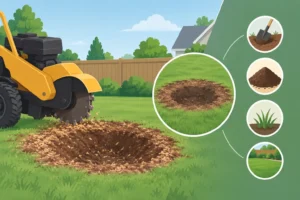
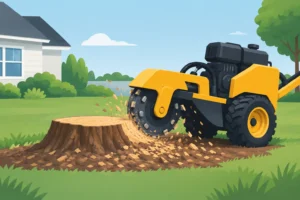
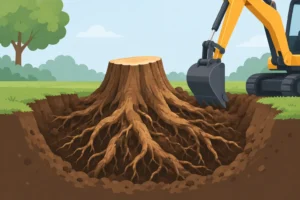
Some landscaping crews can grind a small stump, but deeper root issues may call for specialized equipment and a more thorough approach. Surface grinding removes the visible stump area. Root removal addresses the woody material below grade that can interfere with construction, hardscaping, or a new planting plan.
The right method depends on what comes next. If you simply want grass over an old stump location, grinding may be sufficient. If roots are in the way of a patio, foundation work, utility installation, or a new tree planting, deeper removal may be worth the additional work. At Stumpbuster LLC, the Plowrake root removal system is designed for jobs where leaving major roots behind is not a practical solution.
Questions to Ask Before Hiring Either Professional
Before scheduling work, explain the full issue rather than asking only for a price to cut or trim. Mention proximity to buildings, overhead wires, underground utilities, drainage areas, fences, and access limitations. A professional should ask questions and inspect the site before promising a solution.
For tree work, ask whether the company is insured and whether an arborist will evaluate the tree. Confirm what is included in the estimate: removal, branch cleanup, wood hauling, stump grinding, root removal, and final site cleanup are often separate parts of a project.
It also helps to be clear about your goal. Do you want more sunlight on the lawn, clearance over a roof, protection from a failing limb, room for a new garden, or a completely clean area after removal? The best service plan may involve both professionals at different stages.
A Better Way to Plan the Work
Many properties benefit from a simple sequence. First, have the tree evaluated and complete any necessary pruning, removal, stump grinding, or root removal. Then bring in landscaping work to rebuild the space around it.
That order avoids wasting money on fresh mulch, plantings, sod, or hardscape that may be damaged by heavy tree equipment later. It also gives you a clean view of the property so you can make better decisions about shade, drainage, privacy, and how the newly opened space will be used.
For example, removing an overgrown tree from beside a garage may reveal a drainage issue that was previously hidden. Grinding the stump and clearing problem roots gives a landscaper a workable site for grading, lawn restoration, or new low-maintenance plantings. Each trade does what it is built to do.
Choose Skill Based on the Risk
The arborist versus landscaper decision is not about one service being better than the other. It is about matching the professional to the work. Landscapers improve and maintain the outdoor spaces around your trees. Arborists protect the trees themselves and manage the risks they can create.
If a job involves mature trees, heavy limbs, decay, storm damage, stumps, or roots affecting usable space, start with an arborist. Once the tree work is done safely and the site is clean, landscaping can make the improvement visible every day.