A tree can come down in a day. Lawn damage can stick around for a full season.
That is why homeowners ask how to protect lawn during tree work before the saws start and the trucks roll in. It is a fair question. Tree removal, heavy trimming, stump grinding, and root work all put stress on turf. The good news is that lawn damage is not just part of the deal. With the right planning, equipment, and work methods, a lot of it can be avoided.
Why lawn damage happens during tree work
Most lawn damage comes from weight, traffic, and debris. A crew may need to bring in bucket trucks, chippers, mini skid steers, stump grinders, and trailers. Even when the operators know what they are doing, repeated passes across soft ground can leave ruts, compact the soil, and tear up grass.
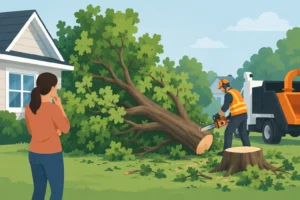
The tree itself also creates problems on the way down. Limbs dragged across the yard can scalp turf. Heavy wood dropped in the wrong place can gouge the lawn. Sawdust and chips are usually temporary, but stump grinding spoils and buried roots can affect how grass grows afterward.
Wet conditions make everything worse. A lawn that holds up fine in August may turn soft fast after a few days of rain. That is why every property has to be evaluated based on access, slope, soil moisture, and the type of tree work being done.
How to protect lawn during tree work before the job starts
The best lawn protection happens before the first branch is cut. A good contractor should walk the property with you and look at access points, tight areas, soft spots, irrigation heads, edging, patios, septic concerns, and any landscaping you want preserved.
This is the time to talk through the route for equipment. The shortest path is not always the best one. Sometimes it makes more sense to use a longer path with firmer ground rather than driving straight across the center of the yard. The same goes for where brush and logs will be staged before removal.
It also helps to identify features that are easy to miss once work begins. Invisible dog fence lines, sprinkler systems, low drainage areas, fresh seed, and decorative lighting can all be damaged if they are not pointed out in advance. A quick walkthrough can prevent an expensive repair later.
If timing is flexible, weather matters. Tree work on saturated ground is harder on the lawn, plain and simple. Waiting for drier conditions can make a major difference, especially for removals that require repeated equipment movement.
The right equipment makes a big difference
Not all tree work is equally hard on turf. One of the biggest factors is whether the crew matches the equipment to the property instead of forcing the property to accept oversized equipment.
For some jobs, climbing and rigging sections down is slower than dropping large pieces into an open yard, but it is much gentler on the lawn and surrounding beds. On tighter residential lots, that extra control often pays off. Smaller specialized machines can also reduce ground pressure compared with heavier general-purpose equipment.
Ground protection mats are one of the simplest ways to reduce damage. They spread weight out, help prevent rutting, and create a defined path for machines. Mats are not magic. On soaked ground, even mats have limits. But on many properties, they are a practical way to protect turf during removals, trimming, and cleanup.
Tire choice matters too. Rubber-tracked machines or lighter units can be a better fit than heavier wheeled equipment, depending on the job. The right setup depends on access and scope. A contractor with real field experience will know when to scale equipment up for safety and when to scale it down to reduce yard damage.
Smart work practices that protect grass
Once the job is underway, technique matters as much as equipment. Crews who care about the finished property do a few things differently.
They control where limbs and logs land. Instead of letting brush fall wherever it may, they set drop zones and use rigging when needed. They avoid dragging heavy material over the same strip of grass again and again. They keep traffic contained to a few protected areas instead of crisscrossing the entire lawn.
They also pay attention to cleanup as they go. Piles of brush left sitting too long can smother grass, especially in hot weather. Sawdust and wood chips should be cleaned up, not spread all over the yard. Stump grindings should not be treated like topsoil for lawn repair unless that is part of the plan, because they break down differently and can affect how new grass fills in.
Good operators also know when to stop and reassess. If the ground starts pumping under the machine tires or ruts are forming quickly, pushing through usually makes things worse. Sometimes the best decision is to change the route, add more protection, or adjust the work sequence.
How to protect lawn during stump grinding and root removal
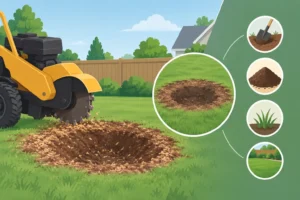
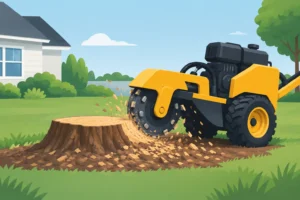
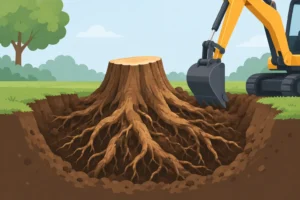
Tree removal gets most of the attention, but stump and root work can be just as hard on a lawn if it is handled poorly. A stump grinder has to access the site, and the process throws chips and grindings across the immediate area. That part is normal. The bigger issue is what happens after.
If the stump is ground and the pile is left too high or spread loosely over the lawn, the area can settle unevenly and stay messy. A cleaner finish usually means removing excess grindings or using them only where appropriate, then backfilling and grading the area for future seed or sod.
Root removal adds another layer. Surface roots may have already lifted turf or interfered with mowing, but deeper removal can disturb a larger section of yard. This is where experience matters. The goal is to remove what needs to go without tearing up more ground than necessary. Companies that do this kind of work regularly tend to leave a more predictable repair area than contractors who treat it like an afterthought.
What homeowners can do on their end
You do not need to manage the crew, but a little prep on your side helps. Move vehicles away from the work zone and clear patio furniture, planters, toys, or portable fire pits from likely access paths. Mark anything fragile or easy to overlook.
If you have irrigation, know where the heads and lines are, or at least where the control zones run. If the lawn was recently seeded or treated, say so before the job starts. That kind of information helps the crew choose a better route and avoid unnecessary damage.
It is also worth asking one direct question during the estimate: what steps will you take to protect the lawn? A serious tree service should be able to answer clearly. If the answer is vague, that tells you something.
Some lawn impact is unavoidable, but it should be manageable
There is a difference between minor disruption and careless damage. A little flattening of grass, some scattered sawdust, or a repair patch near a stump site can be normal. Deep ruts across the whole yard, torn-up turning areas, and avoidable landscape damage are not.
That is the real standard homeowners should use. Tree work is demanding, and no honest contractor should promise zero impact on every property. But they should have a plan to reduce that impact and leave the site in respectable shape.
On many jobs, the lawn recovers quickly when the ground is protected, traffic is controlled, and cleanup is done right. Where repairs are needed, they are usually limited and straightforward instead of turning into a full yard restoration project.
Choosing a company that respects the property
When you hire for tree work, you are not just hiring someone to cut wood. You are hiring them to operate safely on your property, around your home, and across the parts of your yard you have spent years maintaining.
That is why experience matters. An arborist-led company with the right equipment, proper insurance, and a long track record is more likely to think beyond the tree itself. In residential neighborhoods across New Haven County, that practical judgment makes a real difference. Stumpbuster LLC has built its reputation on that kind of careful, skilled work since 1985.
If you are planning tree removal, trimming, stump grinding, or root removal, ask how the job will be done, not just how much it will cost. A clean lawn after tree work usually starts with a crew that respects the ground before they ever leave the driveway.