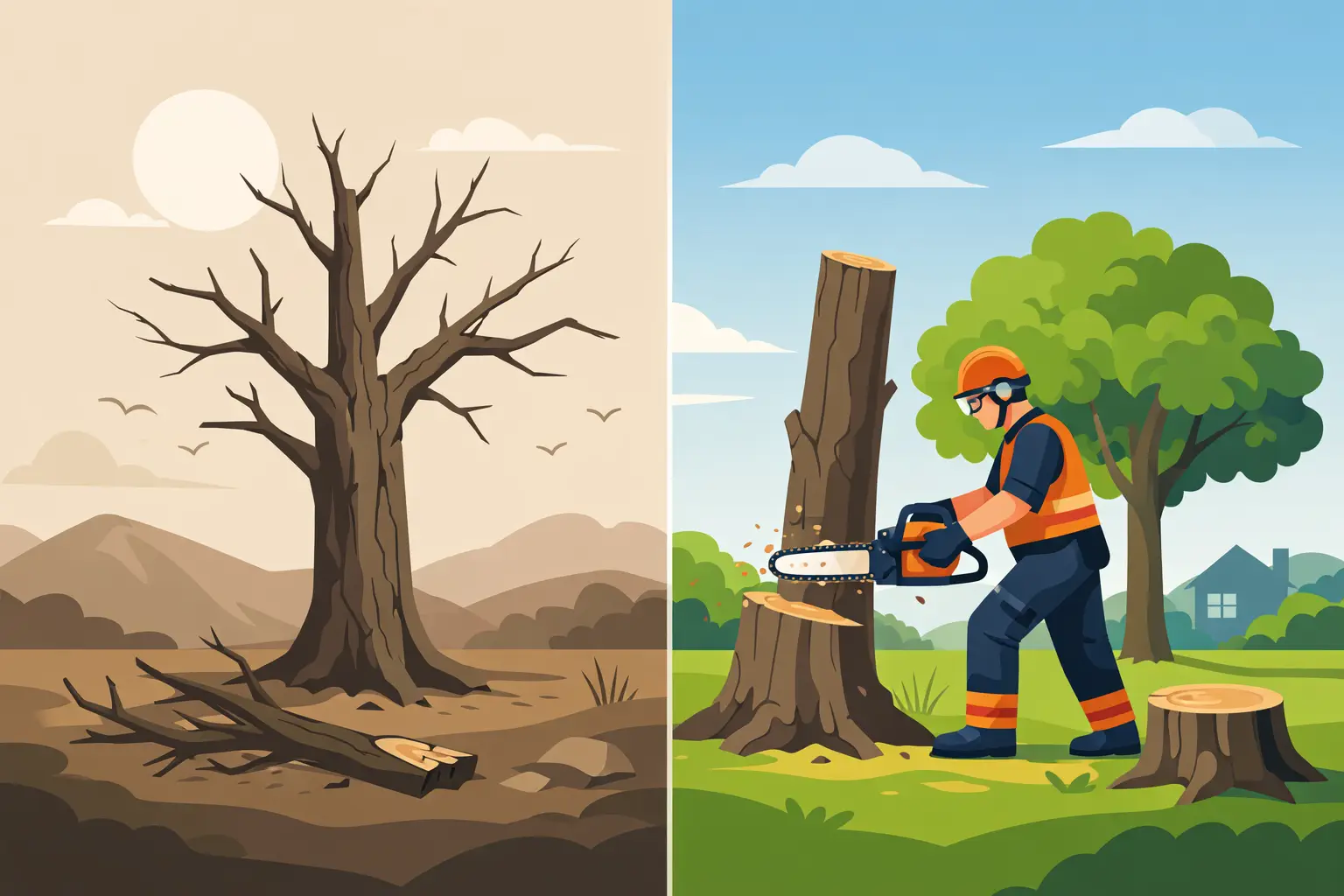
A dead tree can stand for a while and still look harmless, right up until the day it drops a limb over a driveway or leans harder after a storm. If you are asking should dead tree be removed immediately, the honest answer is usually yes – or at least assessed as soon as possible by a qualified tree professional.
That does not mean every dead tree is an emergency at this exact moment. It does mean a dead tree should never be ignored. Once a tree dies, it begins to lose structural strength. Wood gets brittle. Limbs weaken. The root system can start to fail. In Connecticut, where heavy snow, wind, coastal weather, and saturated soil all come into play, that process can speed up fast.
Should dead tree be removed immediately in every case?
Not in every single case, but in many cases, prompt removal is the safest move. The biggest factor is location. A dead tree in the middle of a wooded area with no target nearby is different from a dead maple hanging over a house, garage, play area, sidewalk, or parking lot.
Condition matters too. Some dead trees are standing with most of their trunk still solid. Others are already shedding bark, dropping limbs, cracking at the base, or showing signs of internal decay. The more deterioration you see, the less time you likely have.
Size also changes the risk. A small dead ornamental tree may be more manageable for a short period. A large dead oak or ash near a structure is a different situation entirely. Bigger trees carry more weight, more reach, and more chance of serious damage.
So the practical answer is this: a dead tree should be evaluated right away, and if it is near people, buildings, vehicles, wires, or high-use parts of the property, removal is usually the right next step.
Why dead trees become more dangerous over time
A living tree has moisture, flexibility, and active root support. A dead tree loses all three. That is why time rarely improves the situation.
As the wood dries out, branches become more likely to snap without much warning. The trunk can develop hidden cavities or split lines. At ground level, the roots may rot long before the full extent of failure is visible above grade. A tree that looked stable last month can become unstable after one hard rain or wind event.
Dead trees also become harder to remove safely the longer they stand. Climbing can be more dangerous because brittle limbs and compromised tops do not respond like healthy wood. In some cases, special equipment becomes necessary simply because the tree has deteriorated too much for standard removal methods.
That delay can turn a manageable job into a more complicated and costly one.
Signs a dead tree should come down as soon as possible
If the tree is leaning more than it used to, dropping large limbs, showing fungus around the base, losing bark in big sections, or has visible cracks in the trunk, that is not something to watch for another season. The same goes for a dead tree near utility lines, over a roof, beside a driveway, or close to a neighboring property line.
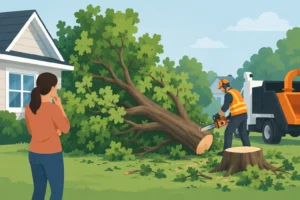
One common mistake property owners make is assuming a tree is only dangerous if it is already falling. In reality, dead trees often fail in pieces first. A heavy limb can do plenty of damage before the trunk ever comes down.
When removal might not be same-day urgent
There are cases where a dead tree does not need emergency service that afternoon. If it is small, isolated, away from structures, and not threatening any area people use regularly, scheduling removal in the near term may be reasonable.
But that is different from putting it off indefinitely. Even low-traffic parts of a property matter. Kids wander. Mowers pass through. Neighbors cut across lots. Weather changes. A tree that seems out of the way can still create liability and cleanup problems later.
If the tree is partly dead rather than fully dead, pruning may sometimes be an option. That depends on species, extent of decline, and whether the main structure is still sound. This is where having an arborist-led assessment matters. Not every declining tree needs full removal, but every truly dead tree deserves a serious look.
What happens if you leave a dead tree standing?
The short answer is risk keeps building.
You may see branch drop first. Then the trunk may start to split, especially after wind or snow load. Roots can loosen in wet soil and allow the entire tree to shift. If insects or fungi are involved, deterioration can move faster than expected. Even if the tree remains standing, debris cleanup becomes an ongoing issue.
There is also the property value side of it. A dead tree near the front yard, entrance, or parking area hurts appearance and sends a message of deferred maintenance. For commercial properties, that can affect how the site is perceived. For homeowners, it can make the whole yard look less cared for.
Then there is simple access. The longer you wait, the more surrounding vegetation grows in, the more brittle the tree gets, and the more removal conditions can worsen.
How Connecticut weather changes the answer
In New Haven County, weather is a major reason dead tree removal should not be pushed off. Strong coastal winds, nor’easters, thunderstorms, heavy wet snow, and spring saturation all put pressure on already compromised trees.
A dead tree that survives a calm summer can still fail in the first major storm of fall or winter. Frozen ground, icy work areas, and storm-related scheduling backlogs can also make timing harder once the weather turns. In other words, waiting for a better time often backfires.
If a dead tree is already near a structure or travel area, it is usually better to plan the removal before weather makes the decision for you.
Why a professional assessment matters
From the ground, some dead trees look straightforward. They are not always. Decay can be hidden inside the trunk. Root failure may be more advanced on one side. Nearby structures, fences, sheds, utility lines, and landscape features can limit how the tree should be taken down.
This is why dead tree removal is not a job for guesswork. Proper equipment, insurance, rigging knowledge, and cleanup planning matter. If stump removal or deeper root removal is also part of the plan, that should be discussed upfront so the site is fully usable afterward.
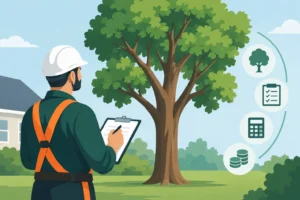
An experienced crew will look at the tree itself, the drop zone, access for equipment, and the safest removal sequence. They will also tell you if the tree needs priority scheduling or if it can be planned in a normal service window.
Should you remove the stump too?
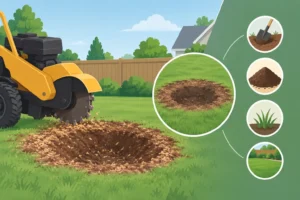
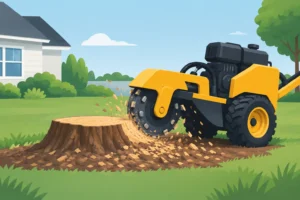
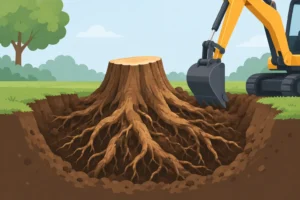
Often, yes. If the dead tree is being removed because it is unsafe, leaving the stump behind may solve only half the problem. Stumps get in the way of mowing, reduce usable yard space, attract insects, and can keep roots active underground for a time depending on species and condition.
For many property owners, full stump grinding or root removal makes the area cleaner, safer, and easier to restore. That is especially true if the tree was near a lawn, patio, driveway edge, or future planting area.
A thorough job leaves you with more than just a tree gone. It gives you your space back.
The right next step if you have a dead tree
If you suspect a tree is dead, do not wait for visible collapse. Get it inspected. If it is close to your home, business, vehicles, or commonly used parts of the yard, treat it as a priority.
For property owners in New Haven County, that means calling a qualified, insured tree service with real local experience – not a general contractor with a chainsaw. Companies like Stumpbuster LLC have seen how quickly a dead tree can shift from nuisance to hazard, especially around older homes, tight lots, and storm-prone areas.
The good news is most dead tree problems are very manageable when handled early. You get a safer property, a cleaner yard, and one less thing hanging over your head the next time the wind picks up.