A mature maple that suddenly looks like a row of bare stumps may seem smaller and safer, but the work can create a much bigger problem. Does tree topping hurt trees? In most cases, yes. Removing the top of a tree or cutting major branches back to blunt stubs puts severe stress on the tree, encourages weak regrowth, and can create future hazards near a home, driveway, or business.
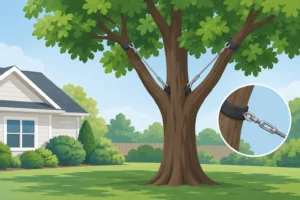
For property owners in New Haven County, the goal should not simply be to make a tree shorter. The goal is to manage its size, condition, and risk without sacrificing its structure. A licensed arborist can determine whether careful pruning, cabling, removal, or another solution makes the most sense for the tree and the property.
What Tree Topping Actually Means
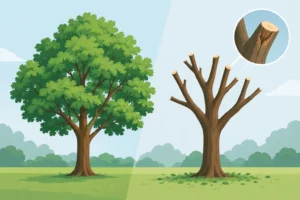
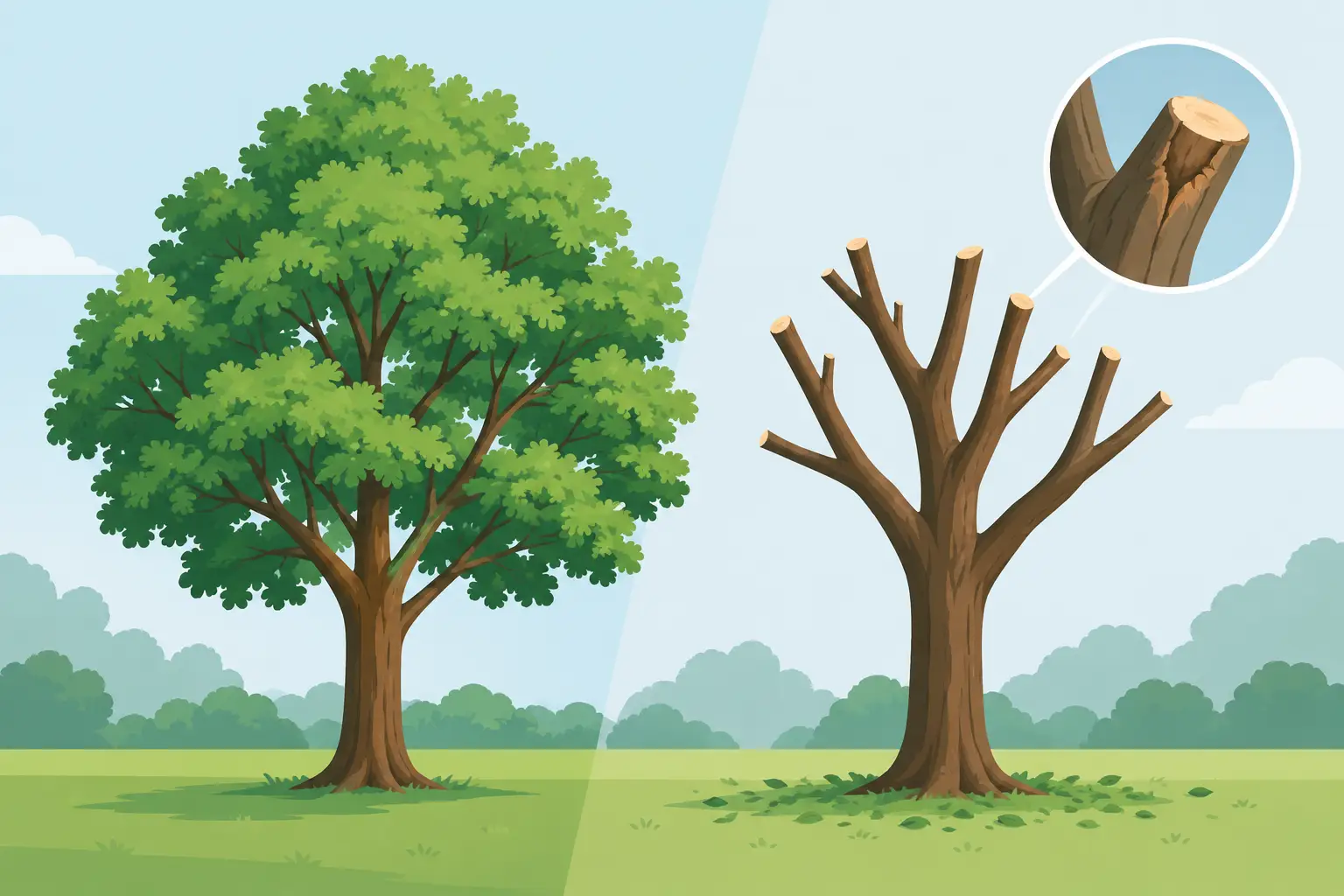
Tree topping is the practice of cutting off the upper portion of a tree or removing large branches at an arbitrary point, rather than pruning them back to a suitable lateral branch. It is sometimes called heading, stubbing, or rounding over. The finished tree often has flat-cut limbs, large wounds, and little natural shape.
Homeowners may request topping because a tree has grown too tall, blocks a view, shades a lawn, or seems too close to a roof or utility line. Those are reasonable concerns. Topping is usually not the right answer because it does not correct the underlying issue in a healthy, lasting way.
A properly pruned tree still has a balanced canopy and branches that can support future growth. A topped tree is forced to react quickly to the loss of a major part of its food-producing canopy.
Why Tree Topping Hurts Trees
Leaves are the tree’s food factory. When a large part of the canopy is removed at once, the tree loses the ability to produce and store energy efficiently. It may survive the initial cutting, but survival is not the same as good health.
The tree often responds by sending out many fast-growing shoots below each cut. These shoots can make the tree look full again within a few seasons, leading some people to believe topping worked. The new limbs, however, are commonly attached near the surface of the old branch rather than growing from a strong natural union. As they become longer and heavier, they are more likely to split or fail in wind, snow, or ice.
Large topping cuts also leave large wounds. Trees do not heal wounds the way people do. They compartmentalize damage and grow around it over time. A broad, poorly placed cut can be difficult for a tree to seal off, giving decay organisms an opening. Internal decay may continue long after the outside of the tree has sprouted new shoots.
Topping can also cause sunscald. Branches and bark that were shaded by the upper canopy are suddenly exposed to intense sunlight. That exposure can damage bark and further weaken an already stressed tree.
Does Tree Topping Hurt Trees Near Homes?
It can make a tree near a structure less safe, not more safe. This is the part that matters most when a tree hangs over a roof, parking area, patio, or sidewalk.
A topped tree may be temporarily shorter, but it often develops dense, poorly attached regrowth at the exact height where the owner was trying to reduce risk. Within a few years, those shoots may reach upward quickly and require repeated cutting. Meanwhile, decay around the original cuts can reduce the strength of the remaining limbs or trunk.
Repeated topping creates a cycle of stress, weak growth, and ongoing maintenance. In some cases, a tree that could have been managed with selective pruning eventually becomes a removal candidate because its structure and health have been compromised.
When a Major Reduction May Be Necessary
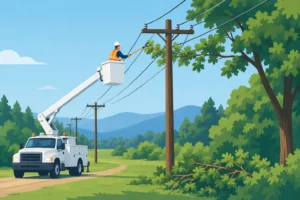
There are situations where significant cutting is unavoidable. A storm may break the upper crown. A tree may have major decay, lightning damage, or a split leader. A limb may have failed over a home or driveway and require emergency work. Utility-line clearance is another specialized situation, although work around energized lines should be left to properly qualified crews.
Even then, the answer is not automatically to top the tree. An arborist evaluates what remains: the species, trunk condition, root health, branch structure, decay, target areas below, and the tree’s ability to recover. Sometimes a reduction cut can lower the canopy by pruning back to healthy lateral branches. Other times, removal is the safer and more honest recommendation.
There is also a difference between topping and pollarding. Pollarding is a long-term, carefully maintained system begun on certain suitable tree species while they are young. It involves repeated cuts at established points and requires regular professional maintenance. It is not a rescue method for an overgrown mature tree.
Better Options Than Topping a Tree
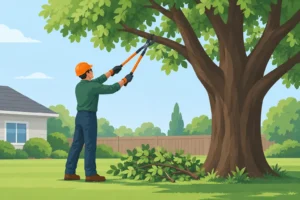
The right alternative depends on why the tree is a concern. If limbs are reaching toward a roof, selective crown reduction or clearance pruning may create needed space while keeping strong branch connections. If the canopy is overly dense, thinning may improve light penetration and air movement without stripping the tree bare.
Dead, damaged, rubbing, or poorly attached limbs can be removed to improve safety and appearance. For a tree that leans, has decay, or has root damage, an inspection may show that pruning alone will not solve the problem. Removal may be the responsible choice when the likelihood of failure is too high.
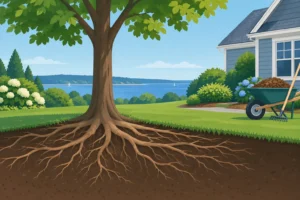
Planting the right tree in the right location also prevents future conflicts. A small ornamental tree may work beside a house where a fast-growing silver maple, poplar, or willow will eventually outgrow the space. For existing mature trees, thoughtful pruning at the right intervals is far less damaging than waiting until drastic cuts feel necessary.
Signs a Topped Tree Needs Attention
If a tree was topped years ago, do not assume it needs to come down immediately. Many topped trees can be monitored or improved with a practical management plan. Still, certain signs call for a professional assessment: mushrooms or soft wood around old cuts, large cracks, peeling bark, dead sections in the crown, heavy shoots growing from old stubs, or branches hanging over high-use areas.
Pay close attention after severe weather. Connecticut’s heavy snow, coastal winds, and summer storms can expose weaknesses in previously topped trees. A limb that looks acceptable from the ground may have decay or poor attachment that is not obvious without a closer inspection.
Do not try to correct old topping cuts by climbing the tree or removing large regrowth yourself. The work can be dangerous, and cutting the wrong shoots can worsen the tree’s balance. Professional tree crews have the equipment and experience to evaluate access, control limbs safely, and clean up the site properly.
Choosing Pruning That Protects Your Property
Good tree care balances the condition of the tree with the needs of the property. Sometimes that means preserving a mature shade tree with careful pruning. Sometimes it means reducing a limb away from a roof. And sometimes it means removing a declining tree before it damages a structure or injures someone.
At Stumpbuster LLC, licensed arborist guidance helps property owners make that call based on the actual tree, not a one-size-fits-all cutting method. A clear assessment can prevent unnecessary damage, repeated maintenance, and avoidable safety problems.
If a tree has become too large for its location, act before someone recommends cutting it down to stubs. A proper evaluation can identify a safer path that protects your home, keeps your yard looking cared for, and gives a healthy tree its best chance to remain an asset for years to come.