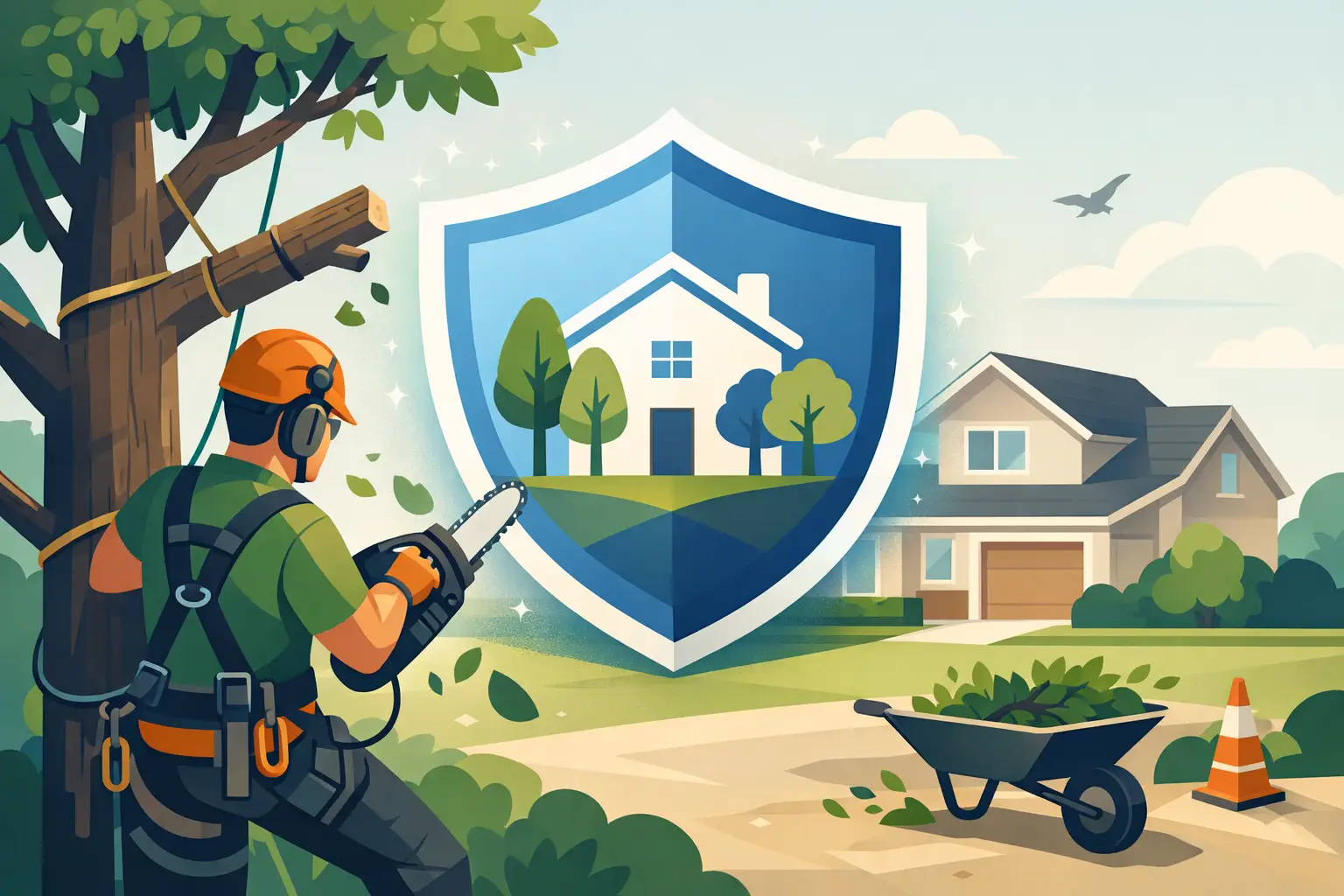
A tree can look manageable from the ground and still weigh thousands of pounds, hang over a roof, or sit within inches of power lines. That is why arborist insurance is not a minor detail to check after you receive an estimate. It is one of the first signs that a tree service is prepared to take responsibility for the work, the crew, and your property.
For homeowners and commercial property managers in New Haven County, hiring an insured tree company helps reduce the risk that an already difficult tree problem becomes an expensive dispute. Insurance does not replace careful planning or skilled work, but it is a necessary layer of protection when crews are climbing, rigging, cutting, grinding, and operating heavy equipment near homes, fences, driveways, and utility lines.
Why Arborist Insurance Matters for Tree Work
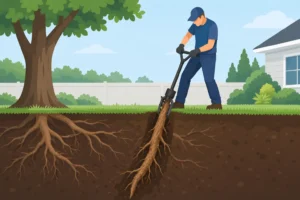
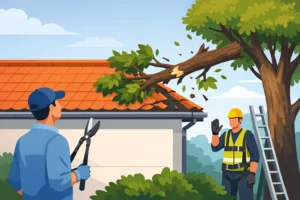
Tree work is different from routine landscaping. A trimming job may involve a climber working 40 feet above the ground. A removal may require sections of trunk to be lowered with ropes between a house, garage, garden, and overhead wires. Stump grinding and root removal bring powerful equipment close to buried utilities, pavement, irrigation lines, and established plantings.
Even a careful crew can encounter conditions that are hard to see from the street: internal decay, shifting soil, hidden metal in a trunk, weak limb unions, or wind that changes during the job. Proper arborist insurance helps make sure an accident is handled through the contractor’s coverage rather than being pushed onto the property owner.
The lowest estimate is not always the lowest-cost choice. An uninsured operator may charge less because they have less overhead, but that savings can disappear quickly if a worker is injured, a vehicle is damaged, or a limb strikes a structure. Tree service should be priced for safe equipment, qualified labor, careful cleanup, and accountable coverage.
The Coverage a Tree Service Should Carry
Insurance needs can vary by company size, job type, and equipment used. Still, a professional tree contractor should be able to explain its coverage clearly and provide current documentation when requested. The main policies to ask about are general liability, workers’ compensation, and commercial auto coverage.
General Liability Insurance
General liability coverage is intended to respond when the contractor causes damage to someone else’s property or creates an injury to a third party. For tree work, that could mean a branch damages a roof, a falling section hits a fence, or equipment causes damage to a driveway or parked vehicle.
Coverage limits matter. A small policy may be inadequate for work around high-value homes, commercial buildings, pools, retaining walls, or extensive landscaping. There is no one limit that fits every property, but a company should carry coverage appropriate for the size and risk of the work it accepts.
Liability insurance is not a promise that every possible issue will be automatically covered. Policies have terms, exclusions, and claim procedures. It does mean, however, that the company has taken a basic professional step toward protecting customers when its operations cause covered damage.
Workers’ Compensation Coverage
Workers’ compensation is especially important in the tree industry. Climbers, ground crews, and equipment operators face real risks from falls, chainsaws, falling wood, uneven terrain, and machinery. If a worker is hurt while performing work on your property, you do not want uncertainty about who is responsible for medical costs and lost wages.
Do not assume a company is covered simply because it has a business name, a truck, or a polished estimate. Ask directly whether the crew members working at your property are covered by workers’ compensation. A legitimate contractor should treat that question as reasonable, not inconvenient.
Commercial Auto and Equipment Coverage
Tree companies commonly bring trucks, trailers, chippers, stump grinders, loaders, and other specialized equipment to a job. Commercial auto coverage applies to work vehicles, while equipment coverage may protect company-owned machinery. These policies do not replace liability coverage, but they show that the contractor is operating as a real business with professional assets to maintain.
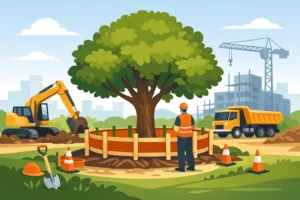
For tight residential driveways, shared access lanes, or commercial lots with active traffic, discuss equipment access before work starts. Good planning helps prevent damage in the first place, which is always better than filing a claim after the fact.
How to Verify a Contractor’s Insurance
A verbal assurance is not enough. Before scheduling major tree removal, pruning, stump grinding, or root work, ask the company for a certificate of insurance. This document typically identifies the insured business, the insurer, the policy dates, and the types of coverage in place.
Check that the business name on the certificate matches the company providing the estimate. Review the effective and expiration dates, especially if the estimate has been sitting for several weeks. If the certificate is outdated or the names do not match, ask for clarification before approving the work.
For a larger removal or commercial project, you may also ask that your property or organization be listed as a certificate holder. Some projects call for additional insured status, but that is a separate request and should be discussed with the contractor and, when appropriate, your own insurance agent or property manager.
It is also reasonable to call the insurance agency shown on the certificate to confirm the policy is active. Do not rely only on a screenshot, a file with unclear dates, or a statement that coverage is “being renewed.” A responsible tree company understands that customers need to verify these details.
Insurance Does Not Replace Arborist Skill
Insurance is essential, but it is only one part of choosing the right tree service. A fully insured contractor can still make poor decisions if they lack training, planning, or experience with difficult removals. The strongest choice combines valid coverage with knowledgeable site evaluation, proper equipment, trained crews, and a clear plan for protecting the property.
Ask how the company will control the work area, where debris will be staged, and how sections of the tree will be lowered. Discuss access for trucks and grinders, especially when gates are narrow or roots are near patios, walkways, and underground systems. If the tree is near utility lines, the company should explain the appropriate safety approach rather than treating it like a standard backyard removal.
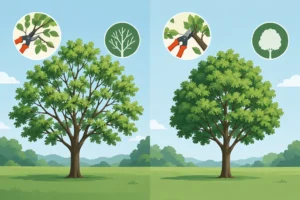
For pruning, experience matters just as much. Improper cuts can weaken a tree, encourage decay, or leave it looking stripped and unnatural. An arborist-led company can help distinguish between a tree that needs selective trimming, a tree that needs support or monitoring, and one that has become too hazardous to keep.
Questions to Ask Before You Sign an Estimate
A clear conversation before work begins prevents many problems later. Along with requesting proof of insurance, ask whether debris removal and final cleanup are included, whether stump grinding is separate from tree removal, and what happens to surface roots after the stump is ground.
You should also ask how damage to existing landscaping will be handled and whether there are conditions that could change the price once the crew arrives. A detailed estimate should identify the tree or area being worked on, the agreed scope, and any limitations such as inaccessible locations, hidden hazards, or permits that may be required.
Be cautious when a contractor pressures you to decide immediately, refuses to put the scope in writing, or offers a price far below every other qualified estimate. Storm damage can create urgency, but urgency is not a reason to skip basic verification. A dangerous tree needs prompt attention, not careless attention.
A Better Standard for Local Tree Service
The right contractor protects more than the visible parts of your yard. They protect the home, driveway, landscape, neighboring property, and people around the work zone. That takes experienced judgment, the right machinery, a disciplined crew, and active insurance coverage.
Stumpbuster LLC has served New Haven County properties since 1985 with licensed arborist leadership, insured tree care, and thorough stump and root removal. Whether a tree is threatening a structure, branches are overgrowing your roofline, or an old stump is taking up usable yard space, start by asking direct questions and requesting a clear estimate. A professional company will be ready with straight answers before the first cut is made.