A tree does not have to fall all the way down to become a serious problem. In many cases, hazard tree removal starts with recognizing the warning signs early – before a leaning trunk, split limb, or damaged root system turns into property damage or an injury.
For homeowners and property managers in New Haven County, this usually becomes urgent after a storm, a stretch of saturated ground, or years of unnoticed decline. A mature tree can add beauty and shade to a property, but when it becomes unstable, the risk changes fast. The real question is not whether the tree once looked healthy. It is whether it is still safe to keep standing now.
What hazard tree removal really means
Hazard tree removal is the removal of a tree that presents a meaningful risk to people, structures, vehicles, utility areas, or high-traffic portions of a property. That risk might come from visible damage, internal decay, root failure, storm impact, or poor structure that makes failure more likely.
Not every imperfect tree is a hazard. Trees can live with some dead wood, minor lean, or surface damage for years. The difference comes down to likelihood and consequence. If a tree or major limb is likely to fail and there is something valuable within reach, it deserves prompt attention.
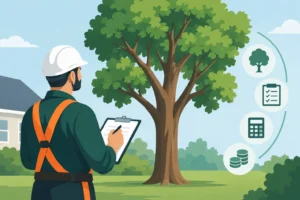
This is where experienced evaluation matters. Tree work is full of gray areas. One tree needs immediate removal. Another can be pruned, reduced, monitored, or cabled. A contractor who only knows how to cut may miss that distinction. An arborist-led company is looking at condition, structure, target area, access, and the safest way to solve the problem.
Common signs a tree may be hazardous
Some warning signs are obvious. Others are easy to overlook until the damage is advanced.
A fresh lean is one of the biggest red flags, especially if the tree did not lean that way before. Soil heaving or cracking near the base can point to root plate movement, which often means the tree is losing its hold in the ground. If that tree is near a house, driveway, garage, patio, or street, waiting is a gamble.
Large dead limbs high in the canopy are another common issue. A limb does not need to be enormous to cause damage. Even a moderate-sized branch can crush a fence, damage a roof, or injure someone below. If dead wood is concentrated on one side, it can also signal broader decline.
Cracks in the trunk, split unions where codominant stems meet, hollow sections, fungal growth at the base, and bark peeling away from dead areas can all point to structural weakness. Sometimes the tree is still leafing out, which gives a false sense of security. Green leaves do not always mean sound wood.
Root problems deserve just as much attention. Construction damage, repeated trenching, soil compaction, and grade changes can weaken a tree long before symptoms show up in the canopy. When roots are compromised, the whole tree becomes less predictable.
Storm damage changes the timeline
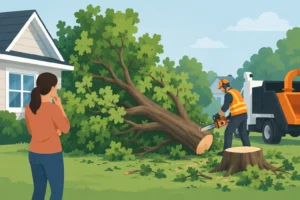
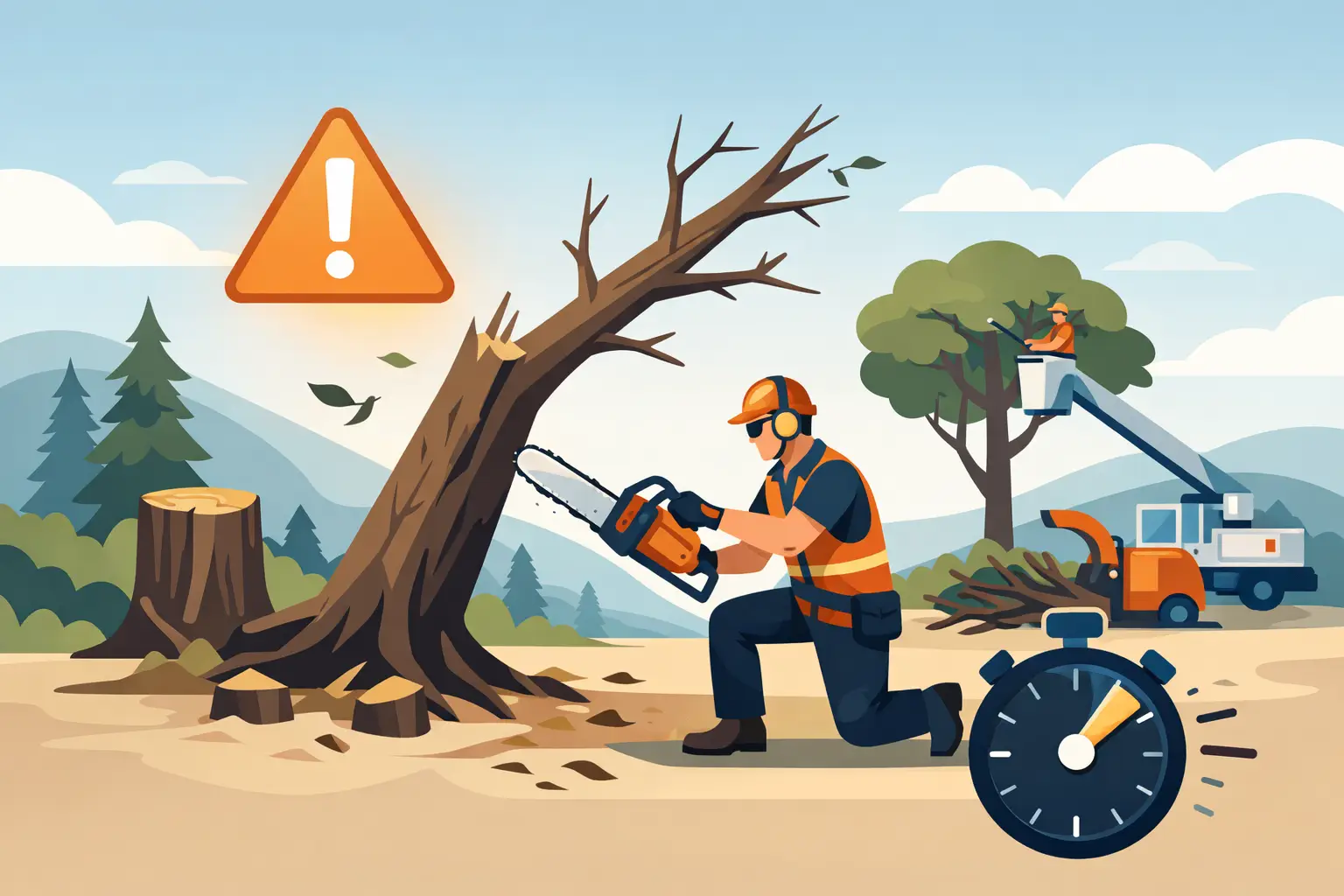
After a windstorm or heavy wet snow, trees can go from manageable to dangerous overnight. A limb may be hanging but not fully detached. A trunk may be twisted, cracked, or partially uprooted. In these cases, hazard tree removal is not routine maintenance. It is risk control.
The mistake many property owners make is assuming a tree that remained standing after the storm is fine. Sometimes the storm only starts the failure. Hidden splits, stressed roots, and weakened attachment points can give way days or weeks later.
That is why post-storm assessment matters. If a tree is over a home, stretched across another tree, or lodged near wires, it is not a do-it-yourself situation. The weight, tension, and unpredictable movement involved in damaged trees can make even a small job dangerous.
Why removal is not always the first answer
A good tree company should not recommend taking every questionable tree down. Some hazards can be reduced through strategic pruning, crown reduction, cabling, or simply removing the failed section while preserving the rest of the tree.
But there are limits. When the trunk is significantly compromised, when root failure is underway, or when the tree is too close to a valuable target to tolerate uncertainty, removal is often the safer choice. Mature trees are worth preserving when possible, but safety has to come first.
This is one reason local experience matters. Trees in Connecticut deal with coastal storms, heavy snow loads, wet spring soils, and seasonal freeze-thaw stress. A practical assessment comes from seeing the same failure patterns over many years, on properties similar to yours.
What a professional hazard tree removal job should include
The removal itself is only part of the job. The planning behind it is what protects the property.
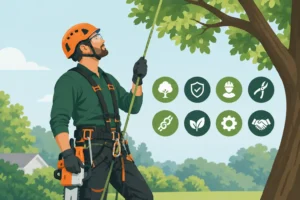
A professional crew should evaluate drop zones, rigging options, access points, equipment needs, and nearby structures before cutting begins. On tight residential lots, removal often has to be done in sections, with controlled lowering instead of letting material fall freely. That takes skill, communication, and the right setup.
Insurance matters too. Tree work involves heavy wood, elevated cutting, climbing, rigging, and machinery. If a company is not properly insured, the property owner may be exposed to risks they did not expect.
Cleanup also tells you a lot about the quality of the service. A thorough job means brush is removed, wood is managed as agreed, and the site is left in workable condition instead of looking like the crew rushed out as soon as the trunk hit the ground.
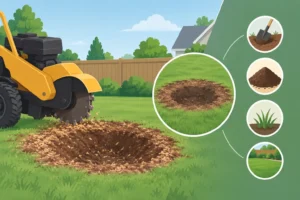
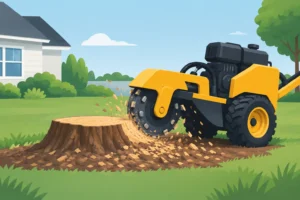
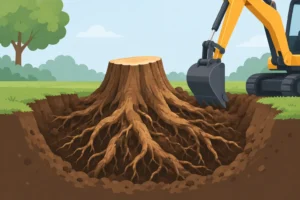
If the tree is being removed because of root instability or long-term decline, stump and root issues may need attention next. Leaving a large stump in place can keep the area unusable and create another obstacle in the yard or landscape bed. On some properties, full restoration of the space matters almost as much as getting the tree down.
Hazard tree removal near homes and driveways
Most calls for hazard work involve a target underneath the tree. It might be a roofline, parked vehicles, a front walk, a garage, a pool area, or a neighbor’s fence. Once that target is in range, the tolerance for risk gets smaller.
Trees growing close to homes present a special challenge because there is little room for error. A removal may require climbing, roping down limbs piece by piece, protecting lawn areas from equipment damage, and coordinating the work around narrow access. The right approach depends on tree size, species, condition, and surroundings.
This is not a place to choose based on the lowest number alone. Hazard work is where experience shows. A cheaper bid does not help if the company underestimates the complexity, damages the property, or leaves a half-finished problem behind.
When to call for an inspection
If you notice a sudden lean, cracked limbs, dead sections in the canopy, mushrooms at the base, exposed roots, or storm damage, it is worth having the tree looked at sooner rather than later. The same applies if a tree has started overhanging the house more aggressively as it grows, or if nearby excavation has disturbed the root area.
You do not need to wait for obvious failure. In fact, the best time to call is when you are unsure. Early evaluation gives you more options. Once a tree is actively failing, the work becomes more urgent, more complex, and sometimes more expensive.
For property owners in towns like North Haven, Hamden, Branford, Guilford, Wallingford, and surrounding parts of New Haven County, local conditions matter. Soil type, lot size, storm exposure, and tree species all affect how a hazard should be handled. That is why many customers prefer an established company with arborist oversight instead of a general contractor who treats every tree the same.
At Stumpbuster LLC, that practical approach comes from decades of field experience, licensed arborist leadership, and doing the work cleanly and safely on real residential and commercial properties.
If a tree on your property does not look right, trust that instinct and have it checked. The best hazard tree removal job is the one done before the tree makes the decision for you.