If you have a stump in the yard that keeps trying to come back, the question is simple: can stump grinding stop regrowth? In many cases, yes – but not always completely, and not with every tree species. The real answer depends on how aggressively that tree wants to survive, how deep the stump is ground, and whether major roots are left in place.
That matters more than most property owners expect. A stump can look gone from the surface and still send up shoots from the remaining wood or root system. If your goal is to reclaim yard space, protect nearby hardscaping, or avoid dealing with repeated sprouting, it helps to know what stump grinding actually does and where its limits are.
How stump grinding works
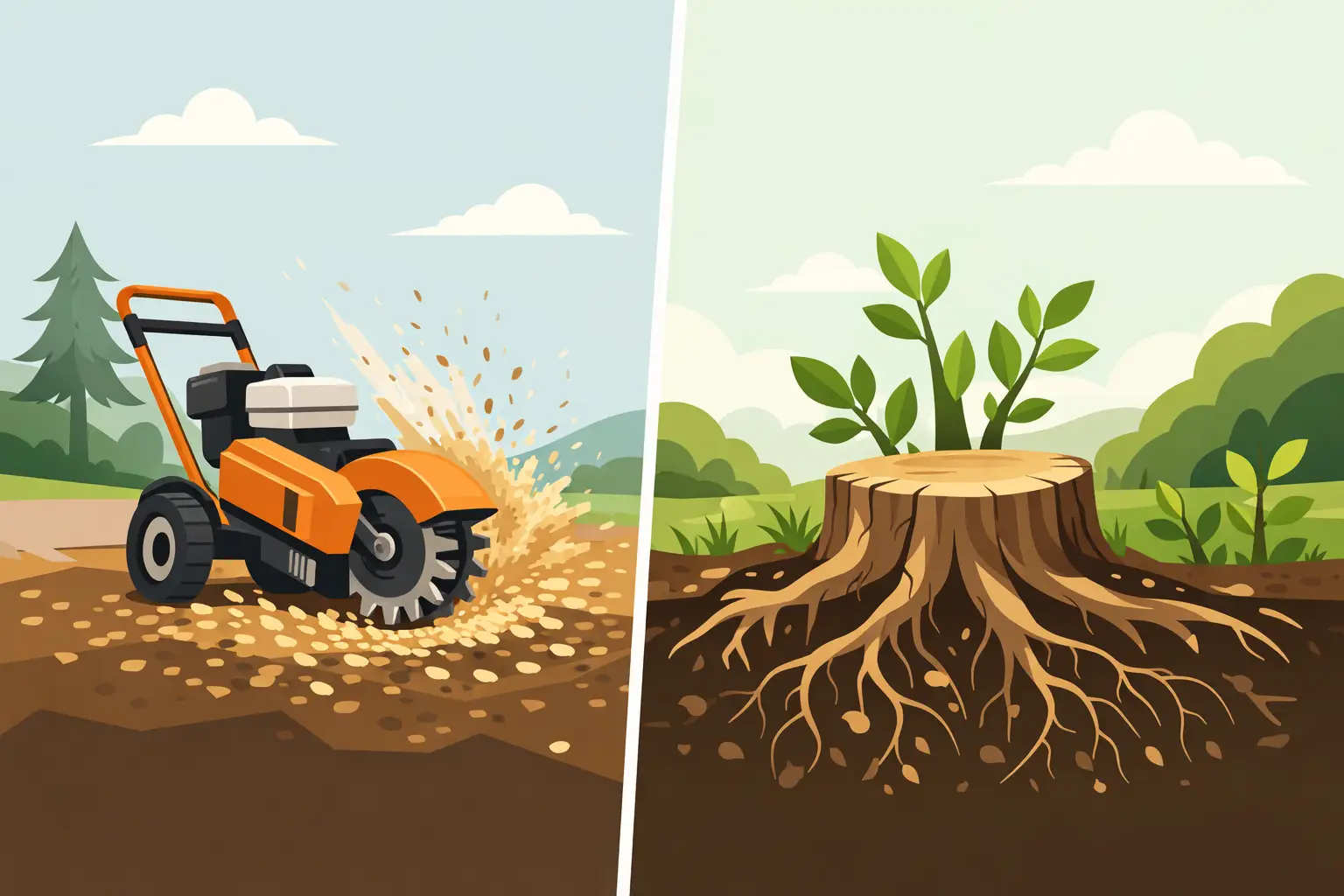
Stump grinding removes the visible stump by cutting it down below grade with a specialized machine. The grinder chips away the wood until the stump sits under the soil line, which allows the area to be covered and, in many cases, replanted or restored.
For a lot of homeowners, that solves the main problem. The trip hazard is gone, mowing gets easier, and the yard looks cleaner. But stump grinding is not the same thing as full root extraction. The larger roots often remain underground, and that is where regrowth can still become an issue.
Can stump grinding stop regrowth for good?
Stump grinding can stop regrowth for good in some situations, especially when the tree species is less likely to sprout and the stump is ground thoroughly enough to destroy the living growth tissue. But with certain trees, grinding reduces the chances of regrowth more than it guarantees elimination.
Species makes a big difference. Some trees are stubborn. They naturally respond to injury by sending up suckers from roots or from the remaining stump base. Others are less persistent and typically die off once the main stump is removed below grade.
Age and condition matter too. A weakened or declining stump may be far less likely to push out new growth than a recently cut, healthy tree with a strong root system still carrying stored energy.
So the practical answer is this: stump grinding is often the right first step, and in many yards it is enough. But if the tree was known for aggressive suckering or if roots are spreading near lawn, beds, or sidewalks, extra removal may be the better long-term fix.
Why some stumps still sprout after grinding
When a stump sprouts after grinding, it usually means live tissue remains connected to an active root system. The grinding removed what you saw above ground, but the tree still has enough stored energy below grade to try again.
This is especially common with species that regenerate readily. Instead of one central stump sending up a shoot, you may see multiple small shoots popping up around the original tree site or along roots several feet away. That can surprise property owners who thought the problem was finished.
Depth also plays a role. A shallow grind may improve appearance without removing enough of the stump structure to shut down regrowth. If the surface is ground but the lower crown area remains alive, the tree may continue to respond.
The difference between grinding and full removal
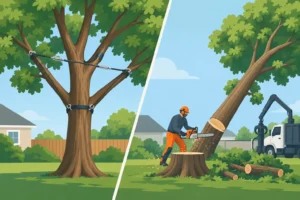
This is where expectations matter. Stump grinding is usually the faster, less disruptive option. It handles the visible stump efficiently and avoids the larger excavation that comes with pulling out the root ball and major roots.
Full removal goes further. It targets more of the root mass and the underground structure that can support future sprouting. That can be the better route when you are dealing with invasive roots, planning new construction, installing a patio, or trying to eliminate a species known for regrowth.
The trade-off is that full root and stump removal is more involved. It can disturb more soil, require heavier equipment, and create a larger repair area afterward. On some properties, that is worth it. On others, a properly done grind gives the best balance of cost, cleanup, and results.
Which trees are more likely to regrow?
Some trees are far more likely to fight back after cutting or grinding. Species that commonly send up suckers tend to be the main troublemakers. Depending on the property, these can include maple, poplar, willow, tree-of-heaven, black locust, and certain ornamental trees.
Other species are less likely to return once the stump is ground below grade. That is why a one-size-fits-all answer never holds up in the field. The right approach depends on the tree that was removed, where it was growing, and what you want to do with the space next.
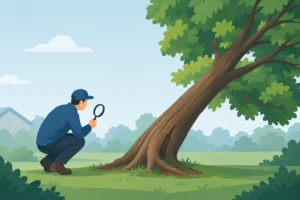
An arborist-led company looks at more than just the stump diameter. The root behavior, surrounding grade, access, utilities, and future use of the area all affect whether grinding alone is enough.
When stump grinding is usually enough
If the tree is not known for heavy suckering, the stump is ground deep enough, and the remaining roots are not causing trouble, grinding is often enough to stop meaningful regrowth. You may still see an occasional small shoot, but not the kind of persistent return that creates an ongoing problem.
This is common in yards where the main goal is to remove the eyesore, regain mowing access, and improve appearance without tearing up the surrounding lawn. For many residential properties, that is the practical choice.
It also works well when the area does not need immediate deep excavation for a foundation, walkway, or other project. In those cases, grinding solves the visible issue while keeping disruption lower.
When you may need more than grinding
If the stump came from a species with aggressive roots or repeated suckering, grinding may not be the last step. The same goes for sites where roots are lifting pavement, running through planting beds, or interfering with planned landscaping.
This is where deeper removal can make sense. If the goal is not just to hide the stump but to clear the area as fully as possible, root removal may be the better investment. Stumpbuster LLC has seen this often on older Connecticut properties, where mature trees have had decades to spread roots through tight yards, stone edges, and lawn areas.
A more thorough approach can save time and frustration later. Instead of chasing shoots for the next few growing seasons, you deal with the source more directly.
What to expect after the stump is ground
After grinding, the area is typically filled with grindings and can be topped with soil depending on the plan for restoration. The site will look dramatically better right away, but the underground wood and roots do not disappear overnight. They break down over time.
That means the area may settle somewhat, and it may not be the best place for immediate premium landscaping unless it is prepared properly. If you are planning to seed, sod, plant, or build over the spot, it is worth discussing that before the work starts.
If small sprouts appear later, they are often manageable early. But repeated sprouting is a sign that more living root structure remains than expected.
How to improve the chances of stopping regrowth
The best results come from matching the method to the tree and the property. A thorough stump grind performed by an experienced operator is far more effective than a quick cosmetic pass. Proper depth matters. So does understanding whether the root system is likely to keep pushing growth.
It also helps to be clear about your goal. If you just want the stump gone from sight, grinding may be perfect. If you want to eliminate the chance of future shoots as much as possible, deeper removal of stump and roots may be the smarter route.
That is why experience matters in this type of work. A contractor should be able to tell you whether your stump is a straightforward grind or a candidate for more complete extraction based on species, size, and location.
The bottom line for property owners
So, can stump grinding stop regrowth? Yes, often it can. But it is not a blanket guarantee, especially with species that naturally sucker or with stumps that still have a strong, healthy root system underground.
The good news is that this is a solvable problem when the work is matched to the actual tree and site conditions. If you want the cleanest long-term result, the right answer is not guessing – it is having the stump evaluated by someone who knows what that species is likely to do next.
A good stump job should leave you with more usable space, fewer headaches, and a yard that is ready for the next step.