The morning after a heavy storm is when a lot of property owners find out which trees were already under stress. A cracked oak over the driveway, a split limb hanging above the roof, or a fallen tree blocking access can turn into a safety issue fast. Storm damaged tree cleanup is not just about clearing debris. It is about making the property safe, preventing more damage, and knowing which trees can be saved and which ones need to come down.
In New Haven County, storms can leave behind more than scattered branches. Mature trees, saturated ground, strong wind, and snow or ice loading can create hidden failures that are easy to miss from the ground. A limb may still be attached but split through the union. A tree may still be standing but leaning because the root plate has shifted. That is why cleanup after a storm needs more than a chainsaw and a pickup truck.
What storm damaged tree cleanup really involves
Good storm damaged tree cleanup starts with hazard assessment. Before any cutting begins, the site needs to be checked for broken tops, hanging limbs, cracked trunks, uprooted trees, and contact with structures, fences, sheds, or service lines. The first goal is simple – keep people away from unstable wood and identify what can move without warning.
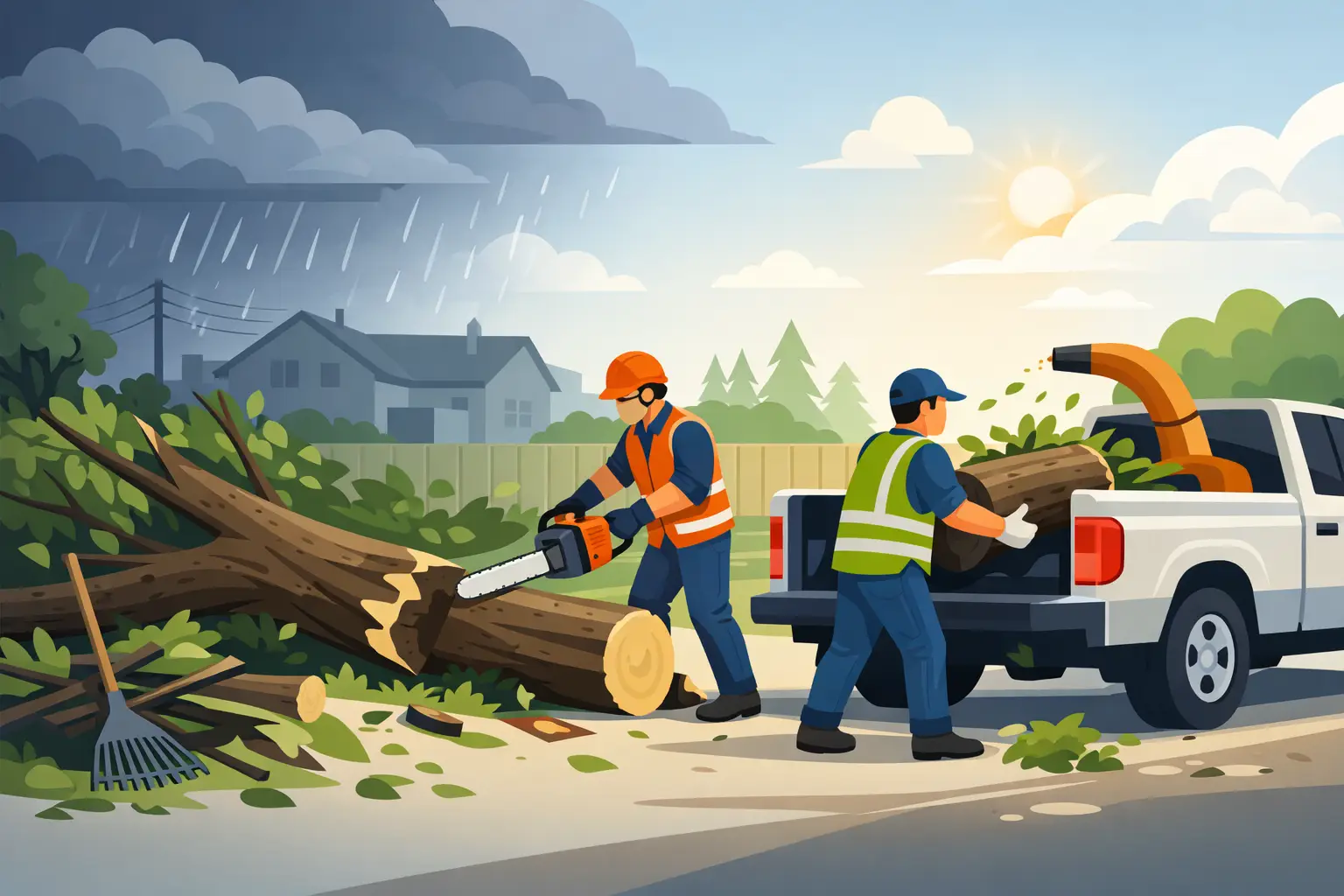
From there, the work usually breaks into three parts. First is emergency removal of immediate hazards. Second is pruning or removing damaged trees that can cause future problems. Third is complete cleanup so the property is usable again, including hauling brush, removing larger wood, and dealing with stumps or exposed roots when needed.
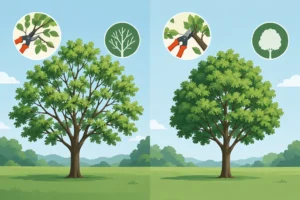
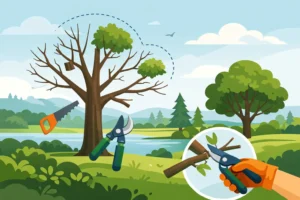
Not every storm-damaged tree needs full removal. Some trees recover well with proper pruning and weight reduction. Others are too compromised to trust near a house, sidewalk, parking area, or neighboring property. The difference comes down to species, age, structure, extent of damage, and where the tree is located.
The biggest mistakes property owners make after a storm
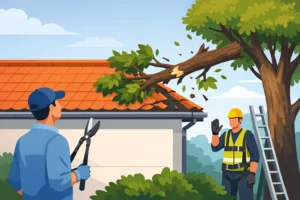
The most common mistake is treating visible debris as the whole problem. A branch on the lawn is obvious. A trunk with a spiral crack or a root system pulled loose on one side is less obvious, and often more serious. Another mistake is trying to cut hanging limbs from below. Storm tension and compression can make wood react violently when it is cut, even by experienced operators.
There is also the issue of timing. Some owners wait too long because the tree is still standing and appears stable. In reality, partial failures often get worse in the next storm or even during a calm day if decay, splitting, or root loss is already in play. Quick action matters, but quick does not mean rushed. It means getting the right eyes on the tree before the damage spreads.
Insurance questions can also slow people down. In many cases, it helps to document the damage right away with photos before cleanup starts, especially if a tree struck a structure or vehicle. At the same time, dangerous limbs and unstable trees should not be left in place just to delay a decision.
What you can do safely before help arrives
There are a few useful steps property owners can take, as long as they stay clear of anything unstable. Keep family members, pets, tenants, and customers away from the damaged area. If a tree or limb is touching utility lines, stay back and contact the utility company immediately. Do not attempt to move branches off wires or cut wood that is entangled with lines.
If the damage is limited to small, fully detached branches lying in the open, those can sometimes be moved aside carefully to clear a walkway or driveway. Beyond that, caution is the right approach. Leaning trunks, partially attached limbs, and trees resting against structures require controlled removal methods and the right equipment.
If possible, take clear photos from a safe distance. That helps with documentation and makes it easier to explain the situation when you call for service.
When a tree can be saved and when it should come down
This is where arborist judgment matters. A tree with a few broken outer limbs may respond well to corrective pruning. A tree with one major scaffold split out of the canopy might still be saved if the remaining structure is sound and balanced. On the other hand, a tree with a cracked main trunk, extensive crown loss, or major root failure is often no longer a good candidate for retention.
Location matters just as much as damage. A compromised tree in the back corner of a large lot is one thing. The same tree hanging over a roof, driveway, or business entrance is another. Property owners should think in terms of risk, not just appearance. Some damaged trees still look decent for a while, but their failure potential is too high to ignore.
Species matters too. Some trees compartmentalize wounds and recover better than others. Some are more prone to decay after storm injury. Mature trees with previous topping cuts, included bark, old cavities, or poor branch unions are also more likely to have serious structural issues after a storm.
Why storm cleanup is not standard tree work
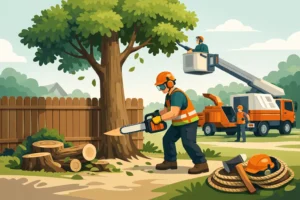
Storm damage creates unstable wood. Limbs can be twisted, pinned, suspended, or loaded with pressure in ways that are hard to read unless you have done this work for years. What looks like a simple cut can release stored energy instantly. That is why storm cleanup often requires rigging, climbing, bucket access, controlled lowering, and step-by-step dismantling rather than quick cutting.
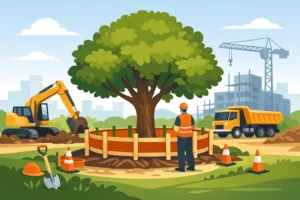
Heavy equipment also needs to be used carefully, especially on wet ground. A rushed approach can leave ruts, damage lawns, break hardscaping, or create more problems around foundations, septic areas, and landscape beds. Clean work matters after the hazard is gone. Most property owners want the site safe, but they also want it neat, usable, and not torn up in the process.
That is one reason experienced local crews tend to be the better call after a storm. They understand local tree species, common storm patterns, and the typical site conditions around older homes and commercial properties in towns like Hamden, North Haven, Branford, Guilford, Wallingford, and West Haven.
A clean finish matters more than people think
After emergency cutting is done, the job is only half complete. Brush piles, trunk sections, jagged stubs, and torn-up root areas leave the property looking rough and often still create trip hazards or space problems. Thorough storm damaged tree cleanup should leave the area clear and workable again.
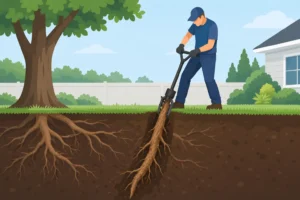
In some cases, that means follow-up stump grinding or root removal, especially if the damaged tree has to be fully removed and the area needs to be restored for mowing, replanting, parking, or regular foot traffic. For commercial sites, cleanup also affects curb appeal and liability. For homeowners, it affects how quickly the yard starts to feel normal again.
A complete job also includes pruning cuts made correctly, not random flush cuts or rough tears left behind. If a tree is being preserved, the cleanup work should support recovery rather than make the damage worse.
What to look for when hiring for storm damaged tree cleanup
This is not the time to hire the first person with a chainsaw who happens to be in the neighborhood. Tree work after a storm carries real risk, so it makes sense to ask about insurance, experience with hazardous removals, and whether a licensed arborist is involved in evaluating the damage.
You also want to know what the cleanup includes. Some crews remove the main trunk and leave the brush. Others haul everything but leave a high stump. Some can address the whole problem from emergency response through final cleanup. It is worth getting that clear upfront.
Stumpbuster LLC has been handling difficult tree, stump, and root work in this area since 1985, and that kind of experience shows when a property needs more than a quick cut and haul. Storm jobs often call for judgment as much as equipment.
After the cleanup, think about prevention
A storm usually exposes existing weaknesses rather than creating all of them from scratch. Once the urgent work is done, it is smart to look at the rest of the property. Dead limbs, overextended branches, weak unions, and trees crowding structures can often be addressed before the next weather event.
Selective pruning, crown reduction where appropriate, removal of declining trees, and attention to root and stump issues can all reduce future risk. Not every tree needs aggressive trimming, and over-pruning can create new problems, but a well-maintained tree is generally better prepared for wind, snow, and ice than a neglected one.
If a recent storm left you with broken limbs, a leaning tree, or a yard full of debris, do not guess your way through it. Get the damage looked at, get the hazards handled properly, and get the property cleaned up the right way so the next storm is one less thing to worry about.