A heavy, wet snowfall can turn a healthy-looking branch into a real problem overnight. In New Haven County, winter tree damage is rarely caused by cold alone. It is usually the combination of wind, ice, saturated soil, freeze-thaw cycles, and accumulated snow that exposes weak limbs, shallow roots, and structural defects. This guide to winter tree protection will help you prepare your trees and recognize when a situation calls for professional attention.
Start With the Trees That Can Cause Damage
Not every tree on a property needs the same level of winter preparation. Focus first on mature trees near your house, driveway, garage, fence, vehicles, sidewalks, and utility lines. A small broken limb in the back corner of a yard may be inconvenient. The same limb hanging over a roof, service line, or parking area can be dangerous.
Walk the property on a clear day and look up from several angles. Dead branches often have no small twigs or buds, loose bark, visible decay, or a noticeably different color than the rest of the canopy. Pay attention to limbs that rub against each other, grow at a narrow angle from the trunk, or extend far beyond the main canopy. These are common failure points when snow and ice add weight.
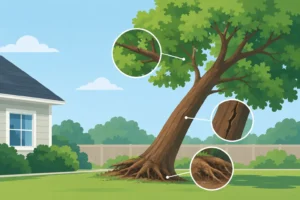
Also inspect the ground around large trees. Soil lifting on one side, exposed roots, new cracks in the soil, or a trunk that appears to lean more than it did before may indicate root trouble. Winter winds can bring down a tree whose root system was already weakened by construction damage, decay, drainage problems, or previous storms.
If you see a broken limb caught in the canopy, a split trunk, or a tree leaning toward a structure, do not try to pull it down with a rope or cut it from a ladder. Keep people and vehicles out of the area and have it evaluated by an insured tree professional.
Prune Before Snow and Ice Arrive
Proper pruning is one of the most effective forms of winter tree protection. Removing dead, damaged, diseased, or poorly attached limbs reduces the weight a tree must carry during a storm. It also helps wind move through the canopy instead of pushing against a dense mass of branches.
Timing depends on the species and the condition of the tree. Many deciduous trees can be pruned during dormancy, after leaves have fallen and before spring growth begins. With the canopy exposed, an arborist can see crossing branches, dead wood, and structural issues more clearly. However, not every tree should receive major pruning in winter. Certain species are more vulnerable to disease or may have specific seasonal needs, so the right approach depends on the tree.
Avoid topping a tree or cutting back large sections simply to make it shorter. Topping creates weak regrowth, large wounds, and an unnatural canopy that is often more hazardous in later storms. A good pruning job keeps the tree’s natural structure while addressing the branches most likely to fail.
Trees near power lines require extra caution. Homeowners should never attempt to trim or remove branches around energized lines. Contact the utility company when appropriate, or hire qualified professionals who understand the work limits and safety requirements.
Protect Roots From Freeze, Salt, and Compaction
Roots are out of sight, but they determine how well a tree handles winter stress. Connecticut’s repeated freezing and thawing can heave young trees out of the ground and dry exposed root areas. Road salt and de-icing products can also damage roots and soil, especially along driveways, sidewalks, and commercial parking lots.
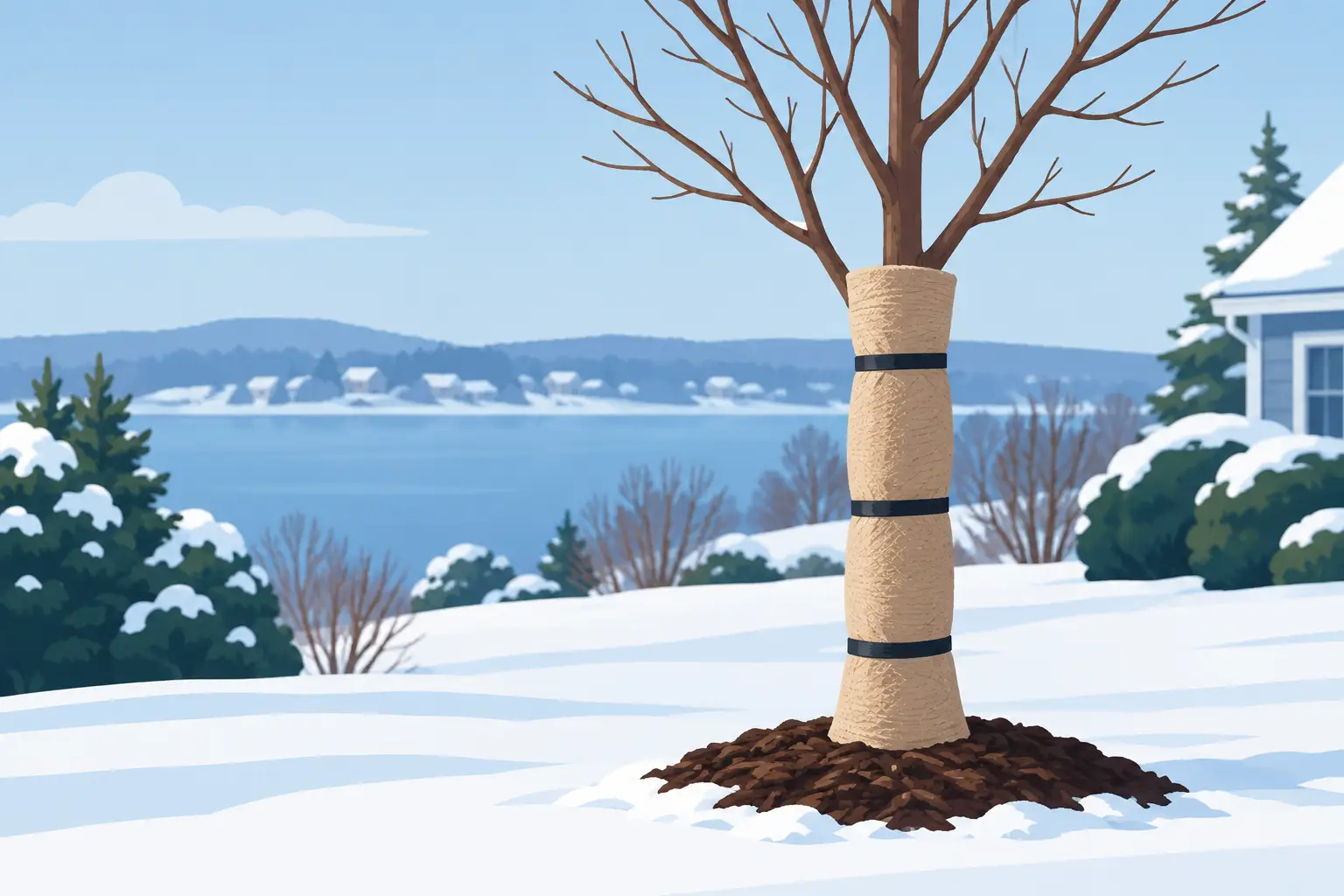
A two- to four-inch layer of organic mulch helps moderate soil temperature, hold moisture, and reduce the impact of sudden weather changes. Spread mulch in a wide ring beneath the tree, keeping it several inches away from the trunk. Mulch piled against bark holds moisture where it does not belong and can lead to decay, insect activity, and rodent damage.
For trees close to pavement, use salt sparingly and choose products that are less harmful to plants when possible. Direct plowed snow away from the base of trees rather than building large piles around trunks. Salt-laden snowmelt can move into the root zone long after a storm has passed.
Keep vehicles, heavy equipment, and stacked materials off the root area. Frozen ground may feel firm, but repeated compaction limits oxygen and water movement in the soil. That stress often shows up later as thinning leaves, dieback, or poor spring growth.
Support Young and Newly Planted Trees
Young trees need more help than established ones. Their root systems are smaller, their bark is more vulnerable, and they can bend or shift under snow and wind. A newly planted tree should be checked after every major storm during its first few winters.
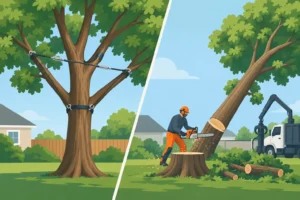
If a tree needs staking, use flexible ties that allow slight movement. A trunk that can move gently develops stronger support roots. Ties that are too tight or left in place too long can rub the bark and restrict growth. Stakes are not always necessary, but they can be useful for a tree in an exposed, windy location or one that has not yet rooted firmly.
Tree guards can prevent deer browsing and damage from rabbits or other rodents that feed on tender bark during winter. Use guards that allow airflow and inspect them periodically. A guard should protect the lower trunk without trapping moisture against it.
Watering is often overlooked. Evergreens continue to lose moisture through their needles in winter, especially on windy, sunny days. Before the ground freezes, water young trees and evergreens deeply if autumn has been dry. Do not water soil that is already saturated, and do not rely on a brief surface watering to reach the roots.
Handle Snow and Ice Carefully
After a storm, resist the urge to shake every branch clean. Vigorous shaking can snap cold, brittle wood and turn a manageable situation into a larger cleanup job. On small, reachable branches, use a soft broom to gently brush light snow upward and away from the branch. Never stand beneath a loaded limb.
Ice is different. Do not try to chip it off branches or use hot water to melt it. Ice may be holding a cracked limb in place, and disturbing it can cause the branch to fall without warning. Let ice melt naturally unless a qualified tree crew determines that emergency work is needed.
Watch for evergreen branches bent low under snow. Many will recover once the weight is gone, particularly flexible species. If a branch remains bent or split after the snow melts, it may need corrective pruning. Waiting a few days can help you see whether the limb rebounds on its own.
Know the Warning Signs After a Winter Storm
Some tree problems are obvious, such as a limb on a roof or a tree across a driveway. Others are less visible but still deserve a prompt inspection. Call for professional help if you notice any of the following:
- A new lean, especially if the ground or roots are lifting on one side.
- A crack or open split in the trunk or major branch union.
- Large limbs hanging above a driveway, walkway, roof, or parking area.
- Broken branches tangled in the canopy or resting on utility wires.
- Fresh decay, missing bark, or a cavity exposed by a fallen limb.
- Repeated branch failures from the same tree after ordinary wind or snow.
A tree does not have to fall completely to create a serious hazard. Partially failed trees and suspended limbs are often unpredictable because the remaining wood may be under tension. Keep clear, mark off the area if possible, and do not park or walk beneath the canopy.
Plan Winter Work Before It Becomes an Emergency
Winter can be a practical time to schedule certain tree services. Without leaves, crews can often assess a tree’s structure more accurately and access some work areas with less impact on lawns and landscape beds. Conditions still matter. Frozen ground, heavy snow cover, steep slopes, and storm conditions can affect timing and equipment access.
For property owners, the best approach is not to wait for a branch to hit the house. An arborist-led inspection can identify dead wood, weak unions, overextended limbs, and root concerns before the next nor’easter puts them to the test. Stumpbuster LLC has served New Haven County properties since 1985, providing experienced tree care, safe removal, and thorough cleanup when winter damage or high-risk trees demand more than a homeowner should handle.
Before the next storm, take one careful walk around the trees closest to what you value most. A small concern addressed early can protect your roof, driveway, landscape, and the people who use your property all winter long.