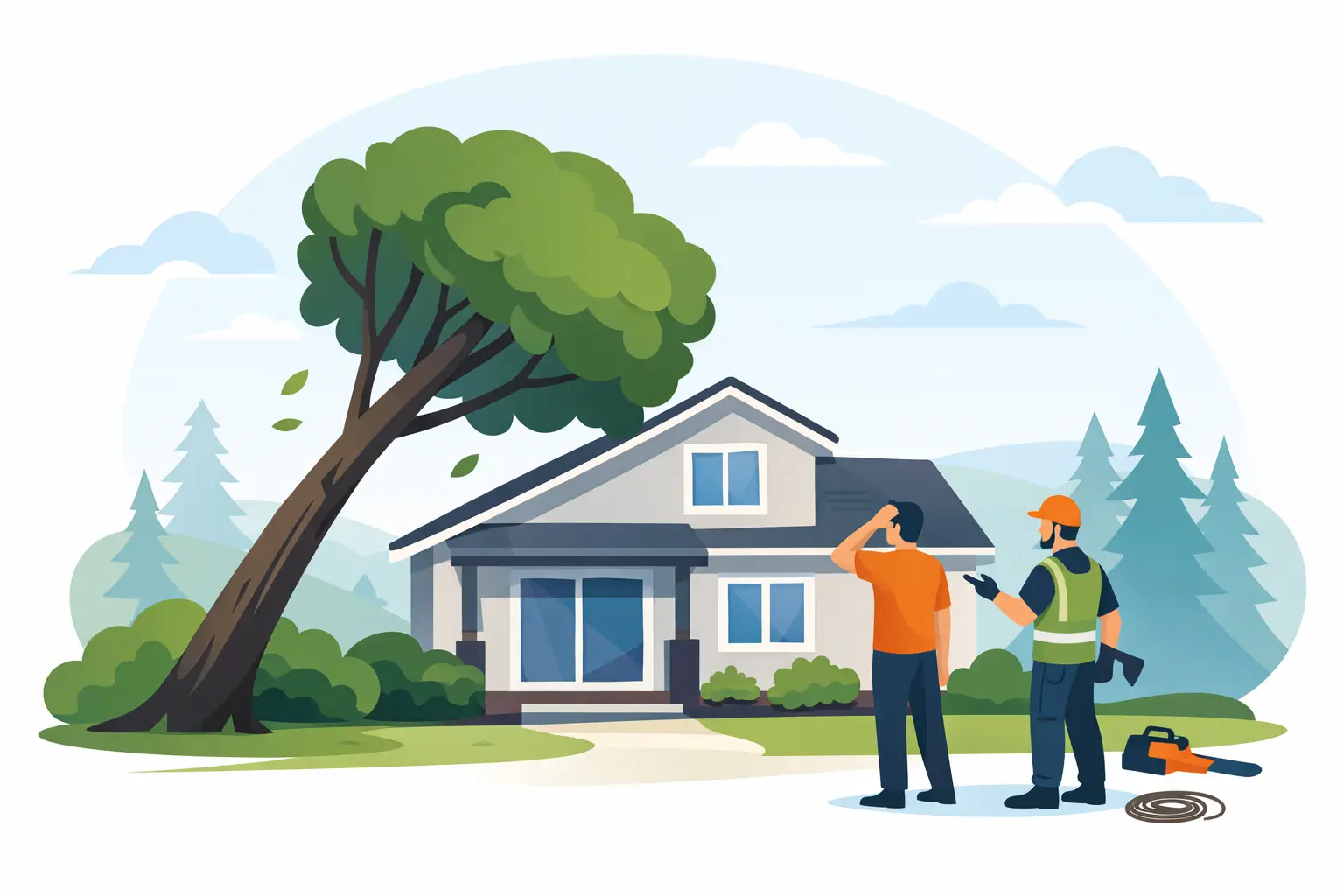
If you walk outside and notice a tree leaning toward house, your first question is usually simple – is this dangerous right now, or has it always been like that? That distinction matters. Some trees naturally grow with a slight lean and stay stable for years. Others shift suddenly after heavy rain, wind, root damage, or decay, and that is when the risk to your home can change fast.
A leaning tree is not automatically an emergency, but it is never something to ignore. The key is figuring out whether the lean is old and stable or new and getting worse. For homeowners in Connecticut, where storms, wet soil, and mature trees are part of the landscape, that call is best made early, before a manageable tree problem turns into structural damage.
When a tree leaning toward house is a real hazard
The biggest red flag is a recent change. If the tree was upright last season and now noticeably angles toward the roof, driveway, or siding, that points to movement at the root plate or trunk. You may see cracked soil near the base, raised roots on one side, or a gap where the roots appear to be lifting out of the ground. Those are not cosmetic issues. They can mean the tree is losing its anchor.
The second concern is the target below. A tree that leans over open yard space is one thing. A tree that hangs over a bedroom, garage, porch, power line, or parked cars carries a different level of risk. The closer the tree is to the house, the less margin for error you have.
Species, size, and condition also matter. A healthy young ornamental with a mild lean can sometimes be monitored or corrected. A tall mature oak, maple, or pine with a heavy canopy and signs of decay is a different job entirely. Bigger trees place more force on compromised roots and weak trunks, especially in saturated ground or high winds.
What causes a tree to lean toward a house
Sometimes the cause is obvious. A storm pushes the canopy, softens the ground, and the tree shifts. Other times, the problem develops slowly.
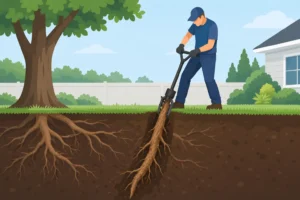
Root issues are one of the most common reasons. Construction, trenching, old stump grinding, soil compaction, repeated vehicle traffic, or grade changes can damage the root system enough to reduce stability. Trees do not need all their roots to fail before they start leaning. Losing support on one side can be enough.
Decay is another major factor. If the trunk is hollowing, the base is rotting, or major roots are decayed underground, the tree may still have leaves and look alive while becoming structurally unsound. That is one reason homeowners sometimes underestimate the risk. A green tree is not always a safe tree.
Some trees also lean because they have spent years reaching for sunlight. That kind of lean can be stable if the root system is strong and the trunk has adapted over time. But even a long-term lean should be assessed if the tree has grown larger, the crown is imbalanced, or the house is now directly in the fall zone.
Signs you should not wait
A few warning signs deserve prompt attention. One is fresh soil heaving around the root flare. Another is cracking sounds during wind or after a storm. Deep splits in the trunk, dead scaffold limbs, fungal growth at the base, and sudden canopy thinning can also point to a tree that is under stress or failing.
Pay attention to the angle as well. There is no single number that makes a tree unsafe, but a pronounced lean combined with root movement or defects is a concern. If the trunk appears to be bowing, twisting, or separating from the ground, do not try to handle it yourself.
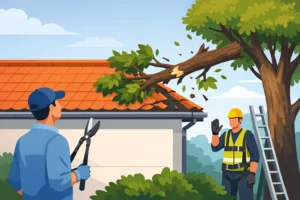
In some cases, the house itself tells the story first. Limbs start brushing the roof, gutters fill with fresh twigs, or the canopy presses against siding during windy weather. At that point, even if the whole tree is not ready to fail, pruning or removal may be needed to protect the structure.
Can a leaning tree be saved?
Sometimes yes, but it depends on the age of the tree, how long it has been leaning, and why it moved.
A small, young tree that recently tilted may be a candidate for corrective staking if the root damage is limited and the trunk is still flexible. That window is usually short. Once a tree is established and larger, staking is rarely the right answer. People often assume cables or straps can fix a mature lean, but that is not how structural stability works. If the root plate is compromised, tying the tree off does not restore the support underground.
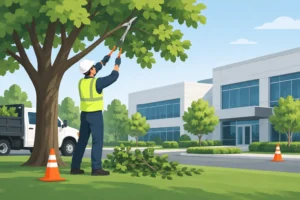
Pruning can help in certain situations by reducing end weight and balancing the canopy. That can lower stress on the trunk and root system, especially when the lean is mild and the tree is otherwise healthy. But pruning is not a cure for root failure or internal decay. It is a management step, not a guarantee.
Removal becomes the safer option when the tree shows active movement, significant defects, or a clear strike zone over the house. A good arborist will not push removal on every leaning tree, but they also will not pretend a hazardous one can be talked into staying upright.
Why DIY is risky with a tree leaning toward house
This is one of the worst situations for guesswork. When a tree is already leaning over a structure, the weight is loaded in the wrong direction from the start. Cutting from the ground with a chainsaw, trying to top it, or pulling it with a truck can cause sudden failure. Trees under tension do not behave predictably.
The risk is not just to the person cutting. It is to the roof, the chimney, the service line, the fence, the neighbor’s property, and anyone standing nearby. Even a moderate-sized tree can produce thousands of pounds of force when it shifts.
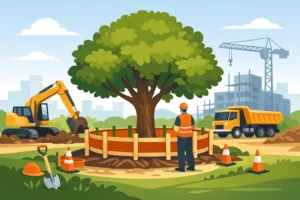
This is where licensed arborist evaluation and insured tree crews matter. Proper removal near a home often requires controlled rigging, sectional dismantling, and a cleanup plan that protects the property after the tree is down. If the stump and major roots are part of the problem, that should be addressed too, especially when you want to reclaim yard space or prevent future issues.
What a professional inspection should look at
A real inspection should go beyond the angle of the trunk. The root flare, surrounding soil, trunk condition, major unions, canopy weight, and proximity to structures all need to be evaluated together.
The arborist should ask whether the lean is new, whether the site has had drainage or construction changes, and whether the tree has dropped large limbs or shown decline. In some cases, the recommendation may be monitoring and selective pruning. In others, it may be immediate removal.
That is where experience counts. A contractor who only sees a cutting job may miss what a licensed arborist sees in the roots, trunk, and growth pattern. In a place like New Haven County, where many properties have mature trees close to homes, local field experience matters. Soil conditions, storm patterns, and common species all affect how these trees fail.
What homeowners can do right now
Start by looking for change, not just lean. Compare photos if you have them. Check the ground around the base for lifting or cracking. Look for new contact with the roof or gutters. If a storm just passed through and the tree appears to have shifted, keep people away from the area.
Do not climb the tree, do not cut weight off the leaning side, and do not park under it while you decide. If utility lines are involved, stay clear and report it immediately to the utility company.
If the tree is near your home, the smartest next step is to have it inspected before the next storm tests it for you. Stumpbuster LLC has been handling hazardous trees, precise removals, and property protection work in New Haven County since 1985, and this is exactly the kind of problem that benefits from experienced eyes on site.
A leaning tree does not always mean panic. It does mean pay attention now, while you still have options and before your house finds out the hard way.