A stump can look small above ground and still cause a big headache below it. If you’re planning to replant, install a patio, or just want your yard back, one of the first questions is simple: how deep does stump grinding go? The short answer is that most stump grinding goes 6 to 12 inches below grade, but the right depth depends on what you want to do with the area after the stump is gone.
That distinction matters more than most people expect. For some properties, standard grinding is enough to clear the surface and restore the lawn. For others, especially when roots are close to a foundation, sidewalk, or future project area, going deeper or removing more of the root system is the better call.
How deep does stump grinding go in most yards?
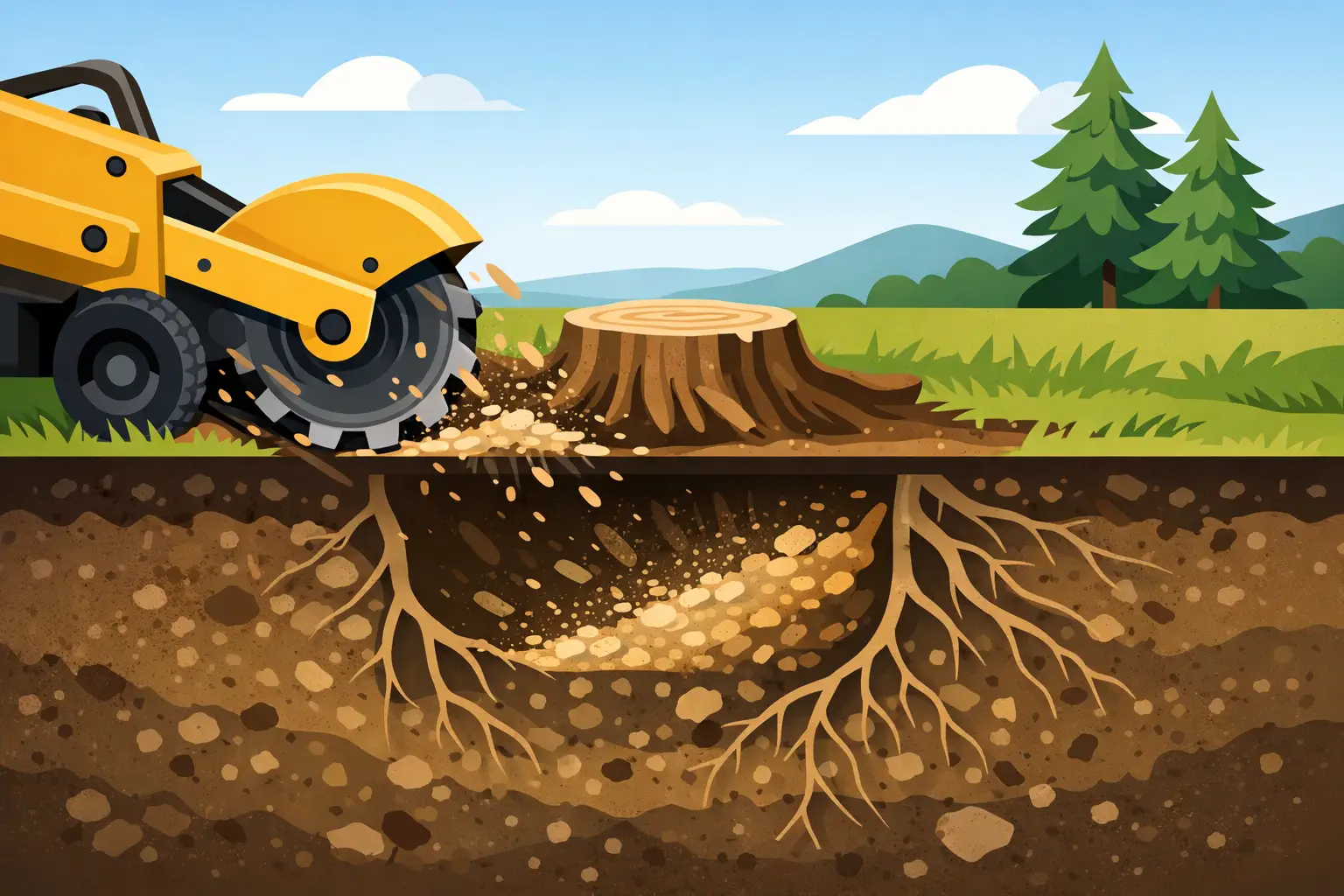
In typical residential work, stump grinding usually removes the visible stump and grinds it several inches below ground level. A common target is 6 to 8 inches below grade, and in many cases contractors can grind 10 to 12 inches or more if the site and equipment allow.
That is usually deep enough for topsoil, seed, and a normal lawn repair. Once the stump is ground down and the grindings are handled properly, the area can be leveled out and made usable again. For a homeowner who simply wants the stump gone so they can mow safely and improve the look of the yard, that is often all that’s needed.
But there is no single depth that fits every property. A stump in the middle of an open lawn is different from a stump next to a driveway, retaining wall, fence line, or utility path. The species of tree matters too. Some root systems sit shallower and wider, while others have dense wood that takes more work to break down cleanly.
What determines stump grinding depth?
The intended use of the area is the biggest factor. If you only want to cover the spot with grass, standard stump grinding depth is usually enough. If you plan to plant another tree in the same location, pour concrete, build a shed base, or install a walkway, you may need deeper grinding or more complete root removal.
Stump size also changes the approach. A larger stump often has a broader root flare at the top, which means the grinder has to remove more material before the area is truly clear. What looks like a 20-inch stump at the surface can have a much wider underground footprint.
Access matters as well. If a grinder can reach the stump cleanly and the operator has room to work, deeper grinding is usually easier and more precise. Tight backyard access, slopes, stone borders, and nearby structures can all limit how aggressive the grinding should be.
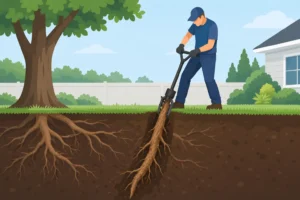
Then there is the question of roots. Stump grinding is primarily designed to remove the stump itself and the immediate upper root flare, not every root running through the yard. Large surface roots can often be addressed, but full root removal is a different service and often requires specialized equipment and a different plan.
Standard grinding versus deeper removal
This is where homeowners can get tripped up. They hear “stump removal” and assume every part of the stump and root system is gone. In reality, standard stump grinding and complete extraction are not the same thing.
With standard grinding, the main stump is reduced below grade so the area can be covered and reclaimed. The deeper structural roots remain in the ground and gradually decay over time. In many yards, that is perfectly acceptable and cost-effective.
Deeper removal is more useful when the stump area needs to support a new project or when roots are creating a practical problem. If you want to install hardscaping, avoid future settling, or clear out a problem root zone near a structure, deeper and cleaner removal can save you trouble later.
An arborist-led contractor will usually ask what comes next for that part of your property. That answer tells you a lot more than a generic depth number ever will.
When 6 to 12 inches is enough
For basic lawn restoration, a depth of 6 to 12 inches is usually the sweet spot. It gets the stump below the surface, allows room for backfill, and removes the obstacle that keeps you from mowing, landscaping, or simply cleaning up the yard.
This works well when the stump is in an open area and there are no immediate construction plans. It also makes sense when your main goal is curb appeal. Most homeowners are not trying to excavate every root. They want the stump gone, the hole filled properly, and the yard looking normal again.
The key is proper cleanup and finishing. If the area is left with excess chips, poor grading, or hidden root flare just under the surface, the spot may sink or stay uneven. Good stump grinding is not just about cutting wood. It is also about leaving a clean, usable result.
When deeper stump and root removal makes sense
If you are planning a new patio, driveway extension, fence post line, or foundation work, standard stump grinding may not go deep enough. Buried wood decomposes. As it breaks down, the soil above it can settle. That is not something you want under a hard surface.
The same goes for replanting in exactly the same location. A shallowly ground stump can leave too much woody material in the soil for a new tree or large shrub to establish well. You may be better off shifting the planting spot or removing more of the old stump and root mass.
There are also cases where roots are physically in the way. Surface roots can heave lawns, interfere with mowing, and push into planting beds. In those situations, targeted root removal may be the real solution, not just grinding the center stump lower.
This is where specialized capability matters. In more demanding situations, deeper and more complete removal can make the site cleaner and more usable. That is especially true on older properties in New Haven County, where mature trees and tight lot layouts often create root problems that a basic pass with a grinder does not fully solve.
What stump grinding does not do
Stump grinding does not remove every root underground. It also does not guarantee there will never be minor settling in the area, especially if the stump was large and the site was not backfilled and graded well.
It usually does not remove roots far from the stump unless that work is specifically included. And while many tree species will not regrow after proper grinding, some aggressive species can still send up shoots from remaining roots.
That is why it helps to be clear about the result you want. If your expectation is a flat lawn area, standard grinding may be the right answer. If your expectation is a fully cleared subsurface area for construction or a fresh planting bed with no woody material left in the way, that is a different scope of work.
How to know what depth you actually need
The best question is not just how deep does stump grinding go. It is what needs to happen in this exact spot after the stump is removed.
If the answer is grass, standard grinding is often enough. If the answer is concrete, pavers, a new tree, or eliminating a stubborn root issue, you should ask about deeper grinding or full root removal options.
A good contractor should look at stump size, tree species, access, nearby structures, and future use of the area before giving you a recommendation. That kind of site-specific judgment is where experience shows. Since 1985, Stumpbuster LLC has seen how different stump and root systems behave on Connecticut properties, and that matters when the job needs more than a one-size-fits-all answer.
A practical way to think about stump depth
Think of stump grinding depth in terms of use, not just inches. For lawn repair, the job is usually to get the stump low enough to disappear, fill properly, and leave a safe, level surface. For building, replanting, or serious root interference, you may need more than standard grinding.
That is why the cheapest quote is not always the best value. If the stump is only shaved down and the underlying root flare is left too high, you may pay for the same area twice – once for grinding and again later when the spot settles, sinks, or blocks the next project.
A solid stump job should match the property owner’s goal. The right depth is the depth that lets you move on with the yard the way you actually plan to use it.