You notice it when the mower starts bouncing. What used to be a smooth stretch of grass now has raised lines, thin patches, and spots where the blades just will not fill in. If you are dealing with tree roots damaging lawn areas, the problem usually gets worse slowly, then all at once. A yard that was easy to mow and use starts turning into something you have to work around.
This is a common issue on properties with mature trees, especially in older neighborhoods across Connecticut where large maples, oaks, and other established shade trees have had decades to spread. The hard part is that the lawn problem is visible, but the real decision is underground. Do you protect the tree, restore the lawn, remove roots, or take the tree out entirely? The right answer depends on the species, the root spread, and how much damage has already been done.
Why tree roots damaging lawn is so common
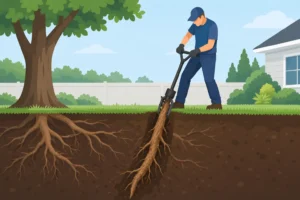
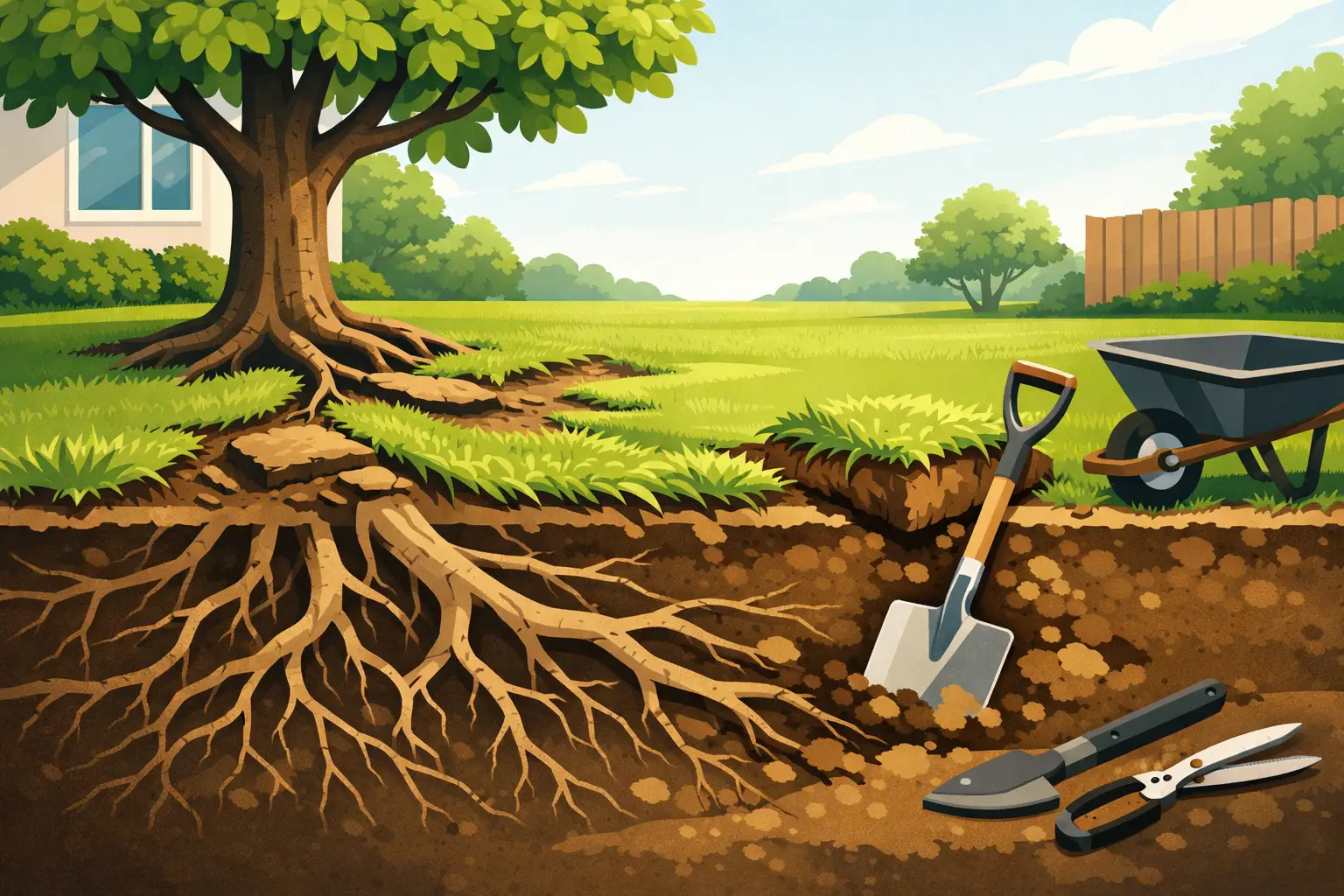
Most homeowners assume roots go deep. Some do, but many of the roots that matter to your lawn stay near the surface. Trees naturally grow feeder roots where oxygen, water, and nutrients are easiest to reach. That often means the top several inches of soil. As those roots enlarge over time, they begin lifting the soil and crowding out turf.
That is why the problem is often worst in compacted yards, around older trees, and in areas where topsoil is shallow. If the tree is competing with grass for water and nutrients, the lawn loses. If the roots are physically heaving the surface, the lawn struggles even more.
Some species are more aggressive than others. Silver maples, Norway maples, willows, and certain poplars are known for wide, shallow root systems. Even healthy oaks can create major surface root issues as they mature. The tree is not necessarily failing. In many cases, it is doing exactly what that species does.
Signs the problem is more than just poor grass growth
A thin lawn under a shady tree is one thing. A lawn being pushed apart by roots is another. The difference matters because reseeding alone will not solve a structural root problem.
Look for raised ridges that follow long runs away from the trunk, exposed roots at the surface, and mower scalping even when the deck height is set correctly. You may also see bare soil along root lines, weak turf during dry weather, or puddling where the ground has become uneven. If people are tripping, equipment is striking roots, or water is no longer draining normally, it has moved beyond appearance.
That is usually the point where property owners call for help. The lawn is harder to maintain, but there is also a safety issue and a usability issue. Kids cannot run across it cleanly. Lawn equipment takes a beating. The yard starts feeling unfinished no matter how much time you put into it.
Can you cut the roots?
Sometimes yes, but not casually.
This is where a lot of lawn damage gets worse. Homeowners see the raised roots, rent a trencher or grab a saw, and start cutting. The lawn may flatten out for a while, but root cutting can destabilize the tree, stress it severely, or trigger decline over time. The closer those roots are to the trunk, the greater the risk.
There is no safe universal rule, because tree species, age, health, and root structure all matter. A licensed arborist looks at how much root loss the tree can tolerate and whether the benefit to the lawn is worth the long-term cost to the tree. In some cases, selective removal is possible. In others, cutting roots is the wrong move and creates a much bigger problem than the lawn itself.
If large roots are lifting broad sections of turf near the base of the tree, the issue may not be solvable with root cutting alone. That is often when full removal becomes the cleaner, safer investment.
What actually works when tree roots are damaging lawn
The right fix depends on what matters most to you. Some property owners want to preserve a valuable shade tree at all costs. Others want the yard back. Most are trying to balance both.
If the roots are minor and the tree is worth preserving, adding a thin layer of quality topsoil and adjusting the turf type can help in the short term. Shade-tolerant grass mixes, careful watering, and gentler mowing practices can improve appearance. This works best when roots are just beginning to show and the ground is still mostly level.
If the roots are exposed but not heavily lifting the lawn, mulch may be a better answer than grass directly around the tree. That reduces mower damage and gives the root flare room to breathe. It also cuts down on constant turf failure in areas that may never support thick grass again.
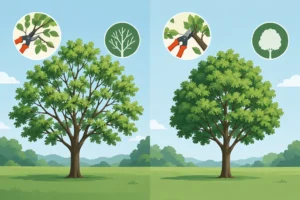
When the lawn has become rough, raised, and difficult to use, partial root removal may be considered, but only after evaluating the tree. This is skilled work, not a guessing game. Cutting too much, in the wrong place, or with the wrong equipment can compromise a healthy tree fast.
If the tree itself is in decline, poorly located, or causing repeated property issues, removal may be the most practical option. Once the tree is gone, stump grinding alone may not solve the whole problem if major roots remain spread through the yard. That is where deeper, more complete root removal makes a visible difference in how quickly you can reclaim usable space.
Surface fixes versus real removal
A lot of contractors will grind the stump and leave the rest. For some jobs, that is enough. For lawns with widespread root interference, it often is not.
Surface-level treatment can improve the look of the immediate stump area, but if structural roots are still running through the yard, you may continue seeing heaving, sinkage, poor grass establishment, and hard spots during mowing. Homeowners are often frustrated because they thought the stump was the problem, when the root system beyond it was still affecting the lawn.
That is why the removal method matters. On some properties, especially where deeper or farther-reaching roots are involved, specialized equipment gives a cleaner result and makes restoration easier. Stumpbuster LLC has built its reputation in part on this kind of work, using a proprietary Plowrake root removal system that goes beyond typical stump grinding when the goal is to open up the yard again.
When lawn damage points to a bigger property risk
Tree roots damaging lawn may seem like a cosmetic issue, but sometimes it is the first visible sign of a broader conflict between the tree and the property. If roots are lifting grass near a driveway, walk, retaining edge, or patio, they may already be affecting those structures too. If the tree is planted too close to the house or a heavily used area, root spread can create ongoing maintenance costs.
This is where experience matters. An arborist-led assessment looks at the whole picture – tree condition, structural risk, root direction, and what the site will look like after the work is done. That is a very different approach from simply cutting what is visible and hoping the problem stays put.
For commercial properties and multi-use residential lots, the stakes are higher. Uneven ground creates liability. Mowing around raised roots slows maintenance crews down and increases wear on equipment. Parking edges, entry lawns, and common areas need to stay safe and presentable.
How to decide between saving the tree and reclaiming the lawn
The practical questions are usually the right ones. Is the tree healthy? Is it well placed? Does it provide enough value to justify continued lawn problems? Can the root issue be managed without making the tree unsafe? And if you remove roots, are you actually solving the yard problem or just delaying it?
There is no one-size-fits-all answer. A large, healthy shade tree in the right location may be worth adapting the landscape around. A declining tree with exposed roots across a high-use lawn usually is not. If your goal is a smoother, safer, more usable property, the best path is the one that matches how you actually use the space.
That is especially true in older Connecticut neighborhoods where mature trees and tight lot layouts often collide. What works in a wooded back corner may not work near a front walk, play area, or business entrance.
If your mower is catching roots, the grass keeps failing, or the yard is getting harder to use every season, do not wait for it to sort itself out. Root problems rarely move backward. A knowledgeable evaluation now can save you from spending money on lawn repair that never had a chance to last. The best outcome is not just removing what is in the way. It is ending up with a property that is safer, cleaner, and easier to live with.