A mature oak shading a parking lot can be an asset. A dead limb over the same lot can become an insurance claim, a damaged vehicle, or a closed entrance. Best practices commercial tree maintenance starts with treating trees as part of the property infrastructure, not as an afterthought when a branch comes down.
For property managers, business owners, condominium associations, and facility teams, the goal is straightforward: keep trees healthy where possible, remove hazards before they become emergencies, and maintain a clean, professional-looking site. That takes a regular plan, qualified judgment, and timely work.
Build Commercial Tree Maintenance Around Risk
Commercial properties have more exposure than a typical backyard. People walk beneath trees, vehicles park nearby, delivery trucks need clearance, signs need to stay visible, and roofs, lighting, sidewalks, and utility lines all compete for space.
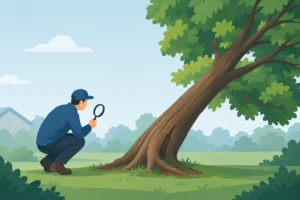
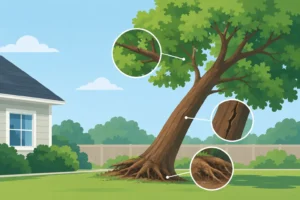
Start by identifying the areas where a tree failure would have the greatest consequence. Main entrances, parking areas, outdoor seating, playgrounds, sidewalks, loading zones, and building rooflines should receive the closest attention. A tree can look healthy from a distance while carrying deadwood, weak branch attachments, cavities, or root damage that only becomes apparent during a closer inspection.
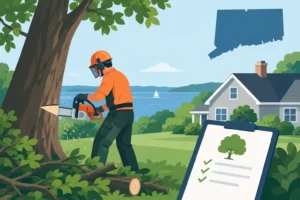
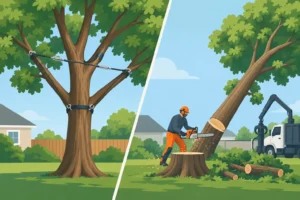
Risk does not always mean a tree needs to come down. Many issues can be managed with proper pruning, cabling, selective reduction, or improved clearance. But when structural defects, severe decline, or a compromised root system make failure likely, removal may be the responsible choice. Waiting for a storm to make that decision usually costs more and gives the property owner fewer options.
Schedule Inspections for the Site, Not a Calendar Reminder
An annual walk-through is a good baseline for many commercial sites, but the right inspection schedule depends on the property. A retail center with busy parking lanes and mature roadside trees may need more frequent review than a lightly used office lot with younger plantings.
Extra inspections are wise after heavy snow, ice, high winds, construction activity, flooding, or utility work. Connecticut weather can expose problems quickly, especially in older maples, oaks, and ornamental trees that have gone years without structured care.
During an inspection, look beyond obvious broken branches. Pay attention to dead limbs, hanging branches, cracks in major stems, fungal growth near the base, peeling bark, leaning trunks, soil heaving, damaged roots, and branches rubbing against a building. Also check sightlines around driveways and signs. A low branch may not be dangerous in the traditional sense, but it can interfere with trucks, block security lighting, or create a visibility issue at an exit.
Document findings with photos and notes. A simple record of what was observed, what work was recommended, and when it was completed helps managers budget ahead and demonstrates reasonable property care if an incident ever occurs.
Best Practices Commercial Tree Maintenance Should Include Pruning
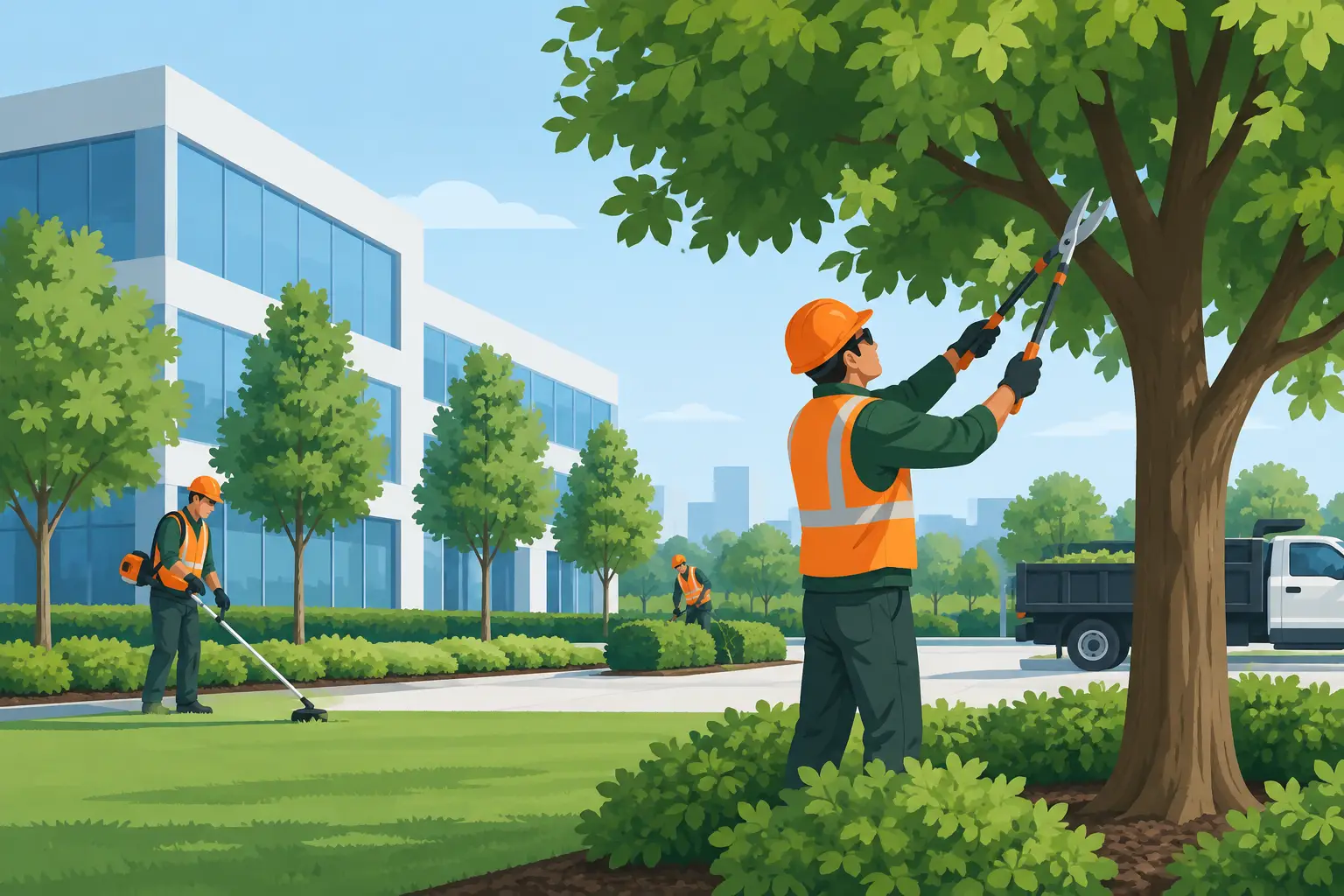
Pruning is often the most visible part of commercial tree care, but it should never be treated as a quick cosmetic trim. Correct pruning removes dead, damaged, diseased, or poorly positioned branches while preserving the tree’s natural structure.
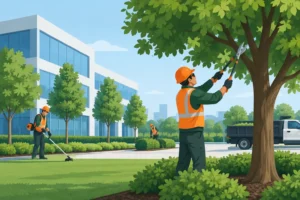
For commercial properties, pruning commonly improves clearance over walkways, parking spaces, roofs, and service roads. It can also reduce the weight on long limbs, improve visibility around signs and lights, and keep branches from contacting buildings. The work should be planned around the species, condition, season, and location of the tree.
Avoid topping trees or cutting back large portions of the canopy simply to make a tree smaller. Topping creates weak regrowth, wounds the tree, and can make the site less safe over time. A qualified arborist can determine whether selective reduction or removal is the better answer when a tree has outgrown its location.
Timing matters, but public safety comes first. Routine pruning may be scheduled during the season best suited to the tree species. A hazardous limb over a customer entrance should be addressed when it is found, not held until the ideal pruning window.
Protect Roots During Construction and Site Work
Many commercial tree problems begin below ground. Roots can be damaged by trenching, grading, compacted soil, pavement work, parked equipment, or changes to drainage. The tree may appear fine immediately after construction, then decline over the next several years.
Before any expansion, utility installation, sidewalk replacement, or parking lot work, identify trees worth preserving and establish protected root zones. Keep heavy equipment and material storage out of those areas whenever possible. If excavation must occur near a mature tree, have an arborist assess the likely impact before the work begins.
This is also where property owners need to weigh the trade-off honestly. Saving a tree is worthwhile when its structure and long-term condition support the investment. If roots are already damaging pavement, entering drainage areas, or compromising a foundation, selective root work or removal may be more practical than repeated patch repairs.
After a tree or stump is removed, do not ignore the remaining roots. Old root systems can interfere with new planting, landscaping, hardscaping, and future site use. For areas being redeveloped or restored, deeper stump and root removal can provide a cleaner starting point than surface-level grinding alone.
Plan Ahead for Storms and Emergencies
Storm response is part of commercial property maintenance, but it should not be the entire plan. The best time to address overextended limbs, dead trees, and branches near buildings is before wind, snow, or ice puts them under stress.
Create a simple emergency procedure for your property. Know who can approve urgent tree work, which areas can be closed off, and how tenants or staff will be notified if access changes. Keep trees around electrical service lines in mind. If a limb is near or touching a power line, stay clear and contact the utility or a properly qualified tree professional. This is not work for maintenance staff with ladders and hand tools.
After a storm, restrict access beneath damaged trees until they can be assessed. Broken limbs can remain hung up high in the canopy, and cracked trunks may fail later as conditions change. Quick cleanup matters, but safe cleanup matters more.
Choose a Qualified, Insured Tree Service
Commercial tree work involves crews, equipment, traffic control, property protection, and cleanup. The lowest estimate is not always the lowest cost once poor cuts, lawn damage, incomplete debris removal, or an uninsured accident enter the picture.
Ask whether the company carries appropriate insurance, uses trained crews, and has arborist expertise available for diagnosis and recommendations. Make sure the estimate clearly states the scope of work, including pruning or removal, debris handling, stump grinding, root removal if needed, and site cleanup.
For complex properties, communication is just as valuable as equipment. A dependable contractor should be able to coordinate work around tenant access, business hours, parked cars, deliveries, and restricted areas. At Stumpbuster LLC, that practical approach has guided commercial and residential tree work throughout New Haven County since 1985.
Keep the Grounds Looking Cared For
Tree maintenance affects more than safety. Healthy, properly managed trees soften parking areas, provide shade, improve curb appeal, and make a commercial property feel established and cared for. Neglected trees send the opposite message quickly, especially when dead branches, old stumps, or overgrown limbs are visible from the street.
Set aside a yearly budget for inspection, pruning, removals, and stump work rather than treating every issue as an unexpected expense. A planned approach gives you time to schedule work around operations and address concerns before they disrupt the property.
The right tree plan is not the one that removes every mature tree or delays every recommendation. It is the one that keeps people safe, protects the building and pavement, and gives healthy trees the care and space they need to remain an asset for years to come.