A mature oak leaning over a driveway or a large maple spreading above a roof creates a decision that cannot be made by appearance alone. Tree cabling versus removal is a question of structural safety, tree health, and what could be damaged if the tree or a major limb fails. In New Haven County, where mature trees often grow close to homes, garages, walkways, and utility lines, the right answer depends on a professional evaluation of the whole tree.
A cable can sometimes extend the safe, useful life of a valuable tree. Other times, it only delays an unavoidable removal. Knowing the difference can protect your property, avoid unnecessary expense, and prevent a dangerous failure during the next heavy wind, wet snowfall, or summer storm.
What Tree Cabling Is Designed to Do
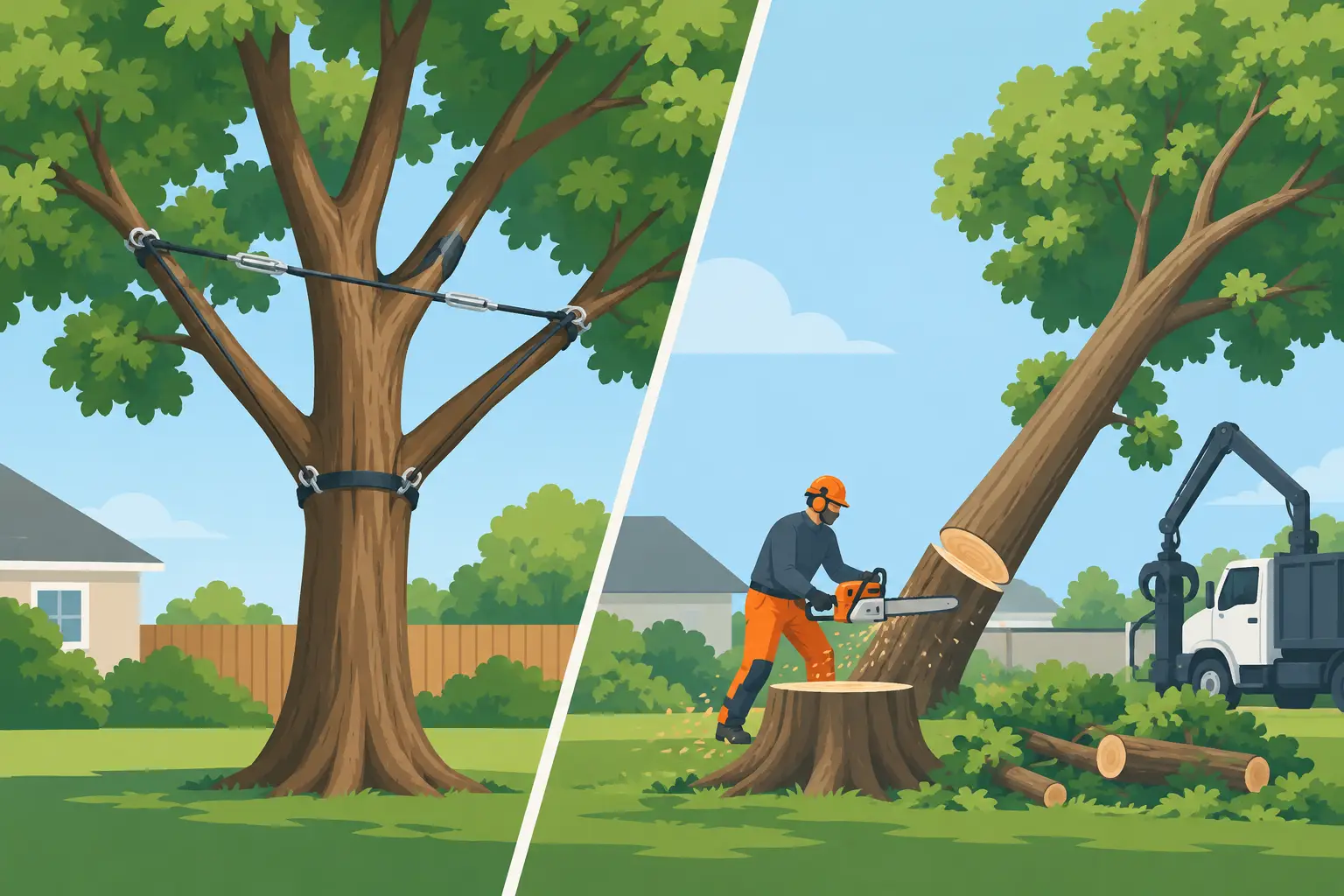
Tree cabling is a support system installed high in a tree’s canopy to reduce stress on weak limbs or stems. The system may use flexible synthetic materials or steel cable, depending on the tree, the defect, and the support plan. Its purpose is not to make a failing tree permanently safe. It is meant to limit movement and lower the likelihood of a split or break at a known weak point.
Cabling is most often considered when a tree has two or more major stems growing from the same area. This is called a co-dominant stem structure. If the union between those stems has included bark, a crack, or poor attachment, wind and snow loads can force them apart. A properly designed cable can help share that load.
Support systems may also be useful for a long, heavy limb extending over a house, patio, driveway, or high-use area. In the right situation, selective pruning combined with cabling can reduce weight, improve balance, and preserve a tree that would otherwise pose a growing concern.
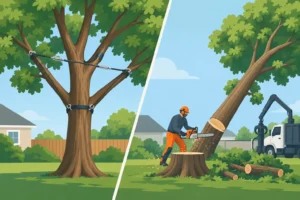
Tree Cabling Versus Removal: The Real Decision
The central question is not whether a cable can be installed. Many trees can physically hold one. The question is whether the tree has enough sound wood, adequate health, and a reasonable structure to justify keeping it.
Cabling is generally worth considering when the tree is otherwise healthy, has a limited and identifiable structural weakness, and provides meaningful value to the property. A healthy mature shade tree can reduce summer sun, improve curb appeal, and make a yard more enjoyable. Removing it should not be the automatic answer simply because it has a heavy limb or multiple trunks.
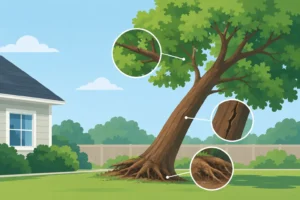
Removal becomes the safer option when the problem is not limited to one weak connection. Extensive decay in the trunk, large cavities, major root damage, a severe lean, widespread dieback, or multiple failing limbs can indicate that the tree has lost the strength needed to remain near people or structures. A cable cannot correct internal decay, restore dead roots, or anchor a tree that is beginning to uproot.
Location matters just as much as condition. A declining tree in an open back corner may present a lower level of risk than the same tree hanging over a child’s play area, roof, parked cars, or a neighboring property. Arborists consider both the likelihood of failure and the consequences if it does fail.
When Cabling May Be a Good Fit
A support system may make sense for a tree with a strong root system, generally healthy foliage, and a specific structural issue that can be managed. Common examples include a valued ornamental tree with a narrow V-shaped union or a large branch that is sound but overextended.
Pruning is often part of the recommendation. Reducing the length or weight of a limb may lower the force acting on the weak point, while the cable provides supplemental support. This approach preserves the natural shape of the tree better than aggressive cutting, which can create additional stress and leave large wounds.
Cabling requires follow-up. Trees grow, hardware ages, and weather places ongoing strain on support systems. A cable should be inspected periodically, especially after severe storms. It is a maintenance commitment, not a one-time repair that can be forgotten.
When Removal Is the Responsible Choice
Removal is usually the better choice when there is a clear risk that cannot be managed with pruning or support. A tree with a hollow lower trunk, advanced fungal decay, significant trunk cracks, or roots lifting out of the ground may fail without much warning. Dead ash trees, storm-damaged trees, and trees declining from disease can become brittle and unpredictable as well.
A tree growing too close to a foundation, roofline, service wire, or septic area may also need removal when its size and condition make continued management impractical. Repeated trimming can sometimes keep a tree away from a structure, but it is not always a long-term solution. If every storm creates concern, removal may be the more sensible investment.
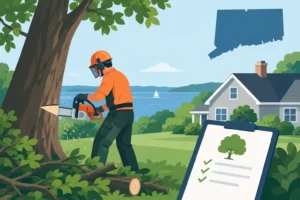
Removing a hazardous tree before it fails gives the crew more control over the job. Sections can be lowered carefully, surrounding landscaping can be protected, and cleanup can be planned. Emergency removal after a tree has fallen across a roof, fence, or driveway is usually more complicated and may involve greater property damage.
Warning Signs That Need an Arborist’s Opinion
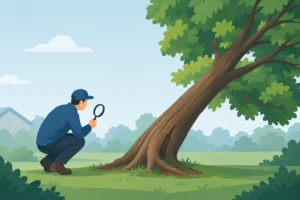
Homeowners should not try to diagnose structural defects from the ground, but certain changes warrant a closer look. New cracks where large stems join, peeling bark around a union, mushrooms at the base, a sudden lean, exposed roots, or a major limb that has dropped are all reasons to call a qualified tree professional.
Also watch for thinning leaves, dead branches concentrated in the upper canopy, and repeated limb failure. These signs do not always mean a tree must come down. They do mean the tree should be assessed before the next storm makes the decision for you.
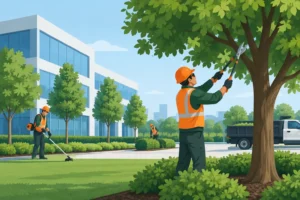
Do not rely on a cable, rope, or chain installed without a plan. Improper hardware can girdle branches, create new weak points, or give a false sense of security. Tree work around large limbs and elevated canopies requires the proper equipment, training, and insurance.
The Cost Trade-Off: Maintenance or Final Removal
Cabling is often less expensive than removing a large tree, particularly when access is difficult or the tree stands close to a house. But the initial price is only part of the decision. A supported tree will need inspections and may need pruning over time. If its health declines, removal may still be necessary later.
Removal has a higher immediate impact because it changes the look and shade of the property. It also eliminates the ongoing risk and maintenance tied to a compromised tree. After removal, stump grinding and root removal can help restore the area for lawn, planting, fencing, or other usable yard space.
The best value is not always the lowest estimate. It is the option that fits the tree’s condition, the property’s risk, and your plans for the space. An arborist-led assessment helps separate a manageable defect from a tree that has reached the end of its safe service life.
Get a Clear Recommendation Before Storm Season
A large tree should not be removed just because it looks imperfect, and it should not be cabled simply because removal feels difficult. The safest decision comes from examining the trunk, roots, canopy, branch unions, past damage, and nearby targets as one complete picture.
For homeowners and commercial property owners in New Haven County, Stumpbuster LLC can evaluate whether careful pruning and support are appropriate or whether clean, controlled removal is the better path. Addressing a questionable tree while conditions are calm gives you more choices, better planning, and a safer property when rough weather arrives.