A limb scraping the roof in a windstorm is not something most property owners ignore for long. When you have tree branches over house areas, the problem usually starts small – a little shade, a little debris in the gutter – and then turns into roof wear, storm risk, pest access, or a branch failure at the worst possible time.
Around New Haven County, mature trees are part of what makes a property look established and valuable. They also need proper attention, especially when growth extends over shingles, chimneys, skylights, driveways, and power lines. The right fix depends on the species, the size of the branch, the condition of the tree, and how close that growth is to the structure.
Why tree branches over house areas become a real problem
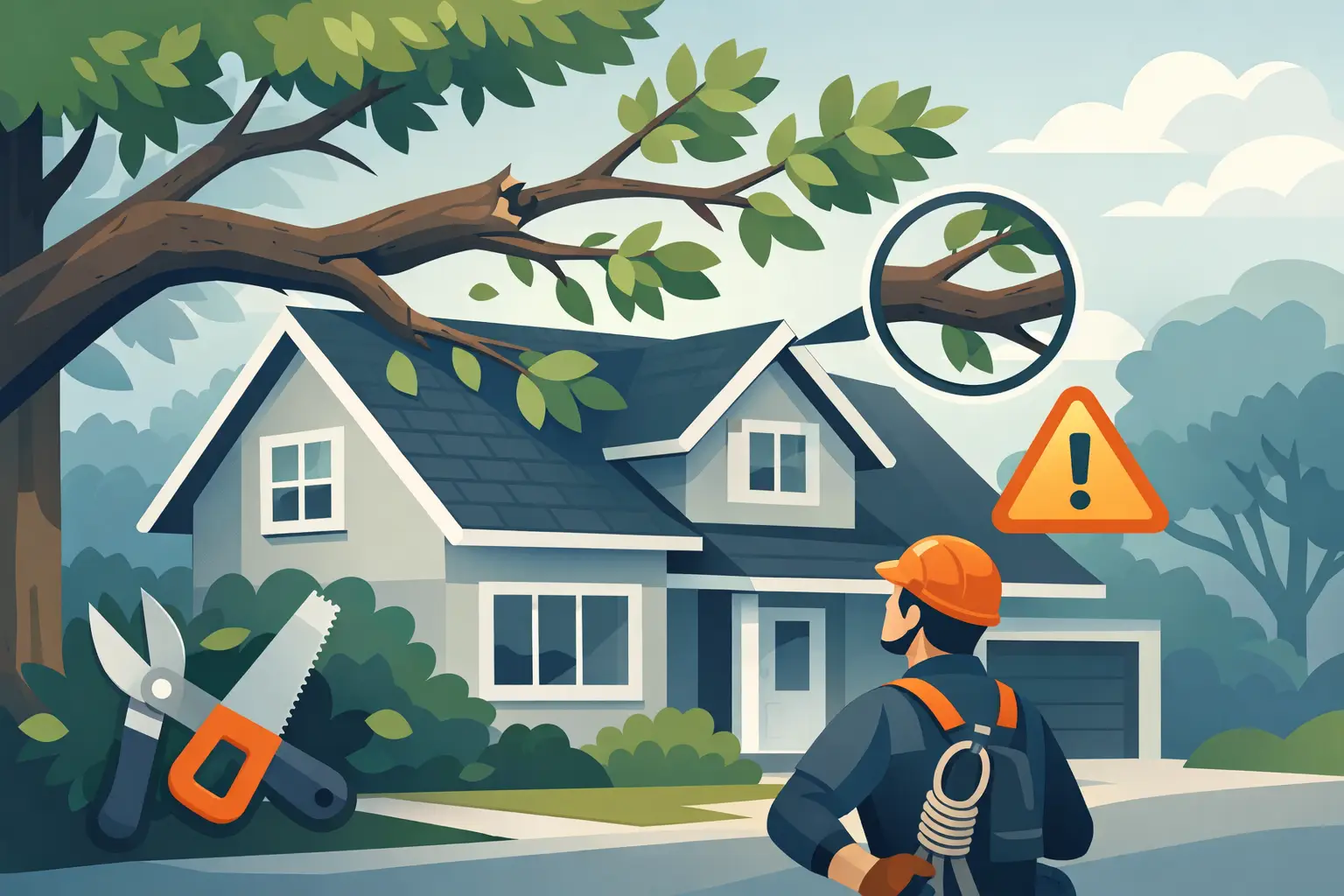
The most obvious risk is impact damage. Heavy limbs can break during snow, ice, or summer storms and come down on roofing, gutters, decks, or vehicles. But even before a limb fails, constant contact causes wear. Branches rubbing on shingles can shorten roof life. Leaves and twigs build up in gutters, trap moisture, and contribute to drainage problems along the fascia and foundation.
There is also the issue of access. Overhanging limbs can give squirrels, raccoons, ants, and other pests an easy path onto the roof. Once that starts, the tree is no longer just a landscaping feature. It becomes part of a route into places you do not want animals exploring.
Shade can be another mixed bag. Some shade helps with summer heat, but too much canopy directly over the roof can slow drying after rain and create conditions where moss and algae thrive. On older roofs, that extra moisture can add up.
When trimming is enough and when it is not
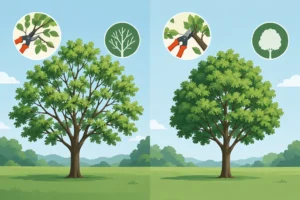
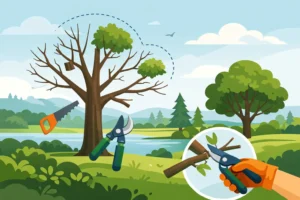
Not every case of tree branches over house sections means the tree has to go. In many situations, careful pruning solves the problem and keeps the tree healthy. If the branch structure is sound, the tree is in good condition, and there is enough room to create safe clearance, trimming is often the right move.
That said, trimming is not a shortcut for every tree. If a tree is structurally weak, heavily decayed, split at the trunk, or leaning toward the home, repeated pruning may only delay a larger problem. The same goes for trees that have been topped, storm-damaged, or poorly pruned in the past. Sometimes the overhanging limbs are only the visible part of a bigger hazard.
A licensed arborist looks at more than where the branch is hanging. Species matters. Growth habits matter. Attachment points matter. A healthy oak and a declining maple near the same roofline can require very different recommendations.
Signs the overhanging branches need prompt attention
Some warning signs are hard to miss. A cracked limb, dead wood over the roof, branches resting on the house, or fresh storm damage should be checked quickly. If you hear branches striking the roof in wind, that is not something to leave until next season.
Other signs are easier to overlook. Cavities in major limbs, peeling bark, fungal growth near the trunk, or a branch union with included bark can point to weakness. So can sudden leaf loss on one section of the canopy. Homeowners often focus on the part over the roof, but failure may begin higher up or back at the trunk.
If you are seeing repeated gutter clogging, roof debris after mild weather, or limbs getting closer each season, it is a good time to have the tree evaluated before the job becomes more urgent and more expensive.
The risk of waiting too long
Tree work gets more complicated when damage has already started. A branch that could have been pruned safely from the yard may become a technical removal over a roof, fence, or garage after it cracks. A tree that might have been reduced and balanced may need full removal after a major storm tears out one side of the canopy.
Waiting also affects tree health. Poorly placed overextended limbs can put stress on the rest of the tree. Strategic pruning done at the right time can reduce weight, improve structure, and lower the chance of failure. Leaving a problem branch in place often means accepting more risk for no real benefit.
In Connecticut, storm seasons and winter weather both raise the stakes. Ice loading, wet snow, and high wind expose weak branch attachments fast. If a tree is already over the house, bad weather tends to find it.
How a professional handles tree branches over house safely
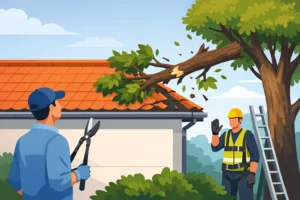
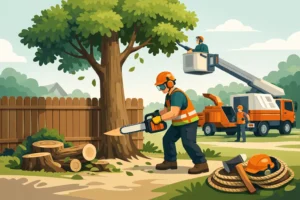
This is not backyard ladder work. Properly addressing tree branches over house areas means planning the cut sequence, managing load, controlling drop zones, and protecting the roof and surrounding property. In some cases, limbs must be rigged and lowered in sections rather than cut and dropped. In tighter settings, climbing or bucket access may be needed.
The goal is not just to remove wood. It is to do it without tearing bark, destabilizing the tree, damaging the roof, or creating an even larger hazard. Good pruning also respects the biology of the tree. Randomly cutting back everything over the house can leave the canopy unbalanced, trigger weak regrowth, and shorten the life of the tree.
That is one reason experienced arborist-led crews stand apart from general contractors with chainsaws. There is a difference between cutting a branch and pruning a tree correctly.
Common situations around homes in New Haven County
Older neighborhoods in places like Hamden, North Haven, Branford, Guilford, and Wallingford often have mature trees planted long before additions, garages, sheds, or expanded driveways were built. What was once a good planting location can become a problem decades later.
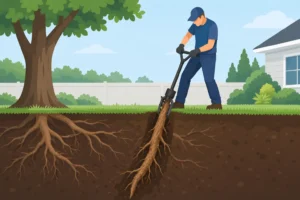
You may have a maple extending over the roofline, an oak shading the whole front slope, or ornamental trees brushing a second-story window. Some properties deal with several issues at once – overhanging limbs, roots lifting walks, and old stumps taking up space in the yard. In those cases, it helps to work with a company that can look at the entire property, not just one branch.
Stumpbuster LLC has been handling this kind of work since 1985, and that local experience matters. Tree species, storm patterns, lot sizes, and neighborhood layouts all affect how a job should be done.
Should you trim the branch yourself?
For small, reachable limbs well away from the roof, some homeowners handle minor pruning on their own. But once branches are large, overhead, near utility lines, or positioned above the house, this becomes professional work. The risk is not only falling. It is swinging limbs, hidden decay, kickback, unstable footing, and property damage.
There is also the quality of the cut. Poor cuts can invite decay, lead to weak regrowth, and make the tree less stable over time. Saving money on a risky DIY job does not feel like savings if the roof, gutter system, or tree is damaged afterward.
What to expect from an estimate
A good estimate should be straightforward. The contractor should assess the tree’s condition, identify the branches creating the risk, explain whether trimming or removal makes more sense, and outline how the work will be performed. Cleanup should be part of the conversation, not an afterthought.
If the tree is close to structures, ask about insurance and how the crew plans to protect the home, landscaping, and nearby surfaces. If multiple trees are involved, it may make sense to prioritize the highest-risk areas first and schedule additional work in phases.
Pricing can vary based on access, branch size, species, proximity to the house, and whether rigging or technical climbing is required. The cheapest number is not always the best number when the work is happening over your roof.
A practical way to think about the decision
If the tree is healthy and the branch issue is limited, prune it properly and stay ahead of future growth. If the tree is declining, poorly structured, or repeatedly threatening the house, removal may be the smarter long-term call. Either way, the right time to deal with it is before weather makes the decision for you.
A tree should add value and shade, not keep you listening for the next crack in the wind. If branches are hanging over your home, get them looked at by someone who knows trees, knows rigging, and knows how to protect the property underneath. A clear roofline and a healthy, well-managed tree are both worth doing right.