A dead oak leaning over a garage is not a project to put off while paperwork makes the rounds. Still, tree removal permits can matter before the first truck arrives, especially when the tree is healthy, large, near wetlands, or located in a neighborhood with local protections. The right first step is to identify the risk, then confirm what your town requires so the work can move ahead without avoidable delays.
For homeowners and commercial property managers in New Haven County, permit requirements are not one-size-fits-all. Every Connecticut town can set its own rules, and a tree that can be removed immediately in one situation may require approval in another.
When Tree Removal Permits May Be Required
Most towns do not require a permit simply because a property owner wants to remove any tree on private land. But there are important exceptions. Local rules may apply based on the tree’s size, condition, location, species, or whether the property falls within a regulated area.
Trees near wetlands, watercourses, coastal areas, public rights-of-way, or protected open space deserve special attention. Work in these locations may involve a wetlands commission, zoning office, conservation authority, or public works department. A permit may also be needed if removal affects drainage, grading, access, or construction plans.
Historic districts and some planned communities can add another layer of review. A homeowners association may have landscape standards even where the town does not require a permit. Commercial properties may face additional site-plan conditions, particularly if trees were installed or retained as part of an approved landscape plan.
Street trees are a separate issue. If a tree is in the public right-of-way, or if ownership is unclear because it sits near the sidewalk or road, it should not be removed without checking with the local municipality. What looks like part of a front yard can sometimes be a town-controlled area.
Emergency Removal Is Different, but Documentation Still Helps
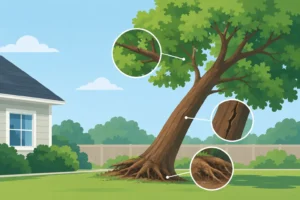
A tree that has failed, is hanging over a roof, has split at the trunk, or is threatening a power line needs prompt attention. Safety comes first. In a true emergency, towns often have procedures that allow hazardous work to be completed before normal permit review, but the details depend on the municipality and the circumstances.
Take clear photos before work begins if conditions allow. Pictures of cracks, uprooted soil, broken limbs, decay, storm damage, or a tree resting on a structure can help establish why removal could not wait. An arborist’s assessment can also be useful when a hazardous condition needs to be explained to a town office, insurer, association, or neighboring property owner.
Never attempt to handle limbs near energized utility lines yourself. Contact the utility provider and use an insured, properly equipped tree service for the tree work. A permit question is manageable. An electrical injury or a damaged service line is a much more serious problem.
What to Check Before You Schedule Removal
Before hiring a crew, call your town’s building, zoning, engineering, wetlands, or public works office and describe the property and the tree location. Ask whether a tree removal permit, wetlands review, right-of-way approval, or other authorization applies. If you are removing a tree for a renovation, addition, pool, driveway, or other construction project, mention that connection. The removal may be reviewed as part of the broader project rather than as a stand-alone request.
Have practical details ready. The office may ask for the street address, a site map or survey, photos, the tree species if known, trunk diameter, and the reason for removal. You may also need to show how equipment will access the site and where debris will be staged. On tight New Haven County lots, access can affect sidewalks, landscaping, neighboring driveways, and overhead lines.
Do not assume a neighbor’s approval replaces municipal approval. Likewise, do not assume a municipal permit settles a property-line disagreement. When a trunk sits directly on a boundary, or when major limbs extend over another property, it is wise to establish ownership and communicate before work begins. A professional crew can remove a tree with precision, but clear expectations between neighbors prevent unnecessary disputes.
Permit Timing Can Affect the Cost of Waiting
Some approvals are quick. Others may require an application, fee, site visit, commission meeting, or public notice. If the tree is not an immediate hazard, allow time for that process before setting a firm removal date.
Waiting without a plan can create a different problem. Dead or declining trees do not improve with time, and a tree that loses limbs during a storm can damage roofing, fencing, vehicles, and utility service. If you are unsure whether a tree is dangerous or simply overdue for pruning, an on-site arborist evaluation gives you a clearer basis for deciding what to do next.
How a Professional Tree Service Helps
A qualified tree contractor does more than cut and haul away wood. The crew should assess the condition of the tree, identify likely hazards, plan the direction of removal, protect nearby structures, and leave the site clean. That planning matters even more when a tree stands close to a house, garage, fence, pool, septic area, or utility line.
An experienced local company may also recognize situations that commonly trigger town questions, such as wetland buffers, roadside trees, or removal connected to a construction project. The property owner is generally responsible for securing required approvals, but a knowledgeable contractor can help provide the practical information needed for an application, including photos, scope of work, and an explanation of the tree’s condition.
At Stumpbuster LLC, licensed arborist oversight and decades of work in New Haven County help property owners make sound decisions before equipment reaches the yard. The goal is not to remove every tree. Sometimes targeted trimming, cabling, or risk reduction is the better choice. When removal is necessary, the job should protect the property from the first cut through final cleanup.
Do Not Forget the Stump and Roots
A removal permit, when required, may address the standing tree without spelling out what happens below ground. Ask whether stump grinding, root removal, regrading, or replacement planting is included in the approved scope. This is especially relevant near wetlands, drainage features, sidewalks, patios, and underground utilities.
Leaving a stump can be acceptable in a wooded corner of a property. In a lawn, driveway expansion area, or future garden bed, it can become an obstacle that attracts pests, interferes with mowing, and limits how the space can be used. Roots may also continue to affect old walkways, garden borders, and shallow utility areas after the tree is gone.
The right approach depends on access, soil conditions, the tree species, and the future use of the area. Deep root removal is not always necessary, but it can be the practical answer when roots are preventing a property improvement or leaving the yard uneven and unusable.
A Simple Way to Avoid Permit Problems
Start with the tree’s condition and location, not a guess about whether a permit is needed. If the tree is hazardous, document the issue and get professional help quickly. If the removal is planned, check with the town before committing to a date, particularly near wetlands, roads, protected districts, or construction areas.
Keep copies of permits, approvals, photos, and any arborist recommendations with your property records. Those details can be useful long after the tree is gone, especially when selling the property, filing an insurance claim, or planning future work.
A safe tree removal should leave you with a cleaner, more usable property and no unanswered questions about whether the job was handled properly. When the tree, the rules, or the access are complicated, a quick local check and an experienced arborist’s opinion are worth far more than a rushed decision.